DDP Yoga

From Online Connections to Community Action: The role of DDP Yoga in Fostering Active Engagement.

Posted on

by


Synopsis:

This paper explores the transformation of online connections into a vibrant and active community through DDP Yoga, a fitness program that leverages the power of social media. By examining the strategic use of the DDP Yoga Facebook group, the study highlights how digital interactions are harnessed to cultivate a sense of belonging and active participation among members. The paper delves into the mechanisms of community building, including the integration of user-generated content, shared fitness goals, and real-world meetups. It also discusses how the program’s emphasis on inclusive communication and communal support transcends digital boundaries, fostering not only physical wellness but also social connectivity. Through this case study, the paper contributes to a deeper understanding of how online platforms can effectively translate virtual connections into tangible, real-world community actions, challenging traditional notions of digital versus physical community spaces.


     DDP stands for Diamond Dallas Page, or Dallas for short. A former professional wrestler turned fitness guru; Dallas has been able to strategically harness the power of community and through community; develop much more than a fitness empire. DDP Yoga is his brand,  and it is marketed has a place for everyone. Being a place for everyone, it has attracted a deep sea of connections; that have gone on to form an extremely diverse and close-knit  community. The following essay looks to examine: How have users of the DDP Yoga,  Facebook group been able to turn a series of online connections into an active and vibrant community; that relies on genuine user participation and community member contribution to continue expanding its community user base. To do this I will explore how DDP Yoga sets up a strategic approach to turn connections into community, show how members contribute in a meaningful way that adds value to the community, how this online community has extended to the offline world and how members are considered equals.  


 In a world were there has been disintegration of traditional face to face community,  people are often searching for connection. This search for connection can now often be  found in the online world and in particular social media. In social media sites like Facebook, users can not only stay connected with their real-world acquaintances but also build connections with users from around the globe (Preece & Maloney-Krichmar, 2005). This ability has been a key feature of fandoms and other interest groups by removing  geographical distances it has allowed more people around the globe join the social sphere  and enter the conversation (Preece & Maloney-Krichmar, 2005). DDP Yoga is an online fitness program that can be classed has an interest group due to its specific nature; and with that nature it attracts a certain type of user. Though there are several breakaway  groups, the official DDP Yoga group can be found on Facebook and at time of writing; has  amassed over 70 000 members (DDP Yoga, 2012). What makes this the official Facebook  group; is upon sighing up to the DDP Yoga program users are given the direct members only link. Before seeing the link, they are encouraged to join the group, introduce  themselves and share updates of their fitness journey (DDP Yoga, n.d.). 


   This is a community that has been designed to integrate with the DDP Yoga program, yet the community filtration begins a few steps before the connection signs up. The design almost acts like a funnel in finding users that will align with the core values of DDP Yoga. It  brings them together and goes on to display Castels theory that; networks are built by the choices and strategies of social actors. (Delanty, 2003, pp. 211). The funnel begins through  DDP Yoga’s various social media channels like the main Facebook business page  (separate from the community) and its YouTube Channel. On these social channels, many inspirational stories, transformations, and fitness journeys can be found and from here  many users are then able to navigate their way to the DDP Yoga website (DDP Yoga,  2012a). These videos not only act in showing casing to the viewer the commitment require  in the DDP Yoga program, but also serve in setting the community tone; making the viewer  aware that the DP Yoga community is there to support them on their own personal fitness  journey (DDP Yoga, 2012a). Any confusion a member might have about the DDP Yoga  program is laid out in the List. The list is a ten-step user guide; which according to DDP  Yoga “Will help you own your life.” From a community standpoint however, the list is much more important than this. Containing acronyms like S.M.A.C.K. down, lectures, books, and videos etc; the list arms connections with the technical language needed to participate in  the public sphere (Wodak & Koller, 2010). This ability to add meaningful engagement to the public sphere, helps members to feel a sense of belonging; and it is this sense of belonging  that turns a technologically mediated community into a tangible community for its members  (Delanty, 2003, pp. 200–201). 
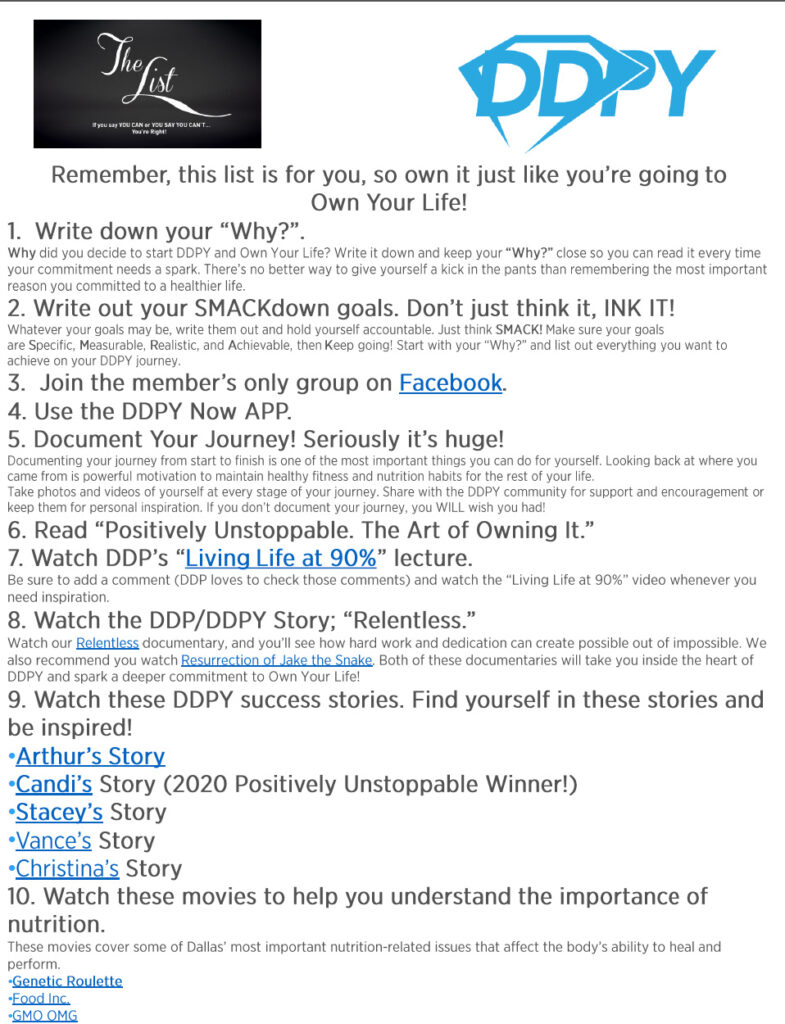
 

DDP Yoga (nd).  The List. [Screen Shot]. https://ddpyoga.com/ 


   Being able to speak a common language is only part of the equation in being able to participate in the public sphere (Wodak & Koller, 2010). A public sphere reflects the main  ethos of a community and in the DDP Yoga community, The List also provides a user with  the community’s ethos before they decide to enter the conversation. By understanding the community’s ethos, it helps a user to follow the accepted norms and expectations of the community and thus avoid potential conflict. More importantly it helps to strengthen the sentiment of the public sphere by adding more members that align with its core values  (Preece & Maloney-Krichmar, 2005). It is important to note that like any other public sphere, members within the DDP Yoga public sphere are still able to have a voice and it is their  voice that can lead to change (Birch et al., 2001, pp. 86–91). This draws direct comparison  to a public sphere found in broader society where politicians may implement change based on the public sphere’s sentiment. In the case of DDP Yoga these changes are implemented  through the group moderators keeping track of the community sentiment (Birch et al., 2001, pp. 86–91). A recent example of this was when a group member posted on the 20th of March 2024 “I wish there were some programs that helped with shoulder flexibility.” This  post gained some traction with several members sharing the same sentiment. A moderator  replied to this with “We are working on this as we speak; be patient, its coming soon” (DDP  Yoga, 2012). 


     DDP Yoga, engages with their community in several ways that helps to promote an  active, participatory culture amongst members; and it is this participatory culture that helps to strengthen the community. By allowing participatory culture to occur, it adds to the overall knowledge pool of the group; and validates participating members, as members that contribute value to the group. (Alessandro Delfanti & Arvidsson, 2019, p. 72). Some of this  this engagement includes competitions, encouragement to share progress, recipes,  people’s personal struggles and triumphs. Though fitness level and negative body image  can often be a barrier for many people considering entering a fitness competition; DDP Yoga appears to have found a solution (Zaccagni & Gualdi-Russo, 2023). There are two main competitions community members can participate in. The first is an ongoing daily competition, where users can trade points, they have earned. Points are earned simply by completing their daily program and can be traded for real world rewards, like t-shirts etc, with the recipient often posting an image with their reward like a badge of honour. The  second competition is a yearly competition and caries the highest prestige within the community. It spans for nine months in duration, with eight winners chosen at the end;  these eight are declared that year’s champions. Both competitions are free to enter making it accessible to all, but it is the solution in the design that DDP Yoga has found; that breaks  the negative body image barriers. Throughout the DDP website and social media channels, the continual theme is about not being the best but being your best; and consistency is the key to positive change. This same sediment echoes throughout the community; and the  champions that are chosen are chosen for the positive change they have made to their lives by adopting the DDP Yoga principles. This means that the everyday person, which  embodies much of the DDP Yoga community; can compete with and triumphant against  personal trainers and professional athletes. This even playing field is extremely important to the DDP Program, which is made for the bed ridden to the professional athlete and everyone in between. The echos of this sediment are entrenched within the community culture such has non scalable victories referred to has NSV’s. NSV’s are personal accomplishments, and NSV’s are embraced and celebrated by the online community no matter how big or small they may appear on the surface. (DDP YOGA, n.d.), 


     Most online communities either begin in the real world; or start online and have elements transcend to the real world (Preece & Maloney-Krichmar, 2005). With the virtual world becoming so prominent we can no longer judge a community by the proximity of members.  Instead, we should judge them by the strength and type of connections they create (Preece  & Maloney-Krichmar, 2005). DDP Yoga erases the old notion that that an online community  cannot be considered a real community and relationships in virtual communities are often  superficial (Delanty, 2003, pp. 2011–2012). Though the DDP Yoga group originated online it has taken on Calhoun’s theory that online communities are a supplement for face-to-face  communities (Delanty, 2003, pp. 213). Starting has an online community, DDP Yoga has been able to transcend to the real world. This is done both formally and informally, between  group members and even through the company itself. On the informal end of the spectrum,  it quite common for community members to friend each other on their social profiles, carry the conversation to private chats and arrange to meet up in real life. There have been a substantial number of community members post which area they live in and make their  intention known that they are looking for others to meet up with to exercise or socialise with. The formal end of the spectrum is quite unique and sees community members given the opportunity to meet up at the home of DDP Yoga. The community members that take up this offer, can be immortalized in the app itself by directly taking part in the filming of training videos to be displayed on the app. These member’s also chose to take part in associated social events like organised dinners and social days. For those wanting a fully immersive experience, there is a specialised training house that can be booked for months at a time. Open only to community members, it sees them living together; fully immersed in the DDP culture of training and diet. DDP Yoga is also able to make connections in the real world via its training model. Allowing anyone that has completed 6 months of DDP Yoga to sit the instructors’ course and become teachers within their local communities. This empowers  community members by allowing them to make meaningful contributions to community growth in the outside world (DDP YOGA, n.d.). 


     DDP Yoga, has used strategic design to change connections into an active and vibrant online community, that has been able to transcend into the real world. It has done this by creating a commonality in the language used and ethos shared; making it easily accessible  for members to contribute to the public sphere from the onset. It actively encourages user engagement by harnessing the positive effects of participatory culture; leading to more  dialogue and activity within the community. It has created a safe place for people to share  and engage in community activities like competitions; that help to build community spirit yet in a way that is accessible and avoids negative judgement. DDP Yoga is a good example  that under the right circumstances an online community does not necessarily mean superficial relationships. With what appears to be genuine connections and friendships  being formed online, the community has been able to extend its reach to the outside world.  


                                                                               References 


Alessandro Delfanti, & Arvidsson, A. (2019). Introduction to digital media. Wiley Blackwell. 


DDP YOGA. (n.d.). DDP YOGA Official Web Site. DDP Yoga. https://ddpyoga.com/ 


DDP Yoga. (2012a). DDP YOGA – YouTube. Www.youtube.com. 

 https://www.youtube.com/channel/UCvmdgf06PhRoQ5VKh0eAzCA 


 DDP Yoga. (2012b, June 8). Log in or sign up to view. Www.facebook.com. https://www.facebook.com/groups/218632148257795 


 Delanty, G. (2003). Community. Routledge. 


Preece, J., & Maloney-Krichmar, D. (2005). Online Communities: Design, Theory, and Practice. Journal of Computer-Mediated Communication, 10(4). https://doi.org/10.1111/j.1083-6101.2005.tb00264.x 


 Wodak, R., & Koller, V. (2010). Handbook of communication in the public sphere. Mouton De Gruyter. 


Zaccagni, L., & Gualdi-Russo, E. (2023). The Impact of Sports Involvement on Body Image Perception and Ideals: A Systematic Review and Meta-Analysis. International Journal of Environmental Research and Public Health, 20(6), 5228. https://doi.org/10.3390/ijerph20065228


Search Site

Your Experience

We would love to hear about your experience at our conference this year via our DCN XV Feedback Form.

Comments

17 responses to “From Online Connections to Community Action: The role of DDP Yoga in Fostering Active Engagement.”

  1. chloe.maher Avatar
    chloe.maher

    Hi Dan,

    What a fascinating topic to present your paper on. I had never heard of DDP before despite its large following. The paper says the group has 70 000 members at the time of writing, but the reference is from 2012. Would you be able to please clarify if the number is from 2024 or 2012? If the latter, I wonder if it has grown significantly since then!

    I like how you talk about people’s desire for human connection and how people ironically turn to social media to foster these experiences. You also did a great job at discussing the affordances of social media in relation to building connections in the DDP community in particular.
    Do you think there would be an existing counterargument to the positive effects you have outlined in your paper?

    Chloe

    1. Dan Avatar
      Dan

      Hi Chloe,

      Thanks for taking the time to read my paper and I am thrilled to hear you found it to be fascinating. Good pick up on the 2012 reference, the 70,000+ members is the correct figure for 2024. The reference year I used in my article was the date the Facebook group was created, so it should be updated to reflect the current figure more accurately.

      Counterarguments are a great question. Firstly in any community, there is a spectrum of active to non-active members. Amongst the active members, people contribute at different rates, and the views of popular people are generally held to a higher degree. This also plays out in the DDP Yoga community where there is a core of sociable people who are more inclined to friend people on their Facebook profiles. By friending people on their profile it means that these new friends are now more likely to receive alerts when the sociable person posts to the page. This helps a post to gain more traction and more traction often leads to higher interactions. In the longer term, this higher level of interaction can give certain members an algorithmic advantage, so the community is more likely to see their posts; friends or not. A person receiving, continually high levels of interactions can often be viewed as a community expert and this in turn means that their views often carry more weight. This leaves a vulnerability that an expert might influence the community in ways that could diverge from its core values.

      Another counterargument could be the strong echo chamber effect that is taking place; where only similar views are amplified. This may lead to someone with an opposing view being drowned out when trying to express it, or simply not expressing it; in fear of potential community backlash.

      If you’ve written an article for the conference, please share the link; I would love to read it and continue our exchange of ideas.

      1. chloe.maher Avatar
        chloe.maher

        Hi Dan,

        Thanks for clearing up those numbers for me. That’s a damn impressive number of members too, might I add. Goes to show how powerful online connections can be.

        Great point about echo chambers. That definitely warrants careful consideration. The phenomenon of like-minded views are amplified in these large online communities which makes it challenging to foster diversity of thought. Do you think there are any ways to combat echo chambers in communities like this that already have such a large membership?

        I also forgot to ask what drew you to this particular topic. Are you part of any yoga communities?

        Feel free to check out my conference paper, would be great to have some more people adding to the conversation. https://networkconference.netstudies.org/2024/csm/3108/dissecting-social-medias-impact-on-eating-habits-and-body-image-among-adolescents-a-critical-analysis-of-diet-trends-and-influencer-culture/

        Chloe

    2. Dan Avatar
      Dan

      Hi Chloe,

      Apologies for the slow reply. I am glad to hear you found the paper interesting. To clarify, the confusion around the reference; it should be 2024. The reference I used was for the creation of the Facebook group, so thanks for pointing it out.

      Thank you. With regards to counter arguments I have listed some in the previous post. To add to that though, my thought is even in a community designed as well has DDP Yoga; you only get out of it what you put into it. Its interesting to see this play out in real time. I have visually witnessed this over the last 12 months and have come to the conclusion, the people that tend to give a lot of themselves, see their standing and support grow within the community.

      If you’ve written an article for the conference, please share the link; I would love to read it and continue our exchange of ideas.

  2. SarahW Avatar
    SarahW

    Thanks for your paper, I enjoyed reading it.

    I hadn’t heard of DDP Yoga before you mentioned the page in Discord, but I had seen the case study he uses with the guy who is on crutches. I remember being inspired by him but hadn’t connected the video to the page.

    You effectively highlight how DDP Yoga’s strategic approach to community building begins even before users sign up for the program, with the integration of social media channels and inspirational content setting the tone for community engagement. The emphasis on user-generated content, shared fitness goals, and inclusive communication helps cultivate a participatory culture within the community, where members feel empowered to contribute and engage with one another.

    In your examination of DDP Yoga’s community-building strategies, you discuss the importance of creating a safe space for users to share and engage in community activities. How do you think DDP Yoga effectively maintains this safe and inclusive environment amidst the diverse range of participants and perspectives within the community?

    I have written a paper on the positive nature of online communities: https://networkconference.netstudies.org/2024/csm/3209/online-communities-play-a-pivotal-role-in-mitigating-the-psychological-distress-for-people-on-a-disease-journey/ and as such I am interested to see your take, if any, on the negative sides.

    Sarah

    1. Dan Avatar
      Dan

      Hi Sarah,

      My apologies for the late reply. I had written a response not long after your post but was distracted and have only just realised I didn’t post it. The guy on crutches is Arthur, and I agree he has a inspiring journey. He has come so far and if you were to see him today, you wouldn’t even realise it was the same person.

      DDP Yoga maintains a safe and inclusive environment in a number of ways. A part of the community design is that it is a politically free group, meaning posts are generally limited to people’s fitness journeys and advice around the program which helps to avoid controversial issues. By creating a common language it allows people from all around the world to participate in an equal manner which encourages more inclusivity. There are currently 13 group moderators who are quite active and will pull the odd post if needed but also call out behavior that goes against the social sphere if encountered. An example of this was a recent post where someone displayed their NSV of being able to bench press a certain amount. Though this post gained plenty of positive responses there was a comment made along the lines of “That’s my warm-up weight”. This comment went against the community ethos i.e. celebrating NSV’s and the only one you are competing against is yourself. A follow-up post was made about this, calling out the negativity and which gained a massive amount of support from the community. To me this is evidence that not only do the moderators play an extremely important role but also there is a high level of self-governance in the community to uphold the vales.

  3. Mitali Kangalee Avatar
    Mitali Kangalee

    Hi !

    Your discussion of DDP Yoga’s society has come into view. I think it’s intriguing how a fitness program called DDP Yoga has cut such a big niche in social media and online platforms, forming a community as strong as one. The plan you already laid down proves that space of internet can be used in making of solid social bondings and promote positive change.

    Another thing I highly noticed is that the DDP Yoga students have so much support from each other; they have such a great community spirit. From this it is evident there is a clear intention for the program to make the environment not only comfortable, but accessible as well, to people whose health and fitness levels vary. Nevertheless, I struggle to imagine how DDP Yoga performs the professionalism of the program while offering a fitness program that is accessible to every single individual. Are there any issues in creating this kind of course for the students with different religion beliefs who keep following the program’s standards?

    Besides, one more question is what the future develops of Internet-based communities like DDP Yoga will be. It is clear that this program has created a tremendous sense of belonging among its members and has contributed to their children’s success in school and life beyond. However, is there a possibility of problems or challenges that could occur as the community development expands? As to what are the approaches that DDP Yoga will apply in the light of these possible obstacles and retain the bright outcome of its community-oriented values?

    Basically, your paper has been engaging in meaningful discourse on the point at which internet connectivity and local involvement converge. It is amazing to see that DDP yoga answers the question how to use online connections as sparks of making things happen that appears to be out of the common notions of digital or physical spaces.

    1. Dan Avatar
      Dan

      Hi Mitali,

      Thanks for taking the time to read my paper, you have some insightful questions. A part of the DDP Yoga community design is to keep it politically free. This means there is actually no discussion of religion within the Facebook group. Like any community some people will disregard the rules; however, moderators are quick to react and put a stop to it if this occurs. The program itself allows a user to choose their personal work out program and they are then provided with a schedule. This schedule can be adjusted by the user, meaning the user can avoid any days that may clash with their religious beliefs.

      The community ethos is quite set, with many people being active members for a number of years. This ethos and active contribution from established members helps to maintain the tone of the community. I think challenges it could faces with the community expanding revolve around maintaining company structure and making sure that only people that align with the ethos are employed. I do not know the in’s and out’s of the company structure, but from the surface it looks like that a lot of employment comes from within i.e. members that have proven themselves to align with the ethos and maintain standards. I think moving forward this a great strategy in not only maintaining the community but expanding it as it progresses.

  4. Lewis Moss Avatar
    Lewis Moss

    Hi Dan

    This was a really interesting piece on DDP Yoga and how he forms a community. Given that I am a fan of WWE myself I was familiar with DDP and his Yoga services.

    After reading your article, I found it interesting how Dallas uses these online communities. I also found it encouraging that the community he has formed is all really supportive of each other.

    Since he started off in wrestling, do you think he is trying to appeal to the wrestling fan base to an extent, given references to “SMACKdown”?

    Lewis

    1. Dan Avatar
      Dan

      Hi Lewis,

      Thank you for reading, and I’m glad you found it interesting. I believe the community’s appeal stems from the profound positive transformations that have enabled many individuals to reclaim their lives. While DDP Yoga’s connection to the wrestling fan base is present, it seems secondary. If you watch the YouTube videos on the official page, you’ll encounter individuals living with pain, struggling to walk, and even those who have lost hope. Witnessing their journeys and the remarkable achievements they’ve made instills hope, drawing others to DDP Yoga.

  5. katelyn.rolfe Avatar
    katelyn.rolfe

    Hi Dan,

    Thank you for sharing your insight into the DDP Yoga community through this paper. It sounds like such a healthy and supportive community to help people get fit and well!

    I’m just curious, what kind of a community leader is DDP? Would you say DDP has created this community out of a genuine want to help people get healthy, or would you say it’s more been a way for him to get money but he’s helped people get healthy as a side benefit? I would say a measure of this could be: does he interact with participants in the Facebook group and sound genuinely caring and excited for people’s progress, or does he interact minimally, mostly leaving employees of his to interact with group participants, sound aloof, and mainly push people to buy his products?

    I’d love to hear your thoughts!

    Katelyn

    P.S. I would love it if you had time to comment on my paper ‘The Negatives of Social Media Communities: How the Pro-Ana Community Circumvents TikTok’s Algorithm with Refracted Publics’ at: https://networkconference.netstudies.org/2024/csm/3609/the-negatives-of-social-media-communities-how-the-pro-ana-community-circumvents-tiktoks-algorithm-with-refracted-publics/

    1. Dan Avatar
      Dan

      Hi Katelyn,

      Thank you for taking the time to read my paper. DDP’s leadership style is both motivational and inspiring, demonstrated by his genuine interest in the community’s health and happiness. While he isn’t highly active on the Facebook group page, he engages with the community in other meaningful ways. For instance, there is a member who has been sharing their journey daily for the past six months. Recently, DDP created a video for this member and two others, acknowledging their inspiring progress and sharing it on the app. He frequently hosts live workouts and get-togethers, inviting community members to participate. Last year, he even invited the community champions to his Christmas party. Additionally, through the points system, members can redeem prizes such as a video call with him. Despite his limited social media presence, his deep involvement in the community is evident.

      When I first discovered DDP Yoga, I was undecided for six months and yet did not encounter a single salesperson. The program seems to sell itself through positive publicity and community engagement. It is often on sale for roughly $12 AUD per month, making it highly competitive and accessible for most people.

      1. katelyn.rolfe Avatar
        katelyn.rolfe

        Hi Dan,

        Thanks for your reply!

        That’s great that DDP has a motivational and inspirational impact on the community. And it’s cool that he hosts get-togethers, showing that he does care for the community. So who would you say is the leader of the DDP Yoga Facebook group? Or is there no hierarchy?

        Okay, that’s positive and sounds pretty genuine. It’s great that he’s able to offer it at such an accessible price.

        I think conference participant Lachlie’s paper ‘Online vs Offline Personas: An exploration of content creators on live streaming platforms and how they attract an audience’ (https://networkconference.netstudies.org/2024/ioa/3542/online-vs-offline-personas-an-exploration-of-content-creators-on-live-streaming-platforms-and-how-they-attract-an-audience) could be a interesting read for you, exploring the idea of digital personas and the authenticity of them, which could be applicable to DDP.

        Best wishes for the final day of the conference!

        Katelyn

        1. Dan Avatar
          Dan

          Hi Katelyn,

          It certainly is; he leads from the front while playing to his strengths.

          “So who would you say is the leader of the DDP Yoga Facebook group? Or is there no hierarchy?” This is a really interesting question, and the response I give is based purely on my observation over the last year. Being a part of the community, a lot of the time, it gives a sense of being self-governed; based on a deeply entrenched ethos. There are, however, people that are behind the scenes guiding the group. DDP seems to pass the baton on to certain trusted people who have proven their loyalty to the program over the years. There are a number of trainers from the app itself that are quite involved in the community, with some even moderating the page. Apart from the core training team, there are community members that have built a positive reputation. An example of this is the yearly champions, who are recognised for the positive changes they have made. This recognition helps to establish them as experts in DDP Yoga and often catapults them to leadership roles.

          Thanks for sharing Lachie’s paper; I will make sure to check it out.

          Thank you very much, and I wish you all the best too.

          1. katelyn.rolfe Avatar
            katelyn.rolfe

            Hi Dan,

            The baton-passing leadership system you’ve described does sound so inviting — and healthy! I can only imagine that it would motivate people more to do well, to become a leader, and ensures the people in leadership roles have been in the positions of newbies to the group and so would empathise and care deeply about the way their leadership impacts group members.

            No worries!

            Thanks Dan 🙂

            Katelyn

  6. Chris May Avatar
    Chris May

    A great read, well done on the article! I was keen to read it after seeing what you were going to write about in Discord.

    As a casual wrestling fan I was familiar with DDP and DDP Yoga before reading, and knew of a handful of the positive “DDP Yoga Saved My Life” stories, not least with fellow veteran wrestler Jake “The Snake” Roberts overcame a drug and alcohol addiction and lost over 50lbs after joining the program.

    There are a ton of case studies, both of celebrities and regular members of the public, that can attest to the positive power of belonging to a positive, healthy, supportive community.

    You indicated that you are now a member of DDP Yoga in a previous comment, and also that the community sometimes organizes meet ups in person, either in an official or unofficial capacity. Have you attended, or had the opportunity to attend, a local community event in person, and if so do you believe meeting IRL deepens your connection to the online community at all, or in your opinion are the online connections strong enough not to need them?

    1. Dan Avatar
      Dan

      Hi Chris,

      Great to hear you enjoyed my paper. To be honest, I actually had no idea who DDP was and found the program through the “DDP Yoga Saved My Life” stories. There have definitely been a lot of inspiring stories, and Jake’s was quite remarkable. The most recent notable story would be Butter Bean, who could barely move after his boxing career. It is about 20 minutes long and worth the watch if you have the time.

      As of yet, I have not had the opportunity to attend a live meet-up. Though there are Australians in the DDP community, they seem to be quite spread out. It appears the majority of the meet-ups are in the US, with a small number in the UK. I believe the online community is strong enough to create a social experience many are searching for, but the live meet-ups definitely add a new dimension. With some of the “DDP Yoga Saved My Life” stories, it comes across as a number of people having been quite isolated. The online community can be used to break this isolation, link back into the community, and feel a part of something again. I feel for some people this may be a strong enough connection. The online community won’t serve everyone’s needs; a lot of people prefer to meet in person, and in this case, I see it definitely strengthening connections. As someone who has been geo-restricted from attending an in-person event, I can only go off observation and not comparison. I made friends with someone who went on to be last year’s grand champion. As part of becoming one of the yearly champions, he has been going to a lot of events and get-togethers. From observation, I would say that in his case, it has definitely strengthened connections and opened up even more of a social network. So in summing up, I think it can and does work without the IRL meetings, but this is more on an individual’s needs basis, same as the IRL.

Leave a Reply

Skip to content