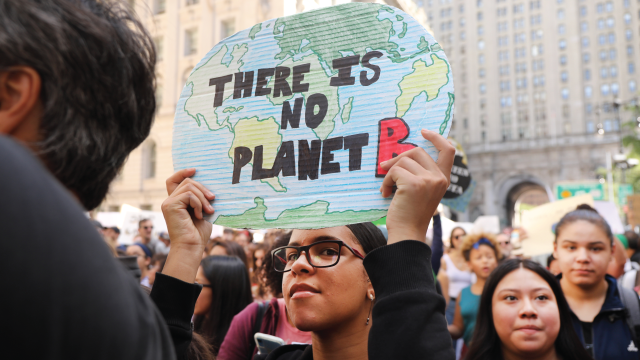
The Potential and Pitfalls of Social Media for Climate Change and Environmentalism
Online activism through social media platforms has demonstrably enhanced public awareness of climate change and environmental issues and facilitated tangible change, while presenting new challenges to its efficacy.
Introduction
The increasing urgency of climate change and escalating environmental crises has transformed the activism landscape, prompting new and dynamic forms of organisation and mobilisation. Central to this shift is the emergence of “networked publics,” digital spaces enabled by social media platforms where individuals gather, engage, and amplify collective concerns beyond traditional institutional channels(Papacharissi, 2011, p. 39). Social media-driven campaigns such as Greta Thunberg’s Fridays for Future movement illustrate the power of these digital platforms to rapidly elevate climate change from niche concerns into mainstream global discourse. However, the effectiveness of online activism remains a topic of contention, with cases demonstrating both its success, such as influencing corporate behaviour and governmental policy, and its limitations, including risks of superficial engagement (“slacktivism”) and potential backlash from disruptive tactics.
This conference paper explores how networked publics, facilitated by social media, have reshaped environmental activism by enhancing public awareness, mobilising geographically dispersed populations, and applying pressure to political and corporate decision-makers. It examines the tangible outcomes and challenges associated with online activism. Ultimately, this paper argues that online platforms have become critical catalysts for environmental activism. However, their efficacy depends significantly on integration with sustained offline actions, strategic institutional engagement, and grassroots mobilisation to achieve lasting social and environmental change.
Networked Publics and Environmental Activism
Networked publics are digitally facilitated areas in which people gather to negotiate, share, and critique collective issues such as climate change. Danah boyd (Papacharissi, 2011) Defines networked publics as the spaces and collectives formed by the intersection of digital networks and social processes. These publics emerge when individuals gather online to engage with issues, share content, and form common agendas, bypassing traditional gatekeepers, notably mainstream media. As such, social media platforms like X(Twitter), Facebook, Instagram, and TikTok serve as communication channels and ecosystems where ideas are shaped, contested, and amplified.
The strength of networked publics is tied to their ability to unite geographically scattered communities, at scale, around issues that require collective action and mass support. Participation in these networked publics, via social media, is a significant factor influencing people’s real-world political engagement, comparable in importance and impact to education, which is commonly acknowledged as a strong determinant of civic participation(Boulianne, 2019). Papacharissi and Trevey (Graham, 2018) argue that social media platforms form “affective publics,” which allow geographically dispersed groups to quickly come together around shared emotional responses, thereby rapidly mobilising collective action at a significant scale. Consequently, the strategic use of social media within networked publics has the potential to significantly amplify collective political efforts, effectively bridging online engagement and offline social change.
These networked publics have a significant capacity to amplify environmental causes as evidenced by global campaigns that thrust climate change into mainstream attention. For example, social media platforms were pivotal to the rise of the #FridaysForFuture movement, sparked by Greta Thunberg’s solo protest in 2018; online engagement amplified her call to action and spurred youth-led climate strikes worldwide(Michiel et al., 2019). The collective online coordination facilitated on-the-ground logistics and fostered a sense of shared purpose among diverse groups, illustrating how decentralised digital networks can spark and sustain large-scale participation around urgent environmental concerns. Bennett and Segerberg argue that this form of “connective action” enables individuals to mobilise fluidly under common goals without rigid hierarchical structures(Bennett & Segerberg, 2013). This shows how social media–driven activism can drive localised climate efforts into international movements, underscoring the vital role of networked publics in bringing environmental issues to the forefront of global dialogue.
The rise of networked publics on social media has demonstrably pressured corporations and governments to react more swiftly and transparently to environmental concerns. For example, online scrutiny via platforms can “trigger both market and regulatory pressure” on companies, effectively compelling firms to improve their environmental disclosures (Deng & Shao, 2022a, p. 17). High-profile campaigns have even forced tangible corporate policy changes. A Greenpeace social media drive pushed Nestlé to clarify its palm-oil sourcing and commit to a deforestation-free supply chain(Chaudhari, 2012). Governments, too, have been responsive to digital activism: in one instance, powerful images of illegal deforestation circulated online elicited an immediate crackdown by local authorities, illustrating how online public outcry can spur rapid official action(Bergman et al., 2022). However, this online influence can be a double-edged sword. Intense social media attention sometimes prompts only cosmetic or short-term fixes, and companies may resort to symbolic “greenwashing” to appease public pressure(Deng & Shao, 2022b)and loosely coordinated online movements can fizzle out quickly without lasting structural change (Sanz, 2024). Thus, while networked publics can accelerate environmental accountability, there is scepticism about the depth and durability of the changes they inspire.
The Efficacy of Online Activism for Social Change
Online platforms and social media have become crucial tools for contemporary climate and environmental activism. Online environmental campaigns can rapidly raise awareness, mobilise supporters across geographic boundaries, and apply public pressure on decision-makers. Research indicates that digital activism is not ineffectual – it can yield tangible real-world outcomes in policy, law, and corporate behaviour(Latkin et al., 2025; Thomas-Walters et al., 2025). This section examines the effectiveness of online climate activism by highlighting documented outcomes credibly linked to digital campaigns, and then considers some select counterpoints on the limitations and criticisms of such activism.
Evidence shows online-facilitated climate activism can shape public opinion and compel institutional responses. For instance, a recent systematic review concluded that climate activism (often coordinated and amplified online) has “strong evidence” for shifting public opinion and media coverage in a pro-climate direction(Thomas-Walters et al., 2025). Moreover, activism has “moderate evidence” of influencing political communication, encouraging policymakers to discuss climate issues more and motivating citizens to vote in favour of pro-climate candidates(Thomas-Walters et al., 2025). These shifts in discourse and voting can pave the way for legislative changes over time. Notably, one study in Germany found that areas with frequent Fridays for Future protests – a movement largely organised via social media – saw increased vote shares for environmentalist parties, suggesting that youth-led online activism translated into electoral impacts(Thomas-Walters et al., 2025). In the UK, analyses have shown that climate protests prompted officials to ramp up climate communications and declarations of climate emergency(Thomas-Walters et al., 2025). Such outcomes illustrate a pathway from online activism to policy attention, even if direct policy changes are harder to attribute. There is less documented evidence of activism immediately causing the passage of new laws or emissions cuts, likely because those long-term impacts are complex and difficult to measure (Thomas-Walters et al., 2025). Still, online movements have set important policy agendas – for example, sustained digital campaigning by groups like Extinction Rebellion and Fridays for Future contributed to numerous governments and cities declaring climate emergencies in 2019–2020 and considering bolder climate legislation.
Legal action has also emerged as a significant outcome of climate activism, often bolstered by online support. Digital campaigns can build public awareness and fundraising for strategic litigation. A prominent example is the Urgenda case in the Netherlands, where an environmental group backed by online supporters sued for stronger climate policy – and won a court order compelling the Dutch government to cut emissions. Similarly, in Germany, youth activists associated with Fridays for Future successfully challenged the national climate law in court, leading to a judicial mandate for more aggressive emissions cuts (Amos-Landgraf, 2021). These cases demonstrate that online activism can facilitate legal victories. Activists have achieved court rulings that force legislative change and enforce climate commitments by rallying public support and funding through digital networks.
A prominent example of networked publics’ efficacy is the global fossil fuel divestment movement, which operates via online networks to pressure institutions into withdrawing investments from coal, oil, and gas companies. Launched by climate advocacy groups (such as 350.org’s Go Fossil Free campaign), it evolved into a transnational movement spanning universities, cities, pension funds, foundations, and faith organisations (Becht et al., 2023). Digital tools and social media have been central to this movement’s spread – petitions, viral hashtags, and coordinated global days of action helped the cause achieve mass-media coverage and exponential growth. Becht et al document that the number of institutions committed to divestment surged from just 181 in 2014 to over 1,559 institutions by 2023 (Becht et al., 2023). This wave of commitments, often amplified by viral online campaigns, has real financial and corporate impacts, such as a measurable reduction in capital flows to fossil fuel companies in countries where divestment pledges gained momentum(Cojoianu et al., 2021).
Challenges and Critiques
Despite these successes, observers also raise critical perspectives on the limitations of online activism. One common concern is the prevalence of performative or superficial engagement, often called “slacktivism.” Performative online activism refers to symbolic support for a cause (liking, sharing, or hash tagging) that makes participants feel good but fails to lead to deeper involvement or concrete action(Latkin et al., 2025). High-profile digital movements can attract millions of clicks, translating into only modest offline participation. Research in social psychology finds that while social media activism can generate positive feelings and awareness, it risks remaining in the digital sphere rather than catalysing tangible change(Latkin et al., 2025). In the context of climate campaigns, heavy social media engagement might even substitute for more impactful behaviours, as time spent posting online could displace time spent on lobbying, volunteering, or other direct actions(Latkin et al., 2025). For example, an individual might retweet climate messages enthusiastically but never engage in community organising or personal carbon reduction. Critics argue that real social change requires moving beyond online signalling to sustained pressure through protests, negotiations, and institutional processes(Morozov, 2011, Chapter 7). Thus, purely digital activism may be insufficient to achieve policy wins or emissions cuts if not connected to offline efforts.
Another critique focuses on disruptive activism tactics often promoted and sensationalised via online platforms. Campaigns like Just Stop Oil (JSO) in the UK have used confrontational stunts – from blocking roads to throwing soup on famous paintings – to grab attention on social media. These tactics have provoked a mixed public reaction, sparking debate about whether they help or hinder the climate cause(The Lancet Planetary Health, 2022). Surveys indicate that a majority of the public disapproves of groups like Just Stop Oil; for instance, 68% of Britons polled in 2023 viewed JSO unfavourably(Bristol, 2023) even though most respondents still acknowledged the importance of climate action. Such negative public perception suggests a risk of backlash: highly disruptive protests circulated online can alienate potential allies and provide ammunition to political opponents of the movement. Media coverage often shifts focus from the climate crisis itself to the spectacle or inconvenience of the protest, potentially undermining the movement’s message (Thomas-Walters et al., 2025). This demonstrates that not all publicity is good publicity: activism that is seen as targeting ordinary people or cultural symbols (rather than the fossil fuel industry directly) may draw condemnation instead of sympathy.
Conclusion
The rise of networked publics through social media platforms has fundamentally reshaped environmental activism, effectively elevating climate change and environmental issues from niche interests to central concerns within global discourse. As demonstrated through movements such as Greta Thunberg’s Fridays for Future and the fossil fuel divestment campaigns, online activism has enhanced public awareness, mobilised geographically dispersed populations, and successfully pressured corporate and governmental actors toward tangible responses. Despite these significant outcomes, the potential pitfalls, including superficial engagement, risks of slacktivism, and backlash from disruptive tactics, highlight critical challenges to achieving sustained, meaningful change. Ultimately, the effectiveness of social media-driven activism depends heavily on strategic integration with offline grassroots actions, ongoing institutional engagement, and deliberate efforts to maintain momentum beyond digital platforms. Recognising and addressing these complexities is essential to harnessing the full potential of networked environmental activism.
References
Amos-Landgraf, I. (2021, May 28). German Court Sides With Youth Climate Activists to Safeguard Human Rights – State of the Planet. https://news.climate.columbia.edu/2021/05/28/german-court-sides-with-youth-climate-activists-to-safeguard-human-rights/
Becht, M., Pajuste, A., & Toniolo, A. (2023). Voice Through Divestment. SSRN Electronic Journal. https://doi.org/10.2139/ssrn.4386469
Bennett, W. L., & Segerberg, A. (2013). The Logic of Connective Action: Digital Media and the Personalization of Contentious Politics (1st ed.). Cambridge University Press. https://doi.org/10.1017/CBO9781139198752
Bergman, J. N., Buxton, R. T., Lin, H.-Y., Lenda, M., Attinello, K., Hajdasz, A. C., Rivest, S. A., Tran Nguyen, T., Cooke, S. J., & Bennett, J. R. (2022). Evaluating the benefits and risks of social media for wildlife conservation. FACETS, 7, 360–397. https://doi.org/10.1139/facets-2021-0112
Boulianne, S. (2019). Revolution in the making? Social media effects across the globe. Information, Communication & Society, 22(1), 39–54. https://doi.org/10.1080/1369118X.2017.1353641
Bristol, U. of. (2023, August 1). New survey reveals British public generally think disruptive, non-violent protesters should not be imprisoned. University of Bristol. https://www.bristol.ac.uk/news/2023/july/public-opinion-on-climate-change-and-protesters.html
Chaudhari, A. (2012). Greenpeace, Nestlé and the Palm Oil Controversy: Social Media Driving Change? IBS Center for Management Research.
Cojoianu, T. F., Ascui, F., Clark, G. L., Hoepner, A. G. F., & Wójcik, D. (2021). Does the fossil fuel divestment movement impact new oil and gas fundraising? Journal of Economic Geography, 21(1), 141–164. https://doi.org/10.1093/jeg/lbaa027
Deng, W., & Shao, J. (2022a). Empowering Green Development: How Social Media Interaction Influences Environmental Information Disclosure of High-Polluting Firms. International Journal of Environmental Research and Public Health, 19(16), 10315. https://doi.org/10.3390/ijerph191610315
Deng, W., & Shao, J. (2022b). Empowering Green Development: How Social Media Interaction Influences Environmental Information Disclosure of High-Polluting Firms. International Journal of Environmental Research and Public Health, 19(16), 10315. https://doi.org/10.3390/ijerph191610315
Graham, M. (2018). The Routledge Companion To Media And Activism (G. Meikle, Ed.; 1st ed.). Routledge. https://doi.org/10.4324/9781315475059
Latkin, C., Lee, H., Srinivasan, S., Bhaktaram, A., & Dayton, L. (2025). Who Is Taking Actions to Address Climate Change: Prevalence and Correlates of Actions to Address Climate Change in a Nationally Representative U.S. Sample of Adults. Sustainability, 17(5), 1861. https://doi.org/10.3390/su17051861
Michiel, D. V., Wahlström, M., Kocyba, P., & de Moor, J. (2019). Protest for a future.
Morozov, E. (2011). The Net Delusion: The Dark side of internet freedom. PublicAffairs.
Papacharissi, Z. (Ed.). (2011). A networked self: Identity, community and culture on social network sites. Routledge.
Sanz, P. (2024). The Rise of Digital Activism and its Strategic Implications.
The Lancet Planetary Health. (2022). A role for provocative protest. The Lancet Planetary Health, 6(11), e846. https://doi.org/10.1016/S2542-5196(22)00287-X
Thomas-Walters, L., Scheuch, E. G., Ong, A., & Goldberg, M. H. (2025). The impacts of climate activism. Current Opinion in Behavioral Sciences, 63, 101498. https://doi.org/10.1016/j.cobeha.2025.101498


Hi Shannon Kate, You’re right to ask; it is incredibly difficult to police these issues today. Predatory behaviour isn’t exclusive…