Skip to content

Social Media Affordances: Donald Trump, Politics and Social Change


Abstract

By first establishing a cynical political climate, this paper highlights how Donald Trump was able to secure votes from the growing disgruntled alt-right public. This paper also utilizes successful movement from Tahrir Square and MyBarackObama to showcase social media’s power to mobilize publics for social change. The analysis show that attention commodity and decentralized processes bypasses issues of audience appropriateness and context, allowing toxic rhetorics to be sustained, proliferate and gravitate to one political representative: Donald Trump.

Introduction

 Donald Trump is a controversial figure spreading racist, sexist and xenophobic ideologies and policies, particularly in the Twitter sphere (Vlatkovic, 2018) and has a track record of fear mongering, outlandish claims and lies about his successful businesses (Durham, 2018), yet he was elected in the 2016 elections and again in the 2024 elections (CNN Politics, 2025). Drawing on previous political movements such as the Tahrir Square protests and previous preceding campaigns by the Obama administration, this paper argues that Donald Trump utilized social media affordances, especially decentralized processes and attention commodity to tap into, secure votes and mobilize publics from the growing disgruntled alt-right community and media, and publics within modern cynical political climate.

Collective Public, Politics and Social Change

  Before we analyze Donald’s Trump utilization of social media it is essential to examine the relationship between collective publics, politics and social change. The collective public has roots from sociological, political and cultural studies and theories summarized as: an imagined community or civically engaged group participating in collective behavior to articulate, exchange and debate meanings and discourse and to question political power (Ojala & Ripatti-Torniainen, 2023). This includes everyday talk and public expressions of personal opinions and attitudes (Papacharissi & Trevey, 2018). A ‘public’ can refer to a local or broader collection of people like members of a nation (Boyd, 2010). The protest in Tahrir Square in Cairo is an example of collective public and collective action. Students, workers and citizens demanded political freedom, decent working conditions and basic humans rights against the Mubarak regime (Hands, 2014).

  However, while Tahrir Square was the result of intense oppression, not all political matters can mobilize collective publics for action. Recent studies reveal the climate of modern politics has left citizens cynical (Papacharissi & Trevey, 2018). Western politics is a system of democratic representation, but is paradoxical as political representatives and candidates cannot accommodate for every public’s needs, wants and desires of political outcome, thus cynicism and skepticism amongst publics accumulate leading to an aversion of participation towards voting and community involvement (Papacharissi & Trevey, 2018). Cynicism and skepticism is amplified by global and political instabilities such as financial crises and terrorism, leaving citizens further disillusioned, disappointed and a feeling of lost agency (Papacharissi & Trevey, 2018). Publics are desperate for an easy-fix and a way to restore agency within constituent policies and are looking for authentic and relatable candidates, thus are vulnerable to affectively charged claims and emotionally invoking campaigns (Papacharissi & Trevey, 2018). This is important to acknowledge as defining the current political climate is essential to analyzing how Donald Trump and his administration utilized social media to secure votes on the 2016 election.

  Finally, collective public and collective action such as protests bring attention to certain issues (Freelon, Marwick & Kreiss, 2020) and forces governments to fulfill their roles as representatives to address those issues, allowing opportunity for social change (Papacharissi & Trevey, 2018).

Communication Technology Affordances

  The advancement of communication technology has changed the way people come together, participate in discourse and political debates, and are exposed to and mobilise for movements and collective action (Ojala & Ripatti-Torniainen, 2023), often with greater speed and size than their traditional media counterparts (Gonzalez-Bailon, 2014). The second stage of development of the internet or ‘Web 2.0’ allow social media sites, like Facebook, Instagram and Twitter, affordances for users like the ability to generate their own content, interact, discuss and share with other people online including photos, audio and videos (Lee et al., 2008;  Shange et al., 2011; Arya & Mishra, 2012). Social media also enables two-way communication anywhere anytime, form online communities (Shang et al., 2011) and connects people with similar interests (Lee et al., 2008). These virtual communities transcend limitations of time, mobility and distance, allowing users global communication and constant connection (Delanty, 2018).

  This constant connection affords users persistent contact with others in their connected networks and pervasive awareness of the interests of individuals they are connected to (Hampton, 2015). This can both be beneficial as this increases access to diverse points of view and/or harmful as social media algorithms may push similar content associated with social ties creating echo chambers and filter bubbles (Hampton, 2015; Hampton & Wellman, 2018).  Algorithmic features such as RSS track discussions, conversations, topics, articles and newsgroups to generate a self-updating feed that is tailored to the user (Lee et al., 2008).  Knowledge is also collective and collaborative with the use of social tagging like hashtags, organizing references and directing people to topics and movements (Arya & Mishra, 2012). 

Networked Publics and Affordances

  Boyd (2010) describes this relationship between social media and publics as ‘networked publics’ as social network sites connect a large mass of people and provide the space for interaction and information. Profile creation, post and comment features allow publics to craft a virtual representation of themselves and interact with each other (Boyd, 2010). Friend lists can reflect participant’s social and political standing based on who they surround themselves with (Boyd, 2010). Boyd (2010) also describes these structural affordances technology provides as persistence, replicability, scalability and searchability. Persistence refers to social media’s ability to record and maintain digital footprints, information in public spaces is hard to eradicate (Boyd, 2010). Replicability is the ease in reproduction of news and information, also potentially increasing their circulation, however, can be taken out of context with each replication (Boyd, 2010). Scalability, refers to social media’s ability to enable wider distribution and visibility (Boyd, 2010). Lastly, metadata organize online content allowing search engines to locate persisting records and information, this is referred to as searchability (Boyd, 2010).

  Boyd (2010) also illuminates the pitfalls of networked publics categorizing them as invisible audiences, collapsed context and the blurring of private and public. Because online communities are imagined communities, unlike face-to-face interactions, users cannot capture the full scope of their audiences, so it is difficult to determine socially appropriate content or relatability, therefore context is important when addressing an audience (Boyd, 2010). Even when context and audience align, it is not guaranteed people’s own cultural and social context align with the content or each other (Boyd, 2010). Lastly, because social media occurs in public spaces privacy is disrupted and challenged, especially when something that is meant to be private is publicized (Boyd, 2010).

Networked Publics, Social Media and Movements

  Technological and networked publics affordances do not determine people’s behaviors but alters the environment in which people communicate in (Boyd, 2010). Digital technology has turned political engagement into a decentralized process, where there is no authority figure processing information and overseeing strategies (Gonzalez-Bailon, 2014). Diamond (2010) describes social media as tools for liberation, allowing citizens to “expose wrong doing, express opinions, mobilize protests, monitor elections, scrutinize governments” (as cited in Poell, 2014, p.189). The internet organizes publics into networks that share political discussion without coercion or incentives (Papacharissi & Trevey, 2018), allowing flexible forms of collective action uninhibited by resource-rich hierarchies (Papacharissi, & Trevey, 2018) and organizations (Gonzalez-Bailon, 2014). Communication technology is used to enhance global visibility of movements by coordinating actions and targeting online networks with their messages to reach larger audiences and involve more participants (Gonzalez-Bailon, 2014).

  This can be seen again with the protests in Tahrir Square against Egyptian authoritarian police state. Facebook was utilized to combat state-controlled media, allowing a platform for expression of support, coordination of activities and mobilizing of movements through user created posts, events and pages that invited mutual feeling individuals to participate (Salem, 2014). Blogging was also an essential tool for the movement, empowering activists to connect and discuss with individuals with differing backgrounds and beliefs to act together (Salem, 2014). Bloggers publicized police torture on citizens, leading as a main factor of the mass mobilization (Salem, 2014). Another notable use of blogging was the ‘We are the 99%’ in Tumblr for the Occupy Wall Street movements in Europe, allowing protesters to voice their frustrations; inequality of medical care, pollution and wages between the 99% of hard-working citizens victimized by unfair political economic establishment and the wealthy ‘1%’, garnering attention and support world-wide (Porta & Mattoni, 2014). The organizing power of hashtags enabled people to follow conversations and topics (Nahon, 2015) on Twitter such as #Jan25, which follows the brutal death of Khaled Said at the hands of Egyptian police, and was instrumental in the lead up to the Tahrir Square protests (Salem, 2014). The wide reach and persistence these social media platforms facilitate can be attributed to each platform’s capacity to distribute information through likes, shares, comments, replying, tagging, mentions and re-tweets (Gerbaudo, 2014). These combined eventually led to the toppling and resignation of President Hosni Mubarak and his regime (Salem, 2014).

  While a decentralized process is beneficial for the mobilization of movements, it can be a double-edged sword. The lack of a governing body can encourage toxic communities to proliferate, Reddit serves as an example (Massanari, 2017). Affordances within Reddit include anonymity, upvoting/downvoting, karma points and Reddit administration demonstrate extremely hands off approach (Massanari, 2017). Essentially, anything goes without repercussion, users are able to participate with controversial content except the sharing of private information, explicit images of minors, spam and hacking (Massanari, 2017). Reddit’s algorithm is influenced by upvoted content, best-voted appear on default home pages and earn karma points marking individuals as a valuable contributor and encouraging the spread of material to other subreddits in order to earn more karma (Massanari, 2017). Even if content is considered regressive by mainstream standards, as long as there are substantial users mirroring similar beliefs, content will continue to spread and grow (Massanari, 2017).

  It is also important to be aware that while social media are independent from governments and organizations, social media is run by corporations and cannot be a fully liberating tool (Poell, 2014). Corporations collect metadata for targeted advertising and monetization, thus requires real names and information to maximise profitability (Poell, 2014). This clashes with activist pseudonym accounts and lead to the deactivation of movement pages such as the ‘We are all Khaleid Said’ Facebook page (Poell, 2014). To lower costs of monitoring user-generated material corporations allow users to report each other for terms of service violations and offensive material, giving state agents and regime supporters opportunity to stifle activist movements (Poell, 2014). Furthermore, there are issues with privacy concerns following the scandal of Donald Trump’s employment of Cambridge Analytica, harvesting metadata without consent (Cadwalladr & Graham-Harrison, 2018). This included data affiliated with economic, political and social roles of Facebook users (Trottier & Fuchs, 2014) to deploy demographically-targeted advertisements to influence voting preferences in the 2016 presidential election (Hinds et al., 2020). Lastly, in networked publics where users are drowned in information, attention becomes a commodity (Boyd, 2010), thus social media sites employ algorithms that prioritize content that users are more likely to interact and agree with (Nahon, 2015), which also aids in a corporation’s goal to capture as many users as possible (Poell, 2014).

  Public elites can also utilize social media to communicate with mass publics their own campaigns and goals (Wright, Graham & Jackson, 2015). The most successful example of this is Barrack Obama’s presidential campaign (Chadwick et al., 2015). In addition to traditional media, Obama incorporated social media tools (Chadwick et al., 2015), creating MyBarackObama.com (MyBO) (Aaker et al., 2010). MyBO transformed users into activists, allowing users to create their own profile, connect and chat with other users, engage with political topics, find or plan offline events and raise funds (Aaker et al., 2010). The Obama campaign also used YouTube as a persistent archival resource and mode of virality (Chadwick et al., 2015). The use of social media gave Obama an edge as research indicates social media is a more trusted form of source in opinions about politicians, as users can draw on and influence other users’ opinions of political candidates (Vlatkovic, 2018). This represents a shift in politics to the splitting of political content across different types of media for different types of audiences as campaign teams can no longer assume they will reach their target audiences en masse (Chadwick et al., 2015).

 Donald Trump, Twitter and the Alt-right

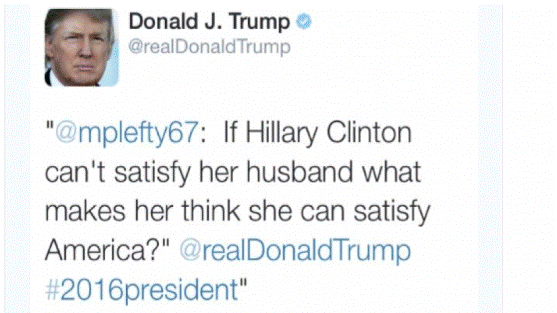
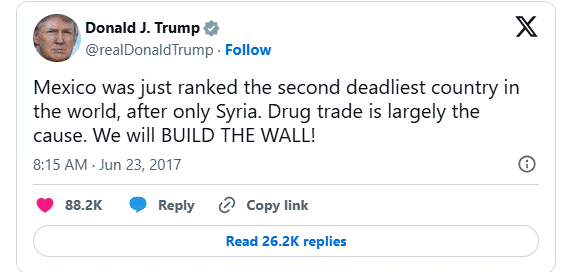
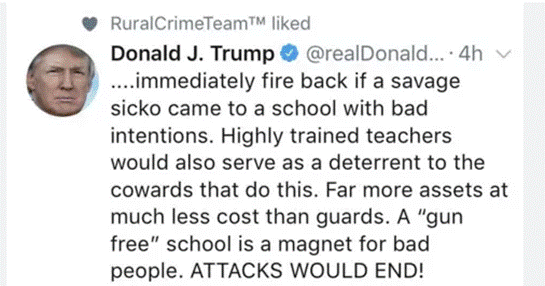
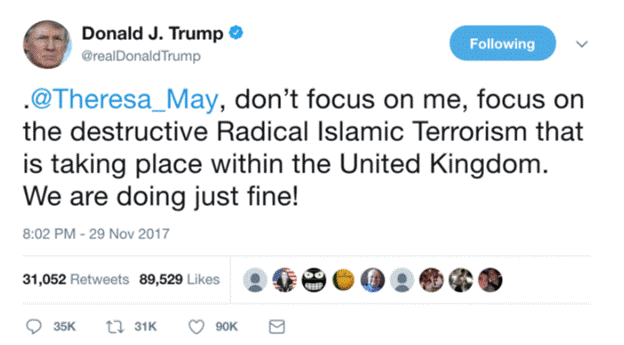
  Similarly, Donald Trump used Twitter to communicate with the collective public during his campaign (Vlatkovic, 2018). As mentioned before, attention is a commodity (Boyd, 2010), humans have limited capacity for storing information (Vlatkovic, 2018). Twitter negotiates this demand limiting posts to 140 characters, delivering swift, focused and easy to consume information amongst the saturation of digital spaces (Vlatkovic, 2018). Notifications also keep users connected and regularly engaged (Kellner, 2018). This allowed Trump to maintain a persistent presence in social media, attacking media critics who “misrepresent” him, to brag (Kellner, 2018) and to regularly interact with the public in real time (Vlatkovic, 2018). Twitter also enabled politicians to bypass the press to speak directly to voters, gaining authenticity (Vlatkovic, 2018) which is important to combatting the modern cynical political climate (Papacharissi & Trevey, 2018). The number of followers also increased Trump’s political scalability, he was followed by 30 million people compared to Hillary Clinton’s 15 million, allowing him to reach a wider audience (Vlatkovic, 2018). Interestingly, contrary to the careful consideration of audiences and appropriateness to content and the dangers of collapsed contexts (Boyd, 2010), Trump thrived by throwing this all out the window, favoring the undivided attention that controversy brings while simultaneously engaging with users on topics important to him (Vlatkovic, 2018). Such topics included the mass deportation of Mexican immigrants, banning of Muslims on entering the U.S. and sexual degradation on his political rival.
(Retrieved from https://woodstockwhisperer.info/2019/06/10/president-trump-wall/)
(Retrieved from https://www.bbc.com/news/uk-wales-north-west-wales-43212577)
(Retrieved from https://www.researchgate.net/figure/Donald-Trump-tweet-November-29-2017-Several-weeks-after-this-incident-Twitter_fig3_334544421

(Retrieved from https://secure.avaaz.org/campaign/en/twitter_ban_trump_21/)

This is coherent with Papacharissi & Trevey (2018) statement that the public are vulnerable to affectively charged claims and emotionally invoking campaigns, even if in this case it’s untrue and hateful. Furthermore, these narratives driven by fear, inuendo and lies were sustained by enduring right-wing beliefs, resistance against science (Durham, 2018) and racist media, and propaganda pushed by alt-right digital networks media such as Fox News (Altheide, 2022), websites such as Breitbart News and social media such as 4chan (Wendling, 2018, p. 2 & 51). Breitbart News challenged left-wing control of media narratives, intentionally feeding mainstream journalists fake stories that would then air on Fox News and circulate in media platforms, which ironically or unironically fueled Trump’s accusation of ‘fake news’ towards reports that did not favor him, delegitimizing the press (Durham, 2018; Vlatkovic, 2018). This form of fake news distribution is also a tactic employed by 4chan known as ‘trolling’ and comes in forms such as memes, hoaxes, twitter campaigns of bullying and defamation and spread of misinformation to incite reactions and aggravate liberals and the mainstream (Wendling, 2018, p. 10). Like Reddit, 4chan is also divided into subsections, the alt-right reside in “Politically Incorrect” (Wendling, 2018, p. 52).  Members of these section engage unchecked in racist, sexist and xenophobic exchange of ideas, usually triggered by an aversion to political correctness as they struggle to navigate society’s awareness of privilege, safe spaces and sexual politics (Wendling, 2018, p. 8). Most of these members are a generational backlash of young men threatened by the progress of feminism, ethnic minorities and the dangers of Islamic terrorism (Wendling, 2018, p. 7). These men desire the restoration of racially motivated hierarchy and gender roles (Wendling, 2018, p. 7). These are topics that underline Trump’s presidential rhetorics, thus resonate in voters to look to Trump for an easy-fix and a way to restore agency (Papacharissi & Trevey, 2018) combatting immigration, left-wing narratives and restoration of traditional roles.

Conclusion

  In this paper I have identified that social media sites give users and political bodies affordances of social change under umbrellas of: mobilization of collective networks, decentralized processes and attention commodity. Facebook, Twitter, Tumblr and YouTube amplify the scalability, mobility and organization power of collective publics and collective action (Ojala, & Ripatti-Torniaien, 2023) like Tahrir Square and play a huge role in campaigns demonstrated by the Obama and Trump administrations, providing a platform to interact with each other, distribute information and form networked communities (Shang et al., 2011). The most effective examples provided shared features of decentralized processes and attention commodity, the absence of a governing body and easily consumable content made movements and candidates feel unfiltered and authentic (Vlatkovic, 2018), which is valuable in today’s cynical political climate (Papacharissi & Trevey, 2018). Furthermore, Trump utilized attention commodity better than his political rivals, bypassing issues of audience and contexts, controversy was free attention that allowed his presence to persist and stay relevant and he was getting a lot of it (Vlatkovic, 2018). Taking into consideration Trump’s regressive attitudes and the support and mobilization of his connected networks of desperate disgruntled alt-right, I would like to propose that Trump’s influence on social change can be better categorized as social regression.

References

Aaker, J., Smith A., Adler, C., Heath, C. & Ariely, D. (2010). Yes we can! How Obama won with
               social media. In J. Aaker, A. Smith, C. Adler, C. Heath & D. Ariely (Eds.), The
               Dragonfly Effect : Quick, Effective, and Powerful Ways to Use Social Media to Drive
               Social Change
(pp. 34-39). https://ebookcentral.proquest.com/lib/curtin/reader.action?docID=589081&ppg=64

Altheide, D. (2022). Trump and the Mediated Politics of Fear. In D. L. Altheide (Ed.), Gonzo
               governance (1st ed., pp. 16-31). Routledge. https://doi.org/10.4324/9781003330837

Arya, H. B. & Mishra J. K. (2012). Oh! Web 2.0, Virtual Reference Service 2.0, Tools &  
               Techniques (II). Journal of Library & Information Services in Distance Learning 6(1),
               28-46. https://doi.org/10.1080/1533290X.2012.660878

Boyd, D. (2010). Social Network Sites as Networked Publics. In Z. Papacharissi (Ed.), A
                Networked Self
(1st ed., pp. 39-58). Routledge. https://www.taylorfrancis.com/chapters/edit/10.4324/9780203876527-8/social-network-sites-networked-publics-affordances-dynamics-implications-danah-boyd

Cadwalladr, C. & Graham-Harrison, E. (2018, March, 18). Revealed: 50 million Facebook
                profiles harvested for Cambridge Analytica in major data breach.
The Guardian. https://www.theguardian.com/news/2018/mar/17/cambridge-analytica-facebook-influence-us-election

Chadwick, A., Dennis J. & Smith, A. P. (2015). Politics in the age of hybrid media. In A. Bruns,
                  G. Enli, E. Skogerbo & A. O. Larsson, C. Christensen (Eds.), The Routledge
                  Companion to Social Media and Politics
(1st ed., pp. 7-22).
                  https://doi.org/10.4324/9781315716299

CNN Politics. (2025, April, 7). CNN Politics. https://edition.cnn.com/election/2024/results/president?election-data-id=2024-PG&election-painting-mode=projection-with-lead&filter-key-races=false&filter-flipped=false&filter-remaining=false

Delanty, G. (2018). Virtual Community. In G. Delanty (3rd Ed.), Community (3rd ed., pp. 200-
                 224). Routledge. https://www.taylorfrancis.com/chapters/mono/10.4324/9781315158259-10/virtual-community-gerard-delanty

Duraham, F. (2018). The origins of Trump’s “alternative reality”. In R. E. Gutsche Jr. (Ed.), The
                  Trump Presidency, Journalism, and Democracy,
(pp. 181-191). Taylor & Francis
                  Group. https://ebookcentral.proquest.com/lib/curtin/reader.action?docID=5228978&ppg=52#ppg=32

Freelon, D., Marwick, A. & Kreiss, D. (2020). False equivalencies: Online activism from left to
                   right. Science 369(6508), 1197-1201. DOI: 10.1126/science.abb2428

Gerbaudo, P. (2014). Populism 2.0. In D. Trottier & C. Fuchs (Eds.), Social Media, Politics and
                    the State : Protests, Revolutions, Riots, Crime and Policing in the Age of Facebook,
                    Twitter and YouTube
(pp. 67-87). Taylor & Francis Group. https://ebookcentral.proquest.com/lib/curtin/reader.action?docID=1744193&ppg=219

Gonzalez-Bailon, S. (2014). Online Social Networks and Bottom-up Politics. In M. Graham (Ed.
                    et al). Society and the internet: how networks of information and communication are
                    changing our lives
(pp. 209-222). Oxford University Press. https://curtin.alma.exlibrisgroup.com/view/delivery/61CUR_INST/12181940870001951

Hampton, K. N. (2015). Persistent and Pervasive Community: New Communication
                     Technologies and the Future of Community. American Behavioral Scientist 60(1),
                     101-124. https://doi.org/10.1177/0002764215601714

Hampton, K. N. & Wellman, B. (2018). Lost and Saved . . . Again: The Moral Panic about the
                     Loss of Community Takes Hold of Social Media. Contemporary Sociology 47(6),
                     643-651. https://www.jstor.org/stable/26585966

Hands, J. (2014). General Intellect or Collective Idiocy? Digital Mobs and Social Media    
                      Mobilization. Popular Communication 12(4), 237-250.
                      DOI:10.1080/15405702.2014.960570

Hinds, J., Williams E. J. & Joinson A. N. (2020). “It wouldn’t happen to me”: Privacy concerns
                       and perspectives following the Cambridge Analytica scandal. International
                       Journal of Human-Computer Studies 143
, 1-14.
                       https://doi.org/10.1016/j.ijhcs.2020.102498

Kellner, D. (2018). Donald Trump and the war on media. In R. E. Gutsche Jr. (Ed.), The Trump
                        Presidency, Journalism, and Democracy,
(pp. 19-38). Taylor & Francis Group. https://ebookcentral.proquest.com/lib/curtin/reader.action?docID=5228978&ppg=52#ppg=32

Lee, M. J. W., Miller, C. & Newnham L. (2008). RSS and content syndication in higher
                      education: subscribing to a new model of teaching and learning. Educational
                      Media International 45
(4), 311-322. https://doi.org/10.1080/09523980802573255

Massanari, A. (2017). #Gamergate and The Fappening: How Reddit’s algorithm, governance,
                      and culture support toxic technocultures. New media & society 19(3), 329-346.
                      https://doi.org/10.1177/1461444815608807

Nahon, K. (2015). Where there is social media there is politics. In A. Bruns, G. Enli, E. Skogerbo
                      & A. O. Larsson, C. Christensen (Eds.), The Routledge Companion to Social Media
                      and Politics
(1st ed., pp. 39-55). Routledge.
                      https://doi.org/10.4324/9781315716299

Ojala, M. & Ripatti-Torniainen (2024). Where is the public of ‘networked publics’? A critical
                      analysis of the theoretical limitations of online publics research. European Journal
                      of Communication 39
(2), 145-160. DOI: 10.1177/02673231231210207

Papacharissi, Z & Trevey, M. T. (2018). Affective publics and windows of opportunity. In G.
                      Meikle (Ed.), The Routledge Companion to Media and Activism (1st ed., pp. 87-
                      96). Routledge. https://www.taylorfrancis.com/chapters/edit/10.4324/9781315475059-9/affective-publics-windows-opportunity-zizi-papacharissi-meggan-taylor-trevey?context=ubx&refId=a74432dd-6fb1-416b-a74e-9f55f2c2d1e9

Poell, T. (2014). Social media activism and state censorship. In D. Trottier & C. Fuchs (Eds.),
                      Social Media, Politics and the State : Protests, Revolutions, Riots, Crime and
                      Policing in the Age of Facebook, Twitter and YouTube
(pp. 189-206). Taylor &
                      Francis Group. https://ebookcentral.proquest.com/lib/curtin/reader.action?docID=1744193&ppg=219

Porta, D. & Mattoni, A. (2014). Social networking sites in pro-democracy and anti-austerity
                       protests. In D. Trottier & C. Fuchs (Eds.), Social Media, Politics and the State :
                       Protests, Revolutions, Riots, Crime and Policing in the Age of Facebook, Twitter
                       and YouTube
(pp. 39-63). Taylor & Francis Group. https://ebookcentral.proquest.com/lib/curtin/reader.action?docID=1744193&ppg=219

Salem, S. (2014). Creating spaces for dissent. In D. Trottier & C. Fuchs (Eds.), Social Media,
                       Politics and the State : Protests, Revolutions, Riots, Crime and Policing in the Age
                       of Facebook, Twitter and YouTube
(pp. 171-188). Taylor & Francis Group. https://ebookcentral.proquest.com/lib/curtin/reader.action?docID=1744193&ppg=219

Shang, S. S. C., Li, E. Y., Wu, Y. & Hou, O. C. L. (2011). Understanding Web 2.0 service     
                       models: A knowledge-creating perspective. Information & Management 48(4-5),
                       178-184. https://doi.org/10.1016/j.im.2011.01.005

Trottier, D. & Fuchs, C. (2014). Theorising social media, politics and the state. In D. Trottier &
                        C. Fuchs (Eds.), Social Media, Politics and the State : Protests, Revolutions,
                        Riots, Crime and Policing in the Age of Facebook, Twitter and YouTube
(pp. 3-
                        39). Taylor & Francis Group. https://ebookcentral.proquest.com/lib/curtin/reader.action?docID=1744193&ppg=219

Vlatkovic, S. (2018). New Communication Forms and Political Framing: Twitter in Donald
                       Trump’s Presidential Campaign. AM Journal of Art and Media Studies (16),
                       123−134. https://doi.org/10.25038/am.v0i16.259

Wendling, M. (2018). Alt-Right : From 4chan to the White House. Pluto Press.
                       https://ebookcentral.proquest.com/lib/curtin/reader.action?docID=5391114&ppg=8

Wright, S. Graham T. & Jackson D. (2015). Third Space, Social Media, and Everyday Political
                      Talk. In A. Bruns, G. Enli, E. Skogerbo & A. O. Larsson, C. Christensen (Eds.),
                      The Routledge Companion to Social Media and Politics (1st ed., pp. 74-88).
                       https://doi.org/10.4324/9781315716299

Share this:

Search Site

Your Experience

We would love to hear about your experience at our conference this year via our DCN XVI Feedback Form.

Comments

32 responses to “Social Media Affordances: Donald Trump, Politics and Social Change”

  1. Cameron Roberts Avatar

    Fantastic article John, really good read. Particularly interested in how well you outlined Reddit’s architecture as encouraging the formation of toxic communities. My paper covers a very similar theme, though I haven’t highlighted Reddit’s problematic architecture as well as you have here.

    You end on a really powerful point when you say “I would like to propose that Trump’s influence on social change can be better categorized as social regression.” I agree with this point but it’s made me wonder where I think the line is.

    Do you think that Social Media as a whole is a form of Social Regression in spite of the positives you’ve outlined? If not, is it just how political campaigns utilize social media that you would consider regressive? Or is it just the especially egregious methods the Trump’s campaign and Cambridge Analytica?

    Thanks very much for the fantastic read.

    Found an interesting article here as well for anyone else that may be interested in some of the background information: https://qz.com/1782348/cambridge-analytica-used-these-5-political-ads-to-target-voters

    1. John Lim Avatar

      Hi Cameron,

      Thanks for the reply! I would love to read your paper on toxic communities as I am interested in ways to mitigate them to avoid dangerous rhetorics to be voted into power.

      I think Social Media as a whole has great powers for social change, but unfortunately it is unregulated and because of how they operate in a profit-based model thrive with content that draw in attention and user engagement whether it be positive, toxic or controversial (Abbas et al., 2021).Therefore it depends on the user and content whether Social media is used progressively or regressively.

      I would categorise regression as the undermining of recent ‘progressive’ movements such as the acceptance of women in positions of power, the integration of multicultural societies, religions and cultures into communities and the acceptance of the LGBT community, rhetorics which Trump constantly attacks and defames and mobilise/rally those with similar sentiments and perceived threats of those movements (Wendling, 2018) to support his policies and catapult him into a position of power.

      If you don’t mind me asking, does your article of Toxic communities also share sentiments of alt-right sentiments? Do you think topics within those toxic communities also share a ‘regressive’ element? I would love to read your article for myself if you could drop down the title.

      Once, again thank you for the comment and can’t wait to read your article.

      References

      Abbas, J., Wang, D., Zhaohui, S. & Arash, Z. (2021). The Role of Social Media in the
      Advent of COVID-19 Pandemic: Crisis Management, Mental Health Challenges
      and Implications. Risk Management and Healthcare Policy 14, 1917-1932.
      DOI:10.2147/RMHP.S284313

      Wendling, M. (2018). Alt-Right : From 4chan to the White House. Pluto Press.
      https://ebookcentral.proquest.com/lib/curtin/reader.action?docID=5391114&ppg=8

      1. Cameron Roberts Avatar

        Hi John,

        Absolutely, I’d love to hear what you think. It’s more of an analysis of the mechanisms that enable social media to be so polarising. Here’s the link: https://networkconference.netstudies.org/2025/onsc/5557/social-medias-contribution-to-the-polarisation-of-political-ideologies/

        I talk a lot about echo chambers in my paper and one of the conclusions I came to was that (though it isn’t explicitly said in my paper) is that communities formed around toxic ideals are considerably more likely to form regressive echo-chambers. I’d go as far to say as regressive behavior is in a toxic community isn’t just an element but a defining characteristic.

        I came across a paper published in the Journal of Computational Social Science that describe it really well by saying “Behaviors such as avoidance, unfriending, and discreditation are mechanisms that reinforce group cohesion by excluding opposing views” (Hartmann et al., 2025)

        References

        Hartmann, D., Wang, S. M., Pohlmann, L., & Berendt, B. (2025). A systematic review of echo chamber research: comparative analysis of conceptualizations, operationalizations, and varying outcomes. Journal of Computational Social Science, 8(2). https://doi.org/10.1007/s42001-025-00381-z

  2. Adina Gicic Avatar

    Brilliant article John!

    While reading your article I found it myself continuing to return to the corporate role in all of this. Although you highlight some great positives of social media use- particularly it’s ability to move individuals towards positive change, and support freedom of speech- I can’t help but think its potential ill/misuse presents a greater danger.

    Considering such platforms (i.e., Facebook, Twitter [X], Reddit), all make revenue and fundamentally must continue to exist for profit, there may be financial motivation to continue to allow inflammatory individuals to remain active on social media as they likely attract new users. As you mentioned yourself, Trump gained 30 million new followers- double Clinton’s 15 million- why?

    I guess that leads me to wonder: Who should be responsible for monitoring harmful social media use- the individual, or the platform?

    How much responsibility do you think social media companies should bear for the manner in which users engage with their platform to spread disinformation or reinforce extremist ideologies? And considering content moderation or outright banning may be viewed as impeding freedom of speech and individual autonomy, how do we preserve open discourse while preventing the spread of deeply harmful beliefs?

    Thank you again for such a though-provoking piece!

    1. John Lim Avatar

      Hi Adina,

      Thanks for the response and insightful question! Yes, unfortunately capitalist agendas usually seem to outweigh potential dangers and there does seem to be a struggle in balancing free speech and hateful rhetorics, and while its easy to blame social media companies in affording users a platform for hate, I think its better for society to be aware and question why social media and technology is used by people in negative way rather than censoring them.
      In the case of reddit and 4chan, toxic technocultures seem to form when users are pushed out of mainstream platforms or “cancelled”, where they congregate and form toxic echo chambers. Therefore, I think it would be better to address why they feel threatened by issues of race and sex, which usually comes down to issues of disruption of power and capitalism. ie. “Mexicans take our jobs and encourage crime” = issues of not only about poverty within immigrants but also companies shamelessly exploiting cheaper labor forces from desperate people rather than negotiating and offering American citizens a proper wage. Proper discussion could then inform the public that the problem is not confined to one race or group but rather government systems and unequal power distributions between citizens, governments and corporations.

      Taking into consideration Trump’s wild misinformed statements, usually to undermine Democrat’s positions (Altheide, 2020) and political parties hijacking these discussions turning them into emotionally charged dribble brawls to weaponize publics to their causes (Papacharissi & Trevey, 2018), what do you recon would be the outcome if we could facilitate an exchange or discussion and actually analyze perceived extremist ideologies between people from polar opposites? Keen to hear your thoughts.

      As for follower counts, Vlatkovic’s (2018) paper stated that Hillary Clinton invested more in Traditional Media Sources (which is wildly distrusted among the American people, because of rise in fake news) compared to Trump who prioritised Twitter dumping. Trump also utilised attention commodity posting anything and everything no matter how absurd it was as controversy brought him more free coverage even if it did not present him in a good way (Vlatkovic, 2018). Additionally, aside from his obvious alt-right supporters, he would have residual followers from his time in reality T.V. like The Apprentice, also within this cynical climate people just really love memes.

      Thanks again, Adina!

      References

      Altheide, D. (2022). Trump and the Mediated Politics of Fear. In D. L. Altheide (Ed.), Gonzo
                     governance (1st ed., pp. 16-31). Routledge. https://doi.org/10.4324/9781003330837

      Papacharissi, Z & Trevey, M. T. (2018). Affective publics and windows of opportunity. In G.
                            Meikle (Ed.), The Routledge Companion to Media and Activism (1st ed., pp. 87-
                            96). Routledge. https://www.taylorfrancis.com/chapters/edit/10.4324/9781315475059-9/affective-publics-windows-opportunity-zizi-papacharissi-meggan-taylor-trevey?context=ubx&refId=a74432dd-6fb1-416b-a74e
      9f55f2c2d1e9

      Vlatkovic, S. (2018). New Communication Forms and Political Framing: Twitter in Donald
                             Trump’s Presidential Campaign. AM Journal of Art and Media Studies (16),
                             123−134. https://doi.org/10.25038/am.v0i16.259

  3. Hayley Avatar

    Really well thought out paper, John!

    I specifically enjoyed your discussion about technological and networked publics and how they have not necessarily changed what we discuss but rather the lack of authority to moderate misinformation in the online environment.
    Especially with the federal election in Australia coming up, this is a fascinating and important topic for people to understand to identify social media’s role in influencing perceptions of campaigns and candidates. I would be interested to expand on this subject focussing on Australian political figures and their utilisation of social media platforms to build and promote the ideas of collective publics.

    1. John Lim Avatar

      Hi Hayley,

      Thanks for the interesting thought about the Australian election. If you’re interested about how political figures utilise social media platforms, you should definitely give Vlatkovic’s (2018) article a go. She goes into much deeper analysis of how Donald Trump utilised social media and his priority on gaining as much attention as possible instead of discussing actual constructive policies that does not “blame” or disadvantage a particular group of people. Although, Australian politicians aren’t on the same level of controversy as Donald Trump, there can be some parallels drawn.

      How do you think would you go about expanding on this topic in an Australian context? Would love to hear what you come with up, as I am quite worried about the amount of slander politics that is happening at the moment instead of discussing actual productive policies in Australia and the potential for toxic publics to congregate on toxic rhetorics like Pauline Hanson’s stance on immigrants and terrorism or Clive Palmer’s ignorance on welcome to country, which can already be seen in recent events with ANZAC day where particular individuals actually booed during the ceremony when Welcome to Country was being spoken.

      References

      Vlatkovic, S. (2018). New Communication Forms and Political Framing: Twitter in Donald
      Trump’s Presidential Campaign. AM Journal of Art and Media Studies (16),
      123−134. https://doi.org/10.25038/am.v0i16.259

      1. Hayley Avatar

        Hi John,

        I appreciate your thorough response. I will definitely look into Vlatkovic’s article as this is such a large topic, even just relating to the US there is such an abundance of ways Trump has demonstrated the influential power and capability for destruction held by social media. There are numerous potential Australian case studies which would be fascinating to research. Such as the recent federal election which resulted in the highest nation vote for the Greens party ever, I think this can be largely attributed to their presence on social media. Other interesting cases may be the affiliation emphasised online between Peter Dutton and Donald Trump and how this affected the results of the election.

  4. Patra Alexandria Avatar

    JC, this was such a thought-provoking read.
    It really made me reflect on how I engage with social media—what kind of content I see, how it’s shaped by algorithms, and how little control I often feel I have over that.

    I completely agree with your conclusion about the negative influence Trump has had on society. He’s shown that being deliberately offensive is a powerful way to gain attention and traction online. The fact that controversy itself can now be used as a tool for engagement and political success is honestly pretty unsettling.

    Do you think there’s still hope for social media to be reclaimed as a space for meaningful democratic conversation? Or has it become too entangled with corporate agendas and toxic digital culture to serve that purpose anymore?

    1. John Lim Avatar

      Hi Patra,

      Thanks for your time in reading my article and the interesting question. I think social media definitely still has use for meaningful conversation. Social revolutions and movements have been empowered by social media as it can provide alternative modes of conversations in countries where traditional media is censored or controlled by corrupt governments. For example the events in Tahrir Square showed the Egyptian citizens utilised social media to provide a place for discussion amongst themselves and the world of the corruption and brutality of the Police Authoritarian regime (Salem, 2014). The #MeToo movement and #BlackLivesMatter definitely brought forth awareness of silenced sexual abuse victims of women and police brutality towards the Black community in America.

      While there are definitely corporate agendas and toxic digital cultures present in social media, there are also progressive social movements that exist, therefore I think its more so to do with education and awareness of these agendas that users need to be aware of and to slow and down and deeply analyze what politicians are actually saying and why they are saying it. Do they actually care about their citizens and introduce lasting and helpful policies or are they tapping into and manipulating negative emotions to rally the cynical, scared and vulnerable publics?

      And in regards to toxic digital cultures, I think offering a place for discussion and analysis of how specific thoughts and ideologies may form the way they do, instead of branding them automatically as racists and sexists could help in curbing the formations of such cultures.

      For example: “Mexicans take our jobs and encourage crime” = issues of not only about poverty within immigrants but also companies shamelessly exploiting cheaper labor forces from desperate people rather than negotiating and offering American citizens a proper wage.

      A deconstruction of these issues, stripped from politically charged agendas could then shift a discussion from race and towards government regulation around wages and the ethical/moral compass of companies and capitalistic agendas on wages and taking advantage of vulnerable and desperate members of society. Then perhaps it could offer members of toxic digital cultures an alternative movement to follow that can actually result in change, ie. public pressure for companies to offer better working conditions and wages, instead of blaming it on other members of society who have no control over what companies do and how much they pay.

      Keen to hear your thoughts on this and what you think on how this could aid in meaningful democratic conversation.

      Thanks again Patra! Looking forward to hear more from you!

  5. Emma Mathers Avatar

    A great read!
    I found the idea of the “collective public,” using political and sociological theory to describe how organisations organise for social change and how social media is being used for liberation, very interesting.

    I also agree with Trump’s point about using social media to maintain constant engagement, bypass traditional media, and appear authentic to his online audience, especially in spaces like Twitter, Reddit or 4chan.

    With the rise of the ‘red pill movement’ and alt-right platforms gaining significant traction on social media, do you think left-leaning politicians can effectively harness similar digital strategies to build support and popularity similar to Trump’s by the next US election? What challenges might they face in doing so?

    Thanks!

    1. John Lim Avatar

      Hi Emma,

      Great point! The left do need to match Trump’s use of Social Media, I think Hand’s (2014) article could be the key. In the article Hand’s (2014) describes an idiot collective and a resonant collective, both groups of collectives can influence movements but the difference lies with the degree of social change they enable. An idiot collective is tied with neo-liberism, while their movements might seem like one that inspires social change, since the value/meaning behind their movements are almost always superficial or selfish, ie. Blaming Mexicans for stealing jobs, or within the article the movement #riotcleanup after the 2011 London riots, they may gain velocity but their duration may not endure. For example, the #riotcleanup while good in intention, is superficial as while it united the community to cleaning up and moving past the chaos and agreeing riots were bad, no real social change resulted in the movement and only benefited members of society in taking care of their own property and neighborhood. If they instead analysed the reasons for the riots, which was due to the discontent of growing disparity of wealth and poverty from surrounding suburbs, perhaps there could have been a discussion opened up and for people to inspire movement or government action to correct underlying political reasons.

      I think the left need to inspire a resonant collective which has both velocity and duration. Members of a collective who share strong feelings about a particular issue and bounce off each other and also bounces their movements to their environments just like the Tahrir Square protests. Issues that transcend past superficial inconvenience and actually address disparities in power ie. the citizens and their desire for basic human rights, better working conditions and political freedom and corrupt police authoritarian government, abuse, censorship and violence. If the left were able to properly communicate and dismantle some of Donald Trump’s rhetorics like “Mexicans stealing Jobs and are dangerous”, as issues of corporations and capitalistic agendas, poverty and government regulation of wages, they may be able to sustain a movement that resonates with more people including right-wing publics. But as it stands, I think both left and right wing parties, Democrats and Republicans, are so tied in with corporate support that they will be unlikely to do so, which ultimately comes down to the general people and if they are able to mobilise their communities and force their governments to act, which in my opinion is the real challenge the U.S. will face, especially when most people seem to be ignorant because it is easier than being educated.

      Do you think this is a fair statement? Do you have any suggestions to particular issues the left should tackle and analyze deeper within US politics and rhetorics? If so what are they?

      Thanks again Emma, looking forward to your response!

      References

      Hands, J. (2014). General Intellect or Collective Idiocy? Digital Mobs and Social Media    
                            Mobilization. Popular Communication 12(4), 237-250.
                            DOI:10.1080/15405702.2014.960570

  6. Edward Nguyen Avatar

    Amazing article John!

    You really pin point the power that exists within social media.

    It’s absolutely terrifying how people in power or politicians can communicate with its audience in real time where this was not so prevalent back in the past.
    With the rapid growth the community of ‘trolls’ that exist amongst social media and politicians with agendas that are definitely questionable such as Trump, and even now in Australia’s position with it’s election to come up, it’s scary to see how much a person’s decision or mind can be swayed with spread misinformation.

    Scary stuff!

    1. John Lim Avatar

      Hi Edward,

      Thanks for the read! Yeah it is pretty scary! Do you think we’ll be able to combat this so we can get some great leadership in Australia?
      Looking forward to your thoughts!

  7. Alicia Avatar

    Hey JC, this was a really interesting read!

    I particularly found the apparent absence of robust regulatory framework in certain online spheres to be rather concerning. I think the inherent ambiguity within these digital environments complicates the identification of appropriate bodies for arbitration. However, the recent legislative development in the United Kingdom, namely the Online Safety Act 2023, introduces the potential for holding social media platforms such as Facebook accountable for deficiencies in safeguarding content for minors. I know this is a distinct issue within it self, completely seperate to themes within your article however, this legislative action illustrates the capacity for government intervention. Nevertheless, I think the desire of many governments to challenge the influence of major technology companies remain a pertinent question.

    1. John Lim Avatar

      Hi Alicia,

      Thanks for the read! That is very interesting for the U.K. to develop that regulation. What were the factors that influenced the Act and how do you think it has impacted U.K. and digital spaces? Do you find it sufficient in its protective parameters? Would love to know more!

      Thanks again!

  8. Aparna Avatar

    Hi John,

    This is a well-researched and thoughtful paper. You did a great job in analysing how Donald Trump used social media to build and influence political outcomes. Also, the comparison with the earlier political movements, like the Tahrir Square protests and Obama’s campaign helped me to perceive both the positive and negative power of digital platforms in shaping public opinion and action. It connects well with wider discussions on how social media alters political engagement, particularly in a time when many people feel disconnected from traditional politics. I found the discussion on “attention as a commodity” especially relevant, as it elaborates how Trump’s controversial style kept him in the spotlight. Something that came to my mind while reading the paper was how do decentralised online movements maintain momentum or accountability once they gain visibility, especially when there is no clear leadership or shared long-term goal? I would like to know your perspective on this.

    Thank you for an informative and insightful read.

    1. John Lim Avatar

      Hi Aparna,

      Thanks for your feedback! Joss Hands (2014) has a great article on General intellect and Collective Idiocy describing Resonant and Idiotic collectives and how each group can sustain a movement. The difference between the two is measured by velocity and sustainment, where velocity describes how fast and how far a movements expands, exposing lots of people to the movement, sustainment describes how much it is shared, how often and is also influenced how deep people care about the movement.

      When Hands (2014) talks about idiot collective, there is velocity but not sustainment, usually to do with the sentiment of the movement. He gives an example of the London Riots in 2011 and the trending hashtag #riotcleanup. While the movement inspired Londoners to clean the streets and help their follow neighbors and criticize that riots are bad, there was no sustained change initiated by the movement. He reasons that while the movement was positive, the movement only served neoliberalistic sentiments, in this case it was about destruction of property and how to take of one’s own belongings. Joss (2014) explains that for there to be real change, the subject focus should transcend beyond the self and serve the greater community. He theorizes if focus was instead to address the imbalance of poverty and wealth from surrounding neighborhoods, the riots would have less likely taken place now and in the future.

      Which is why I found the Tahrir Square protests to be such a great example. It contained both velocity and sustainment. Sustainment in that the subject matter was of great importance to the people, and furthermore, freedom and basic human rights resonated with the whole world. So while both events were shared a lot, Tahrir Square was shared and spread for a longer period of time and wider reach, from the people suffering in Egypt, to other platforms or News stations covering the issues and sharing to the world, feeding back into the Egyptian people who was even more motivated, sharing more about their suffering and demands into a cycle that eventually led to change.

      I think if people were to shift conversations about superficial subjects and dig deeper into root causes such as imbalances of power and wealth there would be more sustained changes. What are your thoughts on this?

      References

      Hands, J. (2014). General Intellect or Collective Idiocy? Digital Mobs and Social Media
      Mobilization. Popular Communication 12(4), 237-250.
      DOI:10.1080/15405702.2014.960570

      1. Aparna Avatar

        Hi John,

        Thanks for introducing me to Hands’ concept of idiot collective- definitely helps to reflect what makes the movements sustain. I agree with you that shifting conversation towards deeper issues like inequality is more likely to bring sustained change and strengthen collective effort.

        Thank you.

  9. Yana_Chua Avatar

    Hey John !
    Love the paper as it presents an interesting analysis of how social media has shaped political campaigns, particularly in the case of Donald Trump. The comparison with movements like Tahrir Square and Obama’s campaign is insightful, highlighting the power of decentralized processes and attention economy. It’s fascinating how the paper demonstrates how social media’s ability to bypass traditional political channels has empowered movements and figures like Trump, even when their rhetoric is often divisive. Do you think that, in the future, social media could replace traditional political structures like political parties or governments? How would this change the way we think about democracy or global governance?

    1. John Lim Avatar

      Hi Yana,

      Thanks for the response. That is a very difficult question to answer! But I do love a challenge.
      I think as it stands political parties and governments serve their own needs and mask it as social issues or confuse/blind/distract us by pitting conflicting views against each other instead of mediating and fixing root issues such as imbalances of power, wealth and fear of the unknown. So while I would love for political parties and governments to disband, someone still needs to manage the country, allocate resources and make decisions etc. Perhaps that every issue that a country faces could be voted upon by the people through social media, like a poll, but then again that would take a lot of time and resources of the citizens everytime we had to decide on an issue and how would you enforce that? And there is always things like data harvesting that can skew the outcome and even then how would we know votes have been counted properly? There’s a lot of things to think about here when considering an alternative government body that I don’t think I will be capable of answering. What are your thoughts on this? What did you have in mind to replace traditional political structures? Would love to hear your ideas, very complex but very interesting idea Yana!

  10. Milagros Wade Avatar

    Hi John,

    Thank you for this well-researched and deeply insightful analysis. I found it both fascinating and terrifying to reflect on how political and social instability can create fertile ground for the rise of authoritarian or extreme figures – Donald Trump being a clear example, echoing similar patterns seen in the 1930s. I completely agree that while his use of social media – particularly Twitter – was strategic, it has had a profoundly detrimental impact, not only on both his election campaigns in 2016 and 2024 but also on political discourse more broadly.

    I really appreciate the way you’ve provided a solid theoretical framework for understanding the mechanisms and emotional triggers behind his digital strategy. It helped me connect the dots between affective politics, media manipulation and the erosion of democratic norms.

    Thanks again for such an engaging contribution.

    1. John Lim Avatar

      Thanks for the read Milagros! Really appreciate the feedback and kind words!

  11. Jacinta Robless Avatar

    Hi John,

    Your paper did incredibly well at correlating multiple themes and offering a highly engaging topic with a well researched and executed analysis. I found your discussion very interesting and informative, particularly for how you addressed the positives and negatives of social change movements instigated through media platforms. Covering the topic of politics and Trump’s rise to his president candidacy, was the perfect example to explain the social media strategy behind an outspoken controversial character, and how they gain publicity and fans. I have always been curious as to how an extremist person like trump with conflicting views, dominates media attention and remains relevant in current times. Do you think the media platforms which enable a controversial person’s rise to prominence, should be held accountable if adverse societal repercussions follow?

    Thankyou for a great informative read on these trending topics!

    1. John Lim Avatar

      Hi Jacinta,

      Thanks for the read! While social media enables the capacity for spreading problematic rhetorics, I don’t think the responsibility solely relies on them but the people who choose to support such rhetorics and the lack of education or platform/means to negotiate and dissect why people engage in such rhetorics, which I think social media also has the same capability, instead of fighting each other we can learn to understand each other instead. I think social media is just a vehicle but not the driver, people are the ones who choose what is acceptable and what is not acceptable in society.

      Very interesting question though Jacinta, what are your thoughts? How do you think should we hold social media accountable if we do decide that social media has become the root of the problem?

  12. Gracias Avatar

    Hi John,

    Great work on your paper! I really liked how you explained the role of social media in shaping political movements, which I also explored in a similar theme in my paper, and this just shows how politicians utilise social media to foster civic engagement and grassroots activism, no matter where. Your analysis of how decentralised platforms can both mobilise and polarise audiences is thought-provoking, particularly in the context of how one figure like Donald Trump can become a magnet for toxic rhetoric.

    It’s fascinating to see how digital platforms can empower or destabilise, depending on how they’re used. I’d be curious to hear your thoughts on how we might harness this influence more responsibly moving forward.

    1. John Lim Avatar

      Hi Gracias,

      Thanks for the response! I think its just a matter of educating people why other parties might feel relatable to or support a movement whether they are negative or positive and dissect deeper discourse surrounding those subjects rather than attacking or censoring opinions that people don’t align with as they can pushed or congregate into darker corners like some subreddits and 4/8chan. By deeper discourse I mean breaking down issues to core political, socio, economic or imbalance of power rather than just boiling it down to simple and convenient rhetorics like racism, sexism etc.

      Let me know what you think of this. Do you have any other ideas in mind? Would love to hear them. Thanks again!

  13. Lily Avatar

    Hi John,
    This was a super interesting and timely read. You did an excellent job of exploring how social media communities can be mobilised for political action. A very relevant topic, considering the amount of political parties we are seeing turn to social media in hopes of recreating something similar. It seems that every politician is getting the unfiltered and authentic rebrand, with TikTok edits and Instagram memes abounding. I’d love to get your thoughts on the whole ‘Kamala is brat’ phenomenon that occurred on TikTok prior to the 2024 election, if you have any:
    https://www.tiktok.com/@flextillerson/video/7388373417835121962?q=Kamala%20brat%20edit&t=1746712362039

    The popularity of the KamalaHQ account with Gen-z users seemed to suggest success. Do you think this was a successful example of the left utilising social media for political gain? Or was it a performative attempt that left something to be desired? Curious to hear what you think, and thank you for the thought-provoking read!

    1. John Lim Avatar

      Hi Lily,

      Thanks for the feedback! Really appreciate it. To be honest I never followed anything about Kamala, I did hear that she fumbled a lot and said stuff that didn’t make sense, although not to the same degree of idiocy as Donald Trump, so it’s hard for me to say. But what I can comment on is the effectiveness of social media and its relation to political gain, which I can best describe with Joss Hand’s (2014) article on collective idiocy and resonant collectives.

      His article basically explains that the success for movements to ignite change is their capacity for both velocity (how much the movement is shared and how fast it is shared) and sustainment (how often and how long the movement is circulated for). Hands (2014) explains it excellently within his articles where movements that are initiated for personal gain ie. to protect their financial, property or economic interests (in his article he describes the London riots and #riotcleanup where citizens came together to clean up the streets after the 2011 London riots, while positive in gesture, only mattered to those affected by the destruction of the riots, but did not address the disparity between the wealthy and poverty suburbs that ignited the riots in the first place), while there is velocity, there is no sustainment since the subject matter does not resonate within most people in London.

      Hands (2014) also mentions the Tahrir Square protests in Cairo where the citizens in most of Egypt protested against the corrupt and abusive Authoritarian Police regime, this movement had both velocity and sustainment, as the movement benefited most citizens fighting for basic human rights, working rights and political freedom and it also resonated with the world, as I’m sure most people can agree that we humans value freedom and thus was sustained and circulated til the regime was disbanded and their government stepped down.

      In relation to Kamala’s use of social media, I would say it was a performative attempt, if she wanted to initiate a movement that resulted in political and social change she would address issues such as imbalance of power especially between corporations and the American people, ie. source of minimum wages, gap in wealth and power etc.

      But that’s just my thoughts though based on what I’ve researched. If you’d like to know more Hands (2014) article is linked on the bottom. I do suggest giving it a look, it’s very interesting to consider, especially when there is so much clicktivism and slacktivism during the social media age.

      Would also love to hear your thoughts on my response, Hands’ article or both or any other ideas that have sparked from this discussion.
      Thanks again Lily!

      References

      Hands, J. (2014). General Intellect or Collective Idiocy? Digital Mobs and Social Media
      Mobilization. Popular Communication 12(4), 237-250.
      DOI:10.1080/15405702.2014.960570

  14. Emily Avatar

    Well done JC! This is a great read – it’s compelling and provides a well-researched analysis of how social media affordances, particularly decentralized communication and attention-driven algorithms, have reshaped political engagement—highlighting both the empowering potential of collective action (as seen in Tahrir Square and the Obama campaign) and the dangers of toxic rhetoric proliferation (as exemplified by Donald Trump’s campaigns).

    How do you think social media platforms can balance their role in enabling free political expression with the responsibility to limit the spread of harmful or extremist content?

    1. John Lim Avatar

      Hi Emily!

      Thanks for your time reading my paper and the lovely feedback! During my time at this online conference I’ve read great ideas about how we could limit extremist content, one of them includes the demonetization of social media platforms that profit off of political content as people could just be inducing hateful ideologies to gain attention and engagement on their platforms without regards to the side-effects of the topics they spread. Of course it has its limits as influencers have learned to curb that censorship by introducing their content as streams or another genre while they discuss politics at the same time. Its a hard issue to tackle and one that needs more research.

      I think the most effective way to go about it as education and dissect extremist content to its core and usually it always has something to do with gaps in power between the wealthy and those in poverty which politicians skillfully manipulate to their favor. One example I’ve used throughout the conference is Donald Trump blaming the Mexicans for taking American’s jobs and increasing crime rate. But in reality we should be looking at corporations abusing vulnerable immigrants and bare wages over hiring Americans and providing appropriate wages and honing on crime rates as an issue contributed by poverty, which again is an imbalance between wealth and power.

      Another brilliant example I found was Wendling’s (2018) book where he discussed that the Alt-right are mostly made up of people who are just confused about gender politics and believe that their social standings or lack of is caused by the success of ethnic groups and women in the workplace, so they need someone to blame that their social standings (white men) aren’t what they used to be maybe half a decade or more ago.

      Although, these are just my theoretical ideas for solutions and even providing a platform for such discussions can still be challenging while political oppositions and emotions are volatile. What do you think? Do you think this could work or flop or do you have other ideas how we could curb the spread of extremist content? Looking forward to your thoughts. Thanks again Emily!

      References

      Wendling, M. (2018). Alt-Right : From 4chan to the White House. Pluto Press.
      https://ebookcentral.proquest.com/lib/curtin/reader.action?docID=5391114&ppg=8

  15. Georgia W Avatar

    Hey John,
    A very well supported essay covering so many crucial aspects of the way that users are able to engage online and connect with other users. I thought the way you were able to speak on several platforms, such as reddit, twitter and YouTube, provided great evidence of the scope and reach that these platforms had during the 2016 election of Trump. The elucidation of the way that all of these platforms were able to operate with very limited fact checking or content regulation, and was instead supported by an algorithm that focused on visibility and post popularity was insightful. It no doubt played a very significant role in the incredible way that many of Trump’s ridiculous and inflammatory comments were able to get as much coverage as they did from both media and new outlets, as well as every day people that were not only in America, but across the world too. I would be curious to hear your thoughts on whether you think these platforms changed much in the most recent election? Or whether the already tumultuous political climate served to further align people to Trump, through his confident presentation as a leader, the reach and support he was able to accrue, and the bold messaging he was able to present?

    Just as a point of improvement for future essays, I found that in some paragraphs you heavily relied on supporting evidence and only one source for your definitions/ arguments, which made it a little confusing to follow. I also was not familiar with the Tahir Square incident and how that directly linked to Donald trump? Despite these small points of improvement, it was a very thoroughly substantiated essay. 🙂

    I have also written on digital platforms and the way that influencers are able to spread messages via their platforms, with a specific focus on women in the fitness industry. Here it is if you wanted to check it out! https://networkconference.netstudies.org/2025/ioa/4970/women-and-the-fitness-industry-how-emmaline-howard-is-helping-to-change-our-relationship-with-health-and-fitness/