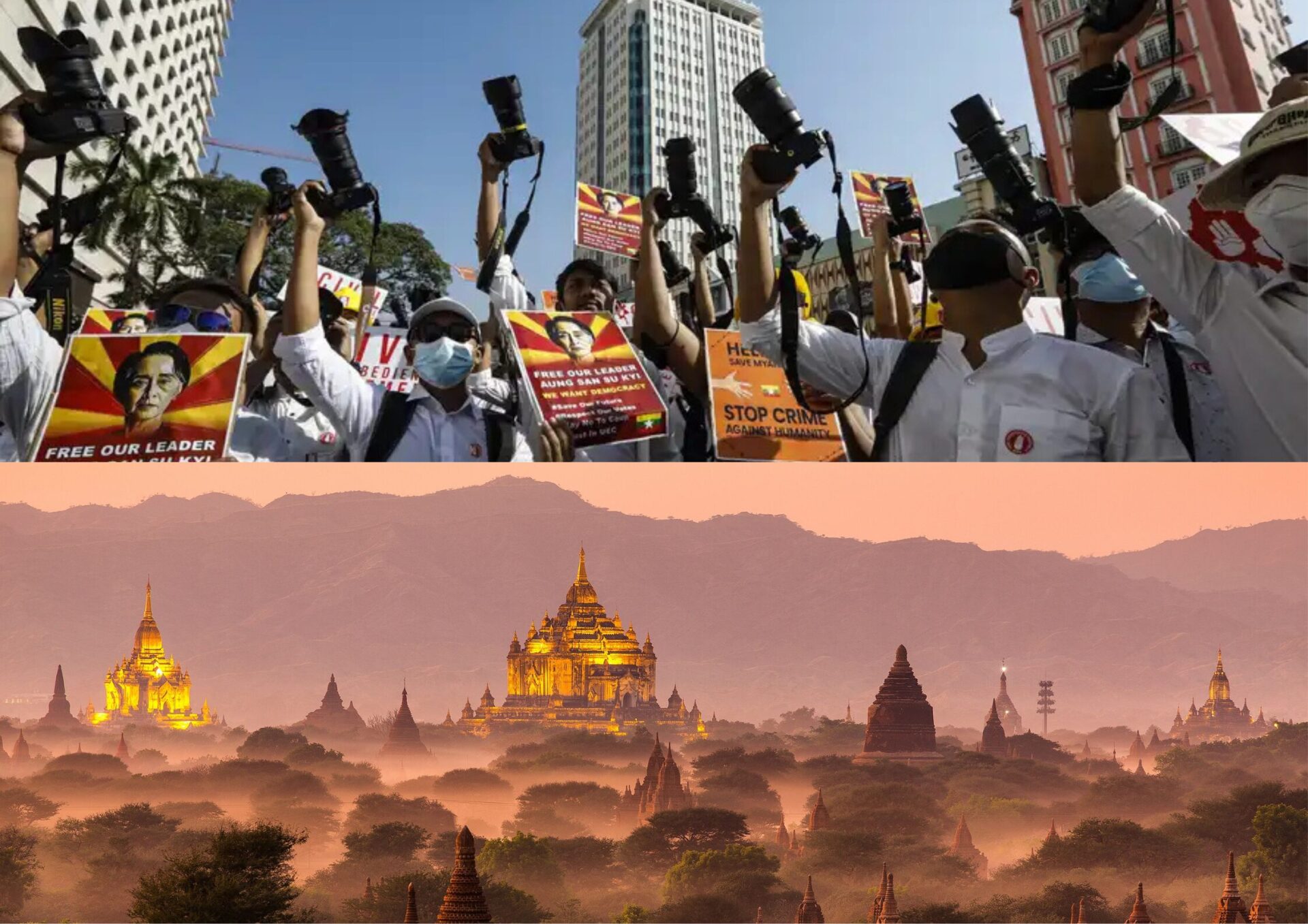
Social media gave Gen Z immigrants like me a stage, however, it also demanded a performance. To be visible online, we often have to ghost parts of ourselves. Hiding the messy and real stories that do not fit platform trends or audience expectations.
This paper explores how digital spaces shape immigrant identities, forcing a constant negotiation between authenticity and visibility.
In the end, we are seen, but not fully known. Performing to belong in a world that filters out complexity.
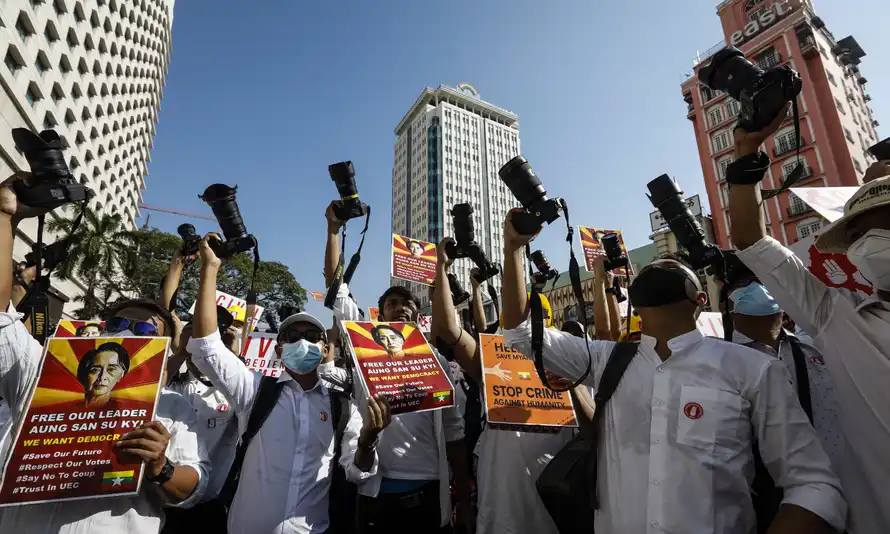
Between Screens and Silence
In the digital age where connection is often defined by interactions on the internet, there is a stark contrast between my online life and my family’s digital silence in Myanmar. While I actively engaged with the world through online services through scrolling and messaging, they remain disconnected due to the circumstances of control and censorship. As a Gen Z immigrant that grew up in Australia, social media has been more than just a space to pass time for me. Social media is a space where I have constructed my identity, gained visibility, and extensively shaped narratives about who I am and where I am from. But within this same space, I have also learned to display only the most polished and presentable version of myself, strategically omitting the chaos of the experience of cultural disconnection, homesickness, and the growing ache of not fully belonging to either world.
In many ways, visibility became a form of invisibility. These experiences demonstrate a broader tension within digital life, a life where social media allows for a powerful sense of self-expression whilst simultaneously demanding a constant presence of performance and perfection (Papacharissi, 2010). For Gen Z immigrants, social media platforms offer a double-edged digital experience as it allows for individuals to be visible online but conflicts with our emotional realities of displacement and struggles with cultural belonging. Understanding this contrast requires exploring beyond personal narratives and understanding the deeper system in place, the process where platform expectations and cultural frameworks shape the construction and perception of online identities.

Platformed Performances of Belonging
The experience of being visible online is not neutral, particularly for those straddling in between multiple cultural contexts, instead it is shaped by the performance of algorithms and the invisible chores of presenting a version of an individuals’ self that they feel is both authentic and acceptable. Theories of online identity, digital performance, and platform cultures provide the framework for understanding this tension. Bullingham and Vasconcelos (2013, p. 102) analyse Goffman’s foundational theory of the representation of self and acknowledges that it positions identity as something we perform depending on the “stage” we are on. This idea becomes amplified in the digital world as there no longer any physical backstage with audiences now spanning across numerous cultures, generations, and belief systems. Social media platforms intensify this performativity as it turns everyday interactions into measurable content that can be judged and monetised.
McKinlay (2010) also explores Judith Butler’s concept of performativity and reports that identity is not fixed and is instead continually produced through repeated actions. When discussing the context of social media, these actions can take the forms of carefully curated posts, aesthetic analysis, or self-validating interactions that are shaped by the algorithms. Digital realms are not simply a space for communication but are instead an environment shaped by what the platforms allow (Abidin, 2021). Abidin (2021) further examines how visibility is tied to the emotional labour and the architecture of platforms, concluding that the way that we construct identity is always filtered through the limitations and ability of the platform itself. Being visible in these environments is a form of power despite also being a source of vulnerability as digital visibility can provide both validation and exposure, especially for those who navigate cultural displacement. These theoretical perspectives assist in analysing how identity, vulnerability, and performance intertwines into the real-life experiences of Gen Z immigrants who are actively engaged with social media as both an environment for belonging and a space of tension.

Finding (and Fitting) Ourselves Online
For many Gen Z immigrants, social media offers one of the few spaces where our complex identities can be openly explored and recognised. Offline environments often possess barriers of language, cultural differences, and racialisation where we are often alienated, and on the other hand the online spaces provide an environment where visibility can be reclaimed on our own terms. In my personal experiences, social media allowed me to create a version of myself that would be well-received, an identity that defied assumptions about where I came from and unbounded by experiences that I had survived. Leaver (2015) argues that our digital tracks began long before we became aware of them and are often shaping how we have come to perceive ourselves.
The act of posting unassuming selfies, quotes, or art can serve as a process of consolidating the identities of young people who are navigating the ambiguity of their culture (Palomo-Domínguez et al., 2024). Jacobsen and Barnes (2020) also reinforce the idea as they show how social media platforms like Instagram have shaped Gen Z’s s behaviours by creating an internalised pressure where they need to perform on the platform with success, confidence, and meet their standards of aesthetic. However, these performances cannot be deemed as entirely unauthentic. In many ways, they do reflect an aspiring self as a version of identity is created where marginalised users author their own narratives in ways that are not possible in traditional media or real-life.

The Emotional Cost of Being Seen
While social media visibility is empowering, it also exposes Gen Z immigrants to emotional stress and the actions of monitoring oneself. Edy Susilo et al. (2025) links the process of excessive visibility to anxiety, self-esteem issues, and compulsive seeking of validation. This link is especially applicable to Gen Z users because they manage cultural identities, and their visibility can lead to emotions of anxiousness and reduced self-esteem. This constant performance requires emotional labour and often goes unnoticed by viewers; however, it is deeply felt by the user themselves. Abidin (2021, p. 5) describes this as a “visibility labour” as there is an ongoing effort to maintain a structured identity that fits within the expectations of the chosen platform. For personal circumstances, this meant worrying about whether my posts would feel ‘too political’ or ‘too foreign’ for some of my audiences. Editing captions, creating and deleting drafts, and perfecting the tones of a post became a part of the online experience until self-expression no longer felt freeing, and instead felt tiring.
While users may appear to be in control of their accounts and feel overseeing powers, the platforms are the ones who shape how content is seen and absorbed. Papacharissi (2010) reminds us that social media visibility is always managed by systems that are built in to benefit certain favourable behaviours. Sablosky (2021) highlights that the more that users cater to aesthetic norms and approval-seeking systems, the more engagement is received. Adversely, when users try to speak openly about lived experiences and culture, some posts often go unnoticed or buried within the systems of the algorithm’s control as seen with how Facebook’s moderation practices are negatively affecting Myanmar’s ethnic visibility (Sablosky, 2021). This structure creates a feedback loop where aligned content is repeatedly available for the viewers even if it may not reflect the authentic life-experiences of people, thus creating emotional burnout and reduced trust in users as they struggle to express themselves in the digital realm.

Who Gets Heard, Who Gets Hidden?
Social media platforms are not simply just a space for expression of its users and is instead an architecture that controls which voices are heard and which ones fall deaf. Gen Z immigrants do not engage with these platforms as a blank slate and rather experience their voices being filtered through designed systems that aim to promote a particular view and bury its counterpart. Li et al. (2019) demonstrates that the features of algorithmic feeds and online trends push users to create content that matches what the platform rewards. These algorithmic systems tend to promote posts that are simplified and visually engaging, omitting content that is deep or culturally experienced stories. Edy Susilo et al. (2025) point out that the way that content spreads on these platforms is influenced heavily by emotional impact rather than depth and nuance, meaning that stories of Gen Z immigrants about their identity, family history, or political experiences may not get the same attention unless it is simplified and constructed to fit the algorithmic trends. Content moderation and the built-in bias of systems further limits what forms of identity can be expressed in a safe manner. Sablosky (2021) and Smith and Smith (2022) reported that users who discuss topics about ethnicity or political conflicts, especially in regions like Myanmar, often have their posts removed by the platform or a restriction placed on the post.
For Gen Z immigrants, social media platforms should serve as a space for expressions of identity and connection to communities (Edy Susilo et al., 2025). However, the nature of algorithms makes it hard for young immigrants to speak about their personal cultural issues without facing the platforms placing penalties or silencing their stories. When certain stories continue to be overlooked or removed, this drives users to change how they post so that they can prioritise visibility. Over time, Gen Z immigrants may opt to trim down the complex nature of their experiences or avoid the sensitive topics in their stories due to the exhaustion of not being able to authentically express themselves and instead replace their content with what performs well (Jacobsen & Barnes, 2020). This leads to the wider debate of whether visibility is equalised for everyone.

The System Decides Who Is Seen
Some can argue that social media gives everybody the same opportunity to speak up for themselves, express themselves and overall, a space where we can all be seen as any user can post and go viral. However, this view is a simpler way of analysing the nature of social media and ignores how platform systems and social structure works differently for each individualised user. Burrett (2017) argues that the digital space is not autonomously and automatically fair, instead it is quite the opposite, and it allows for its systems to reflect the same inequalities that already exist offline. Although everyone has access to the tools, it does not mean that everyone has the same chances of being heard.
Pertiwi et al. (2022, p. 210) brings up the concept of “context collapse” to describe how users often feel that they need to speak to different audiences such as their friends, families, and strangers all at once. For Gen Z immigrants, this means that they can post something that pleases one part of their audiences but offends the other part. Instead of being able to express their emotions and experiences freely, they end up editing their identities to stay safe and accepted (Pertiwi et al., 2022). While digital platforms may seem like an open space for content, these same platforms decide which content is seen and which remains invisible as engagement is not of neutral nature. As Sablosky (2021) explored in the case of Myanmar, posts that are culturally detailed and complex stay hidden for the promotion of posts that are simplified and visually adhere to the system’s architectural design. This means immigrant users are under a constant pressure to either adjust or censor their real emotions and voices. When discussing topics of identity and equity online, it cannot be assumed that platforms perform the same way for everyone. What looks like freedom for us may act as limitations of others as social media is not simply a digital space and is instead a system built on filters, and not everyone gets through those filters equally.
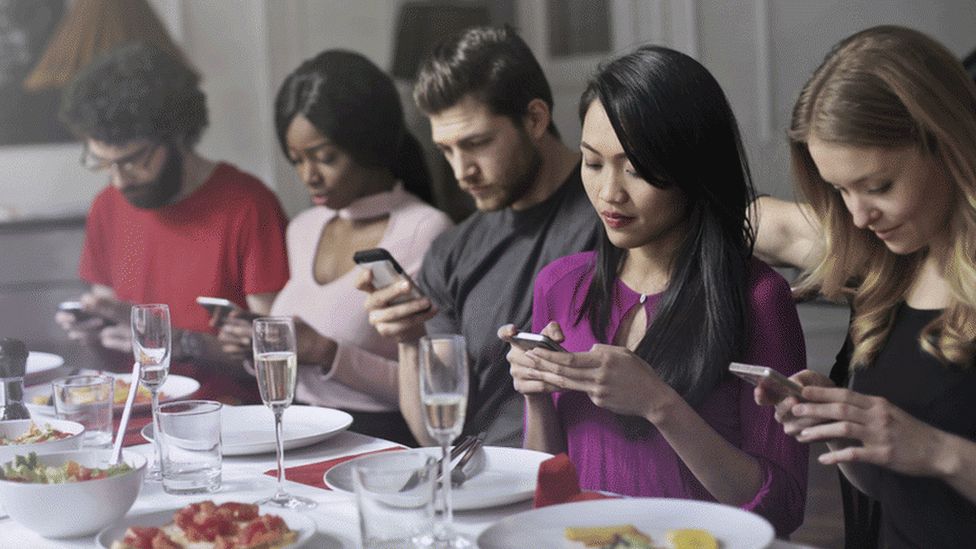
Ghosts in the Machine: Identity as Negotiation
Digital identity is not something that is simply created, instead it is something that is continually being reshaped by the user to cater to those who are watching, validating, critiquing, and engaging. Visibility acts as both a powerful tool and an unassuming trap. For Gen Z immigrants like me, the curated self-identity is a form of survival as it’s a performance crafted between the borders of invisibility and storytelling. Social media gives us the power to be seen, however it rarely ever gives us a space where our identities are whole. We are only visible as much as the system allows us to be, leading to the fact that identity is not expressed online and is instead negotiated (Edy Susilo et al., 2025). Immigrant youths learn quickly that sharing online comes with risks, meaning that oftentimes silence feels safer than honesty.
The idea that visibility automatically means empowerment does not stand when analysing how these systems have been set up for each individual person and their backgrounds. Visibility is empowering for some, exhausting for others, and for many it is both as platforms do not make further space for complex emotions or cultural experience that go against what the algorithms favour. Smith and Smith (2022) acknowledge that moving forward, platform designs need to shift itself in support of complex and nuanced expressions of oneself, including better content moderations and an open understanding of cultures. Moreover, the system needs to lessen the focus on metrics that transform identity into products as Gen Z immigrants, and other marginalised individuals, deserve visibility without the need to perform for its reward.

References
Abidin, C. (2021). From “networked publics” to “refracted publics”: A companion framework for researching “below the radar” studies. Social Media + Society, 7(1), 205630512098445. https://doi.org/10.1177/2056305120984458
Bullingham, L., & Vasconcelos, A. C. (2013). The presentation of self in the online world’: Goffman and the study of online identities. Journal of Information Science, 39(1), 101–112. https://doi.org/10.1177/0165551512470051
Burrett, T. (2017). Mixed signals: Democratization and the myanmar media. Politics and Governance, 5(2), 41. https://doi.org/10.17645/pag.v5i2.831
Edy Susilo, M., Prayudi, P., & Yanu Florestiyanto, M. (2025). Oversharing behavior in gen Z on social media. SHS Web of Conferences, 212, 04022. https://doi.org/10.1051/shsconf/202521204022
Jacobsen, S. L., & Barnes, N. G. (2020). Social media, gen Z and consumer misbehavior: Instagram made me do it. Journal of Marketing Development and Competitiveness, 14(3). https://doi.org/10.33423/jmdc.v14i3.3062
Leaver, T. (2015). Researching the ends of identity: Birth and death on social media. Social Media + Society, 1(1), 205630511557887. https://doi.org/10.1177/2056305115578877
Li, Y., Yang, S., Zhang, S., & Zhang, W. (2019). Mobile social media use intention in emergencies among gen Y in china: An integrative framework of gratifications, task-technology fit, and media dependency. Telematics and Informatics, 42, 101244. https://doi.org/10.1016/j.tele.2019.101244
McKinlay, A. (2010). Performativity and the politics of identity: Putting Butler to work. Critical Perspectives on Accounting, 21(3), 232–242. https://doi.org/10.1016/j.cpa.2008.01.01


Hi Shannon Kate, You’re right to ask; it is incredibly difficult to police these issues today. Predatory behaviour isn’t exclusive…