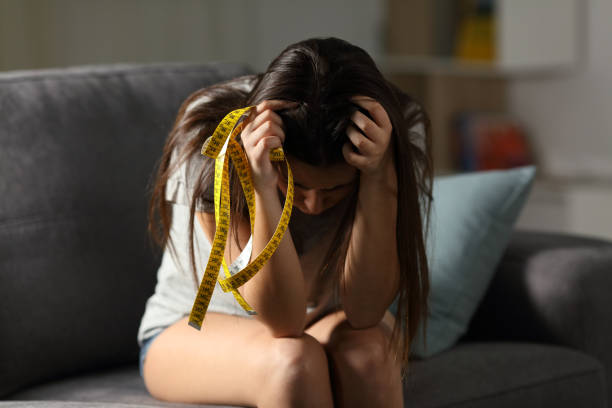
This essay examines the significant impact of meticulously curated online identities on the body image of young teenage women in Australia, where a majority report dissatisfaction linked to social media. It delves into how platform features facilitate idealised self-presentation, feeling upward social comparison and internalisation of often unattainable beauty standards. The analysis considers the role of social comparison theory, the potential for algorithmic amplification of harmful content, and the influence of broader Australian cultural beauty ideals in exacerbating these negative effects on self-perception and well being.
“Almost two thirds (61.7%) of young Australians aged 12-18 reported that social media made them feel dissatisfied with their body”. (Nguyen, 2024). This figure is particularly concerning given the critical development stage of adolescence, where body image significantly influences self-esteem, social interactions, and overall mental well-being, with persistent dissatisfaction potentially leading to long-term negative consequences. The visually driven nature of platforms like Instagram, with its emphasis on visually perfect grids, the prevalence of airbrushed selfies and sponsored content featuring seemingly flawless individuals, and TikTok, where fleeting videos often showcase idealized aesthetics, has created a unique social environment for young people. In Australia, as elsewhere, teenage girls are constantly exposed to meticulously crafted online presentations of their peers and influencers, often involving filters, editing, and strategic curation designed to project an idealized image. Unlike traditional media with limited exposure, this constant visual consumption readily accessible at any time, fosters an environment where young teenage girls are highly prone to engaging in upward social comparison, evaluating their everyday lives and appearances against the often-unattainable perfection presented online. Excessive exposure to curated and often unrealistic online identities presented on social media platforms significantly contributes to heightened self-doubt and body image issues among young teenage women, who often compare their real selves to these idealized online personas.
Social media platforms inherently provide the tools and affordances necessary for users to meticulously construct and project idealized versions of themselves. These platforms provide tools and features that allow individuals to accurately select and edit the images and information they share, often highlighting positive aspects of their lives while omitting less favourable details. This selective sharing fosters the creation of polished identities that may not fully reflect one’s authentic self. Harris & Bardey (2019), conducted a study that reveals a disconnect between how observers perceive Instagram user’s personalities and the users self-reported personalities. This discrepancy suggests that users engage in strategic self-presentation, often showcasing enhanced or curated aspects of their lives. The research highlights the “halo effect”, where aesthetically pleasing profiles can lead to assumptions of more positive personality traits, further incentivizing users to present an idealized image. The ease with which users can edit photos, select flattering angles, and control the narrative of their posts contributes to this phenomenon. This carefully constructed online persona may not accurately reflect the individual’s true personality or daily life, but rather a version they wish to project to their audience. Individuals often engage in selective sharing, choosing to post only the most positive and visually appealing aspects of their lives, effectively constructing a “highlight reel” that omits everyday realities. The widespread use of photo and video editing tools and filters further enables this idealization by allowing users to enhance their appearance and aesthetic quality of their content. Moreover, curated captions and narratives accompany these visuals, often presenting a more positive or exciting interpretation of events that may be entirely accurate. Users also engage in strategic timing and frequency of posts to manage their online presence and create a desired impression. Recognizing that their actions are public, individuals often perform for their audience, showcasing behaviours and interests they believe will be well received. Actively managing public perception through interactions, such as liking positive comments, and selectively responding to feedback, also contributes to this curated image. Many users strive for themed or aesthetically cohesive profiles, employing the consistent visual styles and content focuses to reinforce a specific online identity. Collectively, these common practices illustrate how the features and social dynamics of social media platforms empower individuals to actively construct and maintain idealized online personas that may not fully reflect their offline selves.
The pervasive nature of social media platforms provides a fertile ground for social comparison processes, significantly impacting user’s self-perceptions and well-being.
Social comparison theory posits that individuals have an innate drive to evaluate their own opinions and abilities, and in the absence of objective, non-social means, they do so by comparing themselves to other people. (Festinger, 1954). Social comparison theory is highly relevant to social media due to the platform’s abundance of curated and often unrealistic content. This environment fosters frequent upward social comparisons, where users evaluate themselves against seemingly superior others, often regarding to appearance and lifestyle. The lack of objective online standards amplifies this tendency, leading to potential negative consequences such as lowered self-esteem, increased anxiety and body image issues. While downward comparisons are possible, the predominantly positive nature of social media content emphasizes upward comparison as a key factor in understanding its psychological impact. Muller & Fayant (2010), explain that there is a strong correlation between increased social comparison on social media platforms and body image concerns, people who compare themselves more to others online tend to have greater body dissatisfaction. Instagram and TikTok, with their filtered images and curated content, creates and environment ripe for social comparison. Algorithms can worsen this by prioritizing content that reinforces existing views. A study conducted by (Griffiths et al., 2024) investigated the potential for TikTok’s sophisticated algorithms to exacerbate eating disorder symptoms through personalized content delivery. Analysing over a million videos delivered to individuals with eating disorders and healthy controls over a month, (Griffiths et al., 2024), found that the algorithms of users with eating disorders showed a significant bias towards delivering more appearance orientated, dieting, exercise, and toxic eating disorder content compared to controls. Notably this algorithm bias was strongly associated with the severity of eating disorders in the affected users. While individuals with eating disorders showed a slightly higher likelihood of engaging with these problematic video categories, the study’s hey finding was that their algorithms were far more responsible for the increased exposure to such content. This suggests that TikTok’s content personalization processes may inadvertently exacerbate eating disorder symptoms by creating a feedback loop that overexposes vulnerable individuals to triggering material, even beyond their direct content engagement preferences. Constant upward social media comparison negatively impacts psychological well-being by fostering feelings of inadequacy and lowering self-esteem. This focus on others perceived successes triggers negative self-evaluations, envy and a diminished sense of self-worth. The design of social media, which encourages idealized sharing and facilitates easy comparison, exacerbates this cycle, contributing to a continuous erosion of self-esteem for frequent upward comparers.
Repeated exposure to curated and often unrealistic online identities on platforms like social media can significantly contribute to young women internalizing these idealized beauty standards, leading them to perceive these digitally enhanced and often unattainable images as accurate representations of beauty to which they themselves should aspire. As young women scroll through feeds filled with editing, these portrayals of perfection can create a distorted view of what beauty truly looks like. Over time, young women may come to see these unattainable images as the ultimate definition of beauty, which can impact their self-esteem and body image. The pursuit of this unattainable perfection, often amplified by the desire for validation through likes and comments, can lead to feelings of inadequacy, dissatisfaction, and a distorted self-image. Ultimately the more these unrealistic representations are consumed, the more deeply ingrained the belief becomes that such images are the standard to which they should aspire. As young women compare themselves to online beauty standards, this pressure often leads to anxiety about their appearance, as they may constantly worry about how they look in comparison to others or fear being judged for not fitting the ideal mold. The more they try to meet these unattainable standards, the more disconnected they may feel from their true selves, leading to a cycle of self-doubt and emotion distress. For many, anxiety can eventually develop into depression. They might start to believe they are not enough or that their value is based solely on their appearance, leading to negative self-image. This lack of self-acceptance can make it hard to engage in everyday activities or build meaningful relationships, resulting in further isolation. Over time, this cycle of comparison, anxiety, and depression can severely affect mental health, making it increasingly difficult for young women to feel confident in who they are or embrace their true selves.
Beyond the individual mechanisms of idealized self-presentation and social comparison facilitated by social media platforms, the broader societal and cultural landscape in Australia plays a crucial role in exacerbating the negative impact on young womens body image. Australia, like many Western societies, has historically been influences by narrow and often unrealistic beauty standards perpetuated by traditional media. Social media, rather than existing in a vacuum, often amplifies and disseminates these pre-existing cultural ideals with unprecedented reach and immediacy. The pressure to conform to these standards is pervasive in Australian popular culture, advertising, and even everyday social interactions. This existing cultural emphasis on appearance provides fertile ground for the idealized imagery on social media to take root and resonate deeply with young Australians. Furthermore, the highly visual and public nature of social media platforms can intensify the pressure to conform as young women navigate social hierarchies and seek validation within their peer groups through online interactions. The confluences of pre-existing cultural beauty ideals and the powerful image-centric nature of social media creates a reinforcing cycle that makes young Australian women particularly vulnerable to internalizing unrealistic standards and experiencing body dissatisfaction. (Nguyen, 2024).
In conclusion, the alarming evidence revealing that a significant majority of young Australian women feel dissatisfied with their bodies due to social media underscores the urgent need to address the psychological impact of these digital environments. The confluence of meticulously crafted idealized personas, the inherent human tendency towards social comparison amplified by the platforms design, and the subsequent internalization of often unattainable beauty standards creates a perfect storm for heightened self- doubt and body image issues among young teenage women. As they navigate the visually saturated landscapes of platforms like Instagram and TikTok, the constant exposure to filtered realities and curated perfection fosters a cycle of upward comparison, leading to feelings of inadequacy and a distorted perception of beauty. This persistent exposure not only erodes self-esteem and fuels anxiety around appearance but can also contribute to more severe mental health challenges, including depression and a fundamental disconnect from one’s authentic self. Moving forward, it is crucial to foster media literacy and critical engagement with social media content among young people, alongside promoting body positivity and realistic representations of beauty, to mitigate the detrimental effects of these digital platforms on their self-perception and overall well-being in Australia.
Festinger, L. (1954). A Theory of Social Comparison Processes. Human Relations, 7(2), 117–140. https://doi.org/10.1177/001872675400700202
Griffiths, S., Harris, E. A., Whitehead, G., Angelopoulos, F., Stone, B., Grey, W., & Dennis, S. (2024). Does TikTok contribute to eating disorders? A comparison of the TikTok algorithms belonging to individuals with eating disorders versus healthy controls. Body Image, 51, 101807. https://doi.org/10.1016/j.bodyim.2024.101807
Harris, E., & Bardey, A. C. (2019). Do Instagram Profiles Accurately Portray Personality? An Investigation Into Idealized Online Self-Presentation. Frontiers in Psychology, 10(871). https://doi.org/10.3389/fpsyg.2019.00871
Muller, D., & Fayant, M.-P. (2010). On Being Exposed to Superior Others: Consequences of Self-Threatening Upward Social Comparisons. Social and Personality Psychology Compass, 4(8), 621–634. https://doi.org/10.1111/j.1751-9004.2010.00279.x
Nguyen, N. (2024, May 27). Eating disorder sector present Government with urgent recommendations to improve protections for young people on social media – Eating Disorders Families Australia. Eating Disorders Families Australia. https://edfa.org.au/media-releases/social-media-recommendation-roundtable/


Hi Shannon Kate, You’re right to ask; it is incredibly difficult to police these issues today. Predatory behaviour isn’t exclusive…