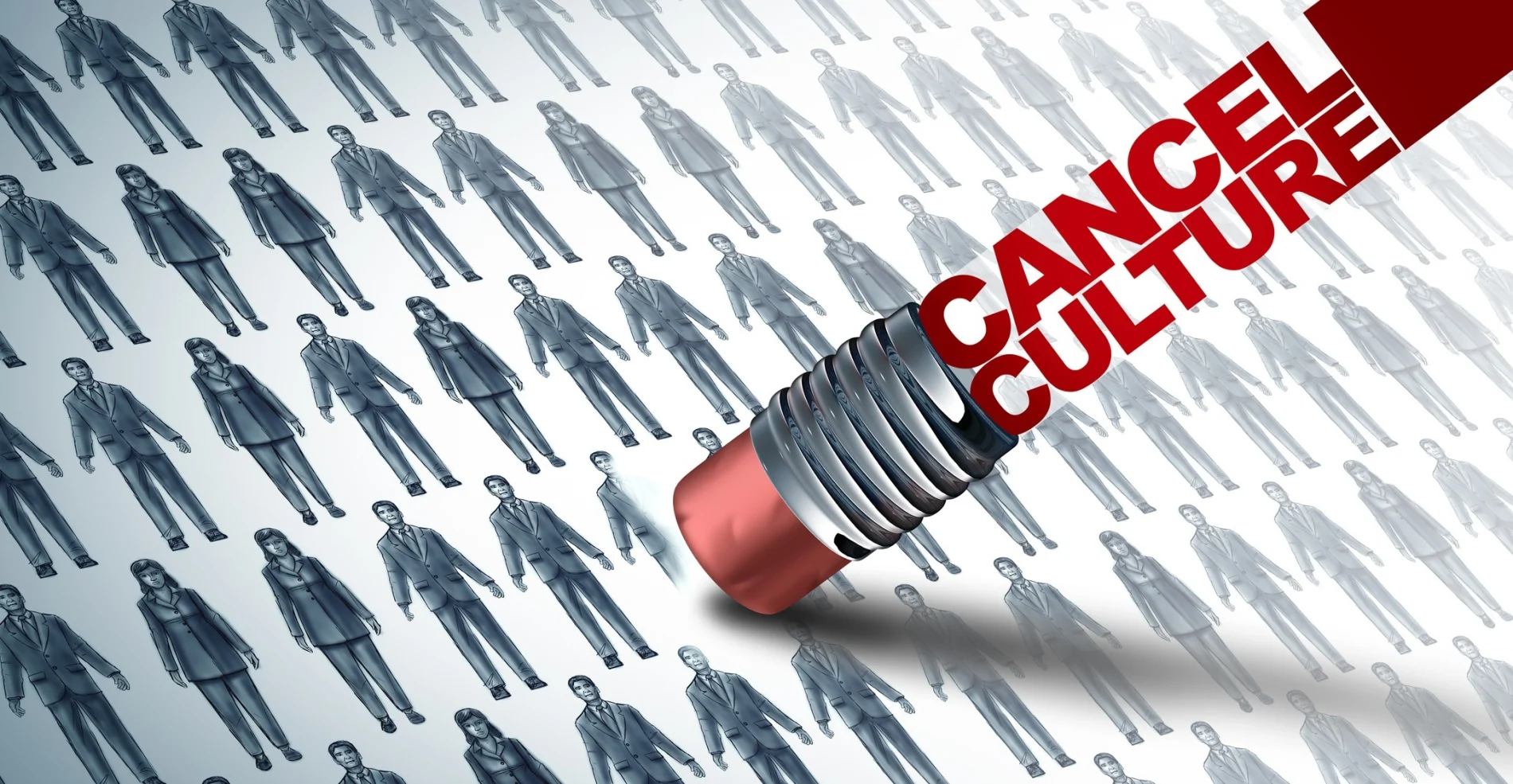

This paper explores the relationship between cancel culture and online identity formation, examining how individuals respond to the threat or consequences of being “cancelled” in digital spaces. It considers how the dynamics of public call-outs, social media backlash, and moral policing shape the way people construct and manage their online identity.
Drawing on relevant literature, real-life examples, and case studies, the paper argues that cancel culture not only acts as a form of social regulation but also influences how users present themselves; often leading to curated personas, performance of values, and increased self-surveillance. The study highlights how identity is increasingly formed in response to the collective expectations and potential judgment of online communities. Ultimately, this paper suggests that cancel culture plays a complex role in identity development, functioning both as a mechanism of accountability and as a source of pressure that shapes a new identity in online environments.
Listen to a 3 minute, AI-Generated podcast where a bot named Chris summarises my conference paper, giving you a brief understanding of the what was mentioned, and my standing on the effects Cancel Culture has on our online identity formation:
Cancel Culture and Online Identity
Cancel culture has become a major threat for anybody trying to form their online identity. When social media was created, John Perry Barlow’s (1996) vision was a space where everyone could express themselves without the fear of being incorrect in the eyes of superiors because there wouldn’t be any superiors. Cancel culture changed that ideology for everyone. Cancel Culture influences individuals when forming their online identity by pressuring moral alignment, encouraging self-censorship and forcing reputation management, sometimes even leading to identity fragmentation.
Zuckerberg, as quoted in Kirkpatrick (2010), stated that “you have one identity.” I argue against this. I believe that your online profile has nothing to hide, and the impact of cancel culture or the fear of becoming a target of cancel culture forces individuals to form two identities, an in-person and online identity.
How Cancel Culture is Pressuring Moral Alignment
The media assists in shaping everyone’s online identity. Pariser (2011) introduces the concept of the “filter bubble” to explain how personalized algorithms limit our online exposure. The term, filter bubble, refers to the algorithmic filtering of online content that creates a personalized feed of information that only you see online. The algorithm figures out who you are and what you like based on posts you interact with. It then provides you with similar content on your feed until the algorithm understands everything about you, even things about yourself you don’t know.
The Netflix movie, The Social Dilemma (Orlowski, 2020), elaborates on the idea that every action you take online is measured and recorded. The Algorithm builds models to predict the actions we make because it has more information about us then we could ever imagine (Orlowski, 2020).
Users online who participate in cancel culture have an algorithm that is formed to provide them with online users who provide their opinions on controversial topics, trying to practice their right to freedom of speech.
An example of this is Matt Rife and the abortion joke controversy in 2023 during his Netflix special, “Natural Selection” (Matt Rife: Natural Selection, 2023). Rife is a stand-up comedian and a viral TikTok sensation who is well-known for his edgy humour, where he is constantly walking the thin line of offensive and funny with all his jokes and crowd work during shows. This is due to the media shaping Rife’s online identity.
Rife has stated that his comedy is purely for elicit laughter, and that there aren’t any deeper implications than that (UNILAD, 2023). He maintains this online identity of an offensive/controversial comedian because that is what brought him to fame, and those jokes are what is going to allow him to afford a living.
During one of his bits involving topics such as domestic violence and abortion, he made a joke involving a woman in the crowd who had a black eye, suggesting to the crowd that she probably couldn’t cook and tied it to her being pro-choice; implying that her ex-boyfriend should’ve finished the job (Matt Rife: Natural Selection, 2023).
Again, Rife is known for constantly walking the thin line of offensive and funny, which is why he is so popular amongst certain groups. He is a stand-up comedian and was onstage making jokes for an audience, obviously not stating how he truly felt about certain issues regarding domestic violence and abortion (UNILAD, 2023). Although people in the edgy comedy/free speech spaces found the joke funny, Individuals in the progressive/feminist spaces found the joke inappropriate and cruel (Time, 2023).
Rife was threatened with boycotting in the progressive/feminist echo chambers, arguing that Rife was using real trauma for cheap laughs. Despite him being a comedian who makes these controversial jokes constantly, the progressive/feminist groups decided that this joke had crossed the line (Time, 2023).
Although he was under the threat of boycotting from the progressive/feminist spaces online, users in the edgy comedy/free speech spaces defended Rife’s joke; Claiming cancel culture was ruining comedy, and stating that if you didn’t like the joke, not to watch his Netflix Special (Newsweek, 2023).
This shows that echo chambers push individuals to become more extreme in their beliefs, because they don’t see the opinions given from other groups of individuals. It drives people to believe that outsiders are all wrong, immoral, and sometimes dangerous (Sunstein, 2021).
Echo chambers fuel cancel culture because it rapidly rallies outrage against those who break the ‘group rules’ that are enforced in the minds of individuals who are a part of these echo chambers (Sunstein, 2021). It shuts out all the voices outside of the echo chamber that ask for forgiveness or try to provide context to the situation (Sunstein, 2021).
Encouraging Self Censorship in Individuals Online Identity Formation
Individuals try to avoid making any controversial statements online due to the psychological fears of cancel culture and public shaming, whether it’s a statement they truly believe in or one that can be taken out of context to be made controversial (Vitak, 2012). People are forced to censor their own ideas, opinions and expressions and second guess anything they say online due to the fear of social, professional or public consequences (Vitak, 2012).
The fear of backlash from controversial statements made online is due to the scalability and searchability of online platforms (boyd, 2014). Anything said online, whether it be from an account with 100 followers or an account with 1 million followers, has the potential to reach millions within minutes and the potential to be taken out of context and judged in unintentional ways (Marwick & boyd, 2011).
When something is posted online, you are posting to an invisible audience; You have no idea who is watching, reading or judging what you put up . It could be family, friends, employers, strangers and/or your haters that can see what you post, whether that post was made publicly or privately (Crawford, 2009).
It could happen immediately after you make a post or come from a post you made years in the past; everything that is posted online by you can be traced back to you. That is the reach of searchability on online platforms (boyd, 2014). The scary part of this, cancel culture doesn’t seem to care whether the comment was made a decade ago about something that may have been considered socially acceptable then; If that post is found and it’s controversial in today’s context, cancel culture will ensure that you are held accountable.
This happened to comedian Kevin Hart in 2018 when he was asked to host the oscars. Shortly after it was announced, some controversial tweets were resurfaced from 2009 – 2011, where Hart made some homophobic jokes about him not wanting his son to be gay; one tweet reading:
“Yo if my son comes home & try’s 2 play with my daughters doll house I’m going 2 break it over his head & say n my voice ‘stop that’s gay’.” (Newsweek, 2018)
Although these tweets had existed for years and had gone completely unnoticed, users online brought them back to life due to his new visibility in an extremely public role (Newsweek, 2018).
The resurfacing of Hart’s old tweets led to his online fans turning into critics, and calling for the Academy to drop him as the host for the Oscars, stating that he hadn’t shown growth since the tweets, nor had he apologised adequately (Newsweek, 2018). Initially, Hart refused to apologise again, saying he had already apologised for this in the past and that this was an example of cancel culture targeting people based on their past (Newsweek, 2018).
Although Hart held his ground against cancel culture, the increased pressure from users online led him to eventually step down as the host of the Oscars (Newsweek, 2018).
This shows that the search-ability of online platforms is limitless, as tweets Hart had made nearly a decade prior were uncovered as soon as he gained new visibility and the controversy spread so rapidly it resulted in him stepping down from the role he truly deserved at the time. Cancel culture formed filter bubbles around users to make them believe that Hart was homophobic, and the users in those filter bubbles pushed that belief until a major role was taken away from his career. He was unaware at the time that who he thought were his fans, had actually become his critics.
Forcing Reputation Management Online
This magnitudes the ideology that a single mistake can ruin an entire career. In today’s age, where cancel culture plays such a massive part in online platforms, every single person online is managing their own brand whether they want to or not (Solove, 2007). The saying that the internet never forgets has never been more truthful than it is now, it’s one of the most dangerous features of digital platforms: Persistence.
During our class in week 4, we discussed the question: “what makes me the same ‘self’ today as I was yesterday?” and came to the conclusion of human truth: that ‘no man is the same person at 2 points in his life’ (Parfit, 1984). Any spoken mistakes without technology are eventually forgotten, but any content posted digitally lingers forever.
All our behaviour online is tracked, predicted and monetised; Every click, every text, every like is all a part of our personal data file (Zuboff, 2009). Zuboff (2019) elaborates on this with his concept of surveillance capitalism, stating that everything is monitored .
Unfortunately, most people aren’t cancelled for extreme violations against worldwide morals, but if a minor past mistake doesn’t align with today’s morals? Cancel culture ensures that they are held accountable with zero tolerance.
Although a person is never the same at two points in their life, disproportionate consequences are placed upon people for past comments that don’t reflect their current identity. This is displayed perfectly in relation to Kevin Hart having to step down from hosting the Oscars.
Where I Stand on Cancel Culture and Online Identity Formation
John Perry Barlow’s (1996) vision was a space where everyone could express themselves without the fear of being incorrect in the eyes of superiors because there wouldn’t be any superiors. Instead of online platforms allowing us to express our freedom of speech, cancel culture has made the digital space a minefield where users are constantly living in the fear of being cancelled, censoring our true feelings towards controversial topics and forcing us all to remain extremely vigilant to ensure one small mistake doesn’t ruin us forever.
Algorithmic echo chambers are forcing users to agree with the dominant moral views, or we have to face backlash from other online communities (Sunstein, 2001). The fear of online judgement and instant vitality is forcing us to silence ourselves and abandon what we truly believe. The permanence of our digital footprint leads to overwhelming anxiety to express who we are and grow as an individual.
Zuckerberg was far from correct when he stated that we now have one identity (Kirkpatrick, 2010). Cancel culture forces people to split their identities into two; A version of themselves that is truthful in the real world, and a carefully monitored identity that has to survive the cruel world that is social media and the internet.
If cancel culture continues to control what is acceptable online, are we ever going to be able to use the internet as a space to show our true identity? A space that allows for mistakes and allows us to grow individually, to merge our in-person identities and online identities into one?
References:
Barlow, J. P. (1996). A declaration of the independence of cyberspace. Electronic Frontier Foundation. https://www.eff.org/cyberspace-independence
boyd, d. (2014). It’s complicated: The social lives of networked teens. Yale University Press.
Crawford, K. (2009). Following you: Disciplines of listening in social media. Continuum: Journal of Media & Cultural Studies, 23(4), 525–535. https://doi.org/10.1080/10304310903003270
Kirkpatrick, D. (2010). The Facebook effect: The inside story of the company that is connecting the world. Simon & Schuster.
Marwick, A., & boyd, d. (2011). I tweet honestly, I tweet passionately: Twitter users, context collapse, and the imagined audience. New Media & Society, 13(1), 114–133. https://doi.org/10.1177/1461444810365313
Newsweek. (2023, November 21). Matt Rife divides internet after domestic violence joke in Netflix special. https://www.newsweek.com/matt-rife-netflix-comedy-woke-canceled-domestic-violence-1845898
Orlowski, J. (Director). (2020). The social dilemma [Film]. Netflix.
Pariser, E. (2011). The filter bubble: What the Internet is hiding from you. Penguin Press.
Rife, M. (Performer), & Griffin, E. (Director). (2023). Matt Rife: Natural selection [Comedy special]. Netflix.
Sunstein, C. R. (2001). Echo chambers: Bush v. Gore, impeachment, and beyond. Princeton University Press.
Time. (2023, November 21). Matt Rife’s joke about domestic violence causes controversy. https://time.com/6338440/matt-rife-domestic-violence-joke-controversy-tiktok/
UNILAD. (2023, November 21). Matt Rife responds to backlash over Netflix special. https://www.unilad.com/film-and-tv/netflix/matt-rife-netflix-controversy-natural-selection-658825-20231121
Vitak, J. (2012). The impact of context collapse and privacy on social network site disclosures. Journal of Broadcasting & Electronic Media, 56(4), 451–470. https://doi.org/10.1080/08838151.2012.732140
Zuboff, S. (2019). The age of surveillance capitalism: The fight for a human future at the new frontier of power. PublicAffairs.
DCN XVI (28 April – 11 May 2025) has been filled with insightful discussions and constructive debates surrounding the conference papers, creating a vibrant and enriching online academic community. Congratulations to all conference promoters, organisers, presenters, and attendees. Thank you for making this conference a resounding success. Your dedication, thought-provoking insights, and collaborative spirit have truly made a difference in fostering knowledge exchange and advancing academic discourse.
The conference has now come to a close and no longer accepting comments.
However, the conference papers are still available for those who are interested in reading and exploring the research and ideas presented. Feel free to revisit the papers and continue your intellectual journey beyond the conference.


26 responses to “Cancel Culture and it’s Effects on Online Identity Formation”
Thanks for your work on this piece, Kai.
I recall Jerry Seinfeld saying something like, “comedians are psychopaths that will do anything to elicit laughter from people around them.” I think his humorous observation suggests something interesting about how, as you say, “Rife’s identity” as a “controversial comedian” is shaped by his online platform. ‘Edginess’ is favored by the algorithm, and so the same mechanism that favors the controversial subject matter is also what fuels the cancellation of this subject matter (i.e., all the indignant reactions to this edginess). Even benign comments or good-willed jokes can be taken out of context and injected with this edge, as this glues eyeballs to screens.
I’d be interested to hear your thoughts on how cancel culture is an expression of these dynamics, and how the ‘split identity’ you mention might play out in other aspects of peoples’ lives.
You make a good point about ‘Edginess’ being favoured by social media algorithms Joel. I have seen many examples of ‘clickbait’ thumbnails on YouTube with sometimes heinous claims about comments that may or may not have actually been made by streamers or celebrities. In some cases, the person in the video will completely backtrack on the premise of text within the clickbait thumbnail/ title of the video, although by that point they will have already secured the user views. Sometimes this results in frustrated comments which drives the algorithm engagement up even higher, a win win!
Great point, Maxim. Clickbait is a clear example of how the algorithm rewards emotional engagement over truth. Even if the video later contradicts the thumbnail’s claims, the initial outrage and reactions have already done the work of amplifying its reach.
This mirrors how cancel culture thrives; through initial reactions, not full context, which drives the posts visibility. It’s a cycle that pressures creators to lean into controversy and shapes how people manage their online identity to stay visible or avoid backlash.
Thanks Joel, your comment highlights a critical paradox. Online platforms reward edgy content like Matt Rife’s because it generates engagement, yet that same content often triggers cancellation when exposed to opposing algorithmic echo chambers (Pariser, 2011). As Sunstein (2001) notes, these chambers reinforce group norms and outrage, leading to adverse responses where context and intent are overlooked. This contradiction forces creators and everyday users to carefully manage how they’re perceived online, resulting in a digital identity that’s shaped less by authenticity and more by survival in a morally broken space.
This pressure drives the identity split I discussed between one’s true self and a self-censored, curated online persona. Vitak (2012) and boyd (2014) show how fears of misinterpretation, amplified by the internet’s persistence and searchability, encourage people to silence their true beliefs. The Kevin Hart example reinforces how a single resurfaced moment can reshape public perception, regardless of personal growth overtime.
Until digital platforms prioritize making a space for growth, forgiveness, and complexity, users will continue to live in a state of caution, never fully merging their online and offline selves. It’s not just comedians who live this duality; it’s everyone online. Many people express one version of themselves in real life (where they can clarify nuance, intention, and tone) and a different, heavily moderated version of themselves online. As Vitak (2012) and boyd (2014) emphasize, the fear of being misunderstood by an invisible audience leads to widespread self-censorship, even when expressing genuine beliefs.
Hi Kai,
Thank you for presenting your very interesting paper. It had me looking up John Perry Barlow and reflecting on his vision of online being an open and fair space, as opposed to the hazards today of trying to have an online identity, as you describe, where we can be pressured or scared to reveal our selves, or only parts of us are shown due to algorithms and cancel culture.
What particularly struck me was your comment about not having a space to be able to make mistakes and grow, which would be particularly difficult if your access to the world was only ever digital.
You have certainly made me think, and I have say I am quite guarded online.
I note you discuss how we “split our identities into two” and I wondered if you thought that we possibly split ‘our real world’ identities into many more versions of ourselves?
Thanks again for you thoughtful discussion.
All the best
Jayne
Hi Jayne,
Thanks for your kind words and thoughtful reflection, I appreciate you taking the time to look up John Perry Barlow. It’s fascinating to compare his hopeful vision of the internet with the complex, often intimidating reality we face now.
Your point about how we may split our real-world identities into even more versions is really insightful, and I absolutely agree. While I focused on the online vs offline divide, you’re right that we naturally adapt different “selves” depending on the context: who we’re with, where we are, and what’s expected of us. The difference now is that online platforms tend to flatten these variations, demanding a single, polished identity that’s always “on” and open to judgment; always trying to fit into the idea of a ‘socially acceptable’ person. That pressure can be exhausting, especially for those whose primary social space is digital.
All the best,
Kai
Hi Kai,
You make a good point – in the digital environment we are, as you highlight, supposed to continually display a “polished” and ‘socially acceptable’ persona which flattens out our options.
It would be wonderful if we could remove the algorithms, I visit libraries and get lost down the aisles, which leads to random selection of things and new avenues of discovery. I do not enjoy algorithms suggesting what I might like based on previous searches – it seems both limiting and presumptuous.
Wishing you all the best with the conference.
Jayne 🙂
That’s definitely an idea worth exploring. Imagine if all social media platforms had an option to disable the algorithm entirely and instead show randomly uploaded posts. It’s something I would absolutely use, and I know others who would too.
It might just be a million dollar idea. Giving users the option to break out of algorithm-driven echo chambers could help reduce the impulsiveness of cancel culture. It would make it easier for people to gain full context on issues before jumping to conclusions based solely on what the algorithm has curated for them. This kind of feature could promote broader perspectives and more thoughtful engagement. Thanks for the insight!
Regards,
Kai
Hi Kai,
It would be great, and I would definitely love an option to opt in or out, it would be a fantastic opportunity to see the difference.
Perhaps someone will add that button in for us, the anti-algorithm.
Many thanks
Jayne
Hi Kai,
You make some great points within your essay regarding the finality of cancel culture.
While it is important to hold each other accountable, especially in situations that incite or condone violence against others, it is important to allow people to learn from their actions. There are some negative affects of cancel culture including people losing their jobs or status in society from comments made decades ago. Just like a person who commits a crime and is re-egnaged back into society, those who make ‘cancellable offenses’ online should – in some cases – be given the grace to apologise and return to their previous standing in society.
What are your thoughts on ways that people can be held accountable for genuinely horrible comments vs. people like comedians and artists who frequently engage in playing a character online for entertainment?
Thanks,
Max
Hi Max,
Thank you for your comment. I completely agree, accountability is crucial, especially when someone’s words or actions promote harm. But as you said, there also needs to be space for growth, learning, and redemption. Without that, cancel culture can feel more like permanent exile than constructive criticism.
When it comes to genuinely harmful comments, I think intent, context, and response are key. If someone shows no remorse or continues harmful behaviour, accountability should be firm. But for comedians and artists (who often play exaggerated or satirical roles), their work needs to be judged within its creative context. That doesn’t mean they’re above critique, but there should be a difference between holding someone accountable and erasing them entirely. To create a space for growth, learning and redemption, users need to be made aware that their comments may have effected someone’s emotional state, however creating an echo chamber online whereas users are trying to erase that person completely is not a solution. Eliminating an individual from online spaces won’t help them to identify areas of growth, it won’t help them to learn and it won’t give them the opportunity to redeem themselves; It will only isolate them.
Ultimately, we need a cultural shift that allows room for dialogue and change, rather than instant cancellation.
All the Best,
Kai
Hello Kai,
I agree on your statement regarding permanent exile, this might achieve shunning someone in the short run but ultimately it could lead to them becoming more extreme in their views and causing more damage as opposed to learning a lesson and re-integrating with online societies.
What do you suggest could be a viable way removing hate speech or harmful material from social media platforms when it is monetised in terms of overall engagement?
I believe as long as clicks and comments are what make influencers online, platforms will be plagued by harmful content which seeks to get a rise out of it’s users.
Thanks,
Max
Hey Max,
Totally agree. When people are completely shut out, it can push them further into harmful mindsets instead of helping them to grow. That’s the danger of “cancel first, ask questions later.”
As for platforms profiting off harmful content, I think part of the fix has to be in changing what gets rewarded. Right now, outrage = clicks = money, so toxic stuff thrives. Platforms should stop monetising content that spreads hate and adjust their algorithms so they’re not promoting it just because it’s engaging.
Also, more thoughtful moderation would help, context matters. Comedy or bad takes from years ago shouldn’t be treated the same as intentional hate speech. And maybe instead of just banning people, there could be tools that help users reflect or learn before posting.
I keep thinking about that Simpsons episode (Season 27, Episode 10 ‘The Girl Code’) where Lisa makes an AI tool that warns users about the real-world consequences of what they’re about to post (Jean & Kruse, 2016). Something like that in real life (maybe a pause or rethink button) could really shift the tone online. It’s not about silencing people, but giving them a second to think “is this actually helpful?” or “is this really worth posting” before hitting send
Big picture: if we want better online spaces, platforms and users both need to value growth and accountability over outrage and cancelation.
What do you think?
Cheers,
Kai
Reference:
Jean, A. (Writer), & Kruse, C. (Director). (2016, January 3). The Girl Code (Season 27, Episode 10) [TV series episode]. In J. L. Brooks, M. Groening, & S. Simon (Executive Producers), The Simpsons. 20th Century Fox.
Hi Kai,
I found your paper interesting. I also wrote about cancel culture. However, I would have never considered that users are curating themselves or living “double lives” to avoid being cancelled – that idea really stood out to me.
Your examples helped me understand how even small mistakes from the past can be brought up again and lead to someone being cancelled. It made me reflect on how our digital footprint has grown and become harder to manage over time.
If cancel culture continues to dominate, do you think it will create a new kind of “perfectionism” where people feel the constant pressure to maintain flawless moral standards at all times? And if so, could this pressure make people start “pre-cancelling” themselves before anyone else gets the chance to publicly shame them?
If you are interested, I would really appreciate it if you could read and comment on my paper too! https://networkconference.netstudies.org/2025/onsc/5169/cancel-culture-amplified-social-medias-power-in-the-digital-world/
Hi Renee!
It’s great to hear that the idea of people curating two identities online resonated with you.
Your question about cancel culture leading to a new kind of perfectionism is spot on. I do think we’re already seeing that take shape. People are increasingly hyper-aware of what they post, not just to avoid offending others, but to pre-emptively guard themselves against any future backlash. This kind of moral perfectionism can be incredibly restrictive, and as you suggest, might even lead individuals to “pre-cancel” themselves by choosing silence or erasing themselves online before someone else has the chance to do it for them.
In the long run, that could restrain genuine expression and personal growth. Ideally, digital culture would evolve to recognize intent, consider context, and allow space for learning from mistakes rather than demanding constant perfection. Unfortunately, that vision still feels distant, as cancel culture continues to gain momentum and appear more frequently across online platforms.
Thanks for your comment! I’ll read over your paper once I get the opportunity, it will be nice to read another perspective on cancel culture and social media.
Hi Kai!
Just wanted to start by saying your paper was so well written. I already felt like cancel culture can definitely be toxic at times, but I never thought about how it could actually shape our online identity and make us feel like we need to have two different versions of ourselves. That really got me thinking so well done!
Going into your content, there were a few points I’d love to further discuss. I totally agree that cancel culture can go way too far. Absolutely people grow. People change. And if someone is clearly not the same person they used to be, have reflected and has done better, I really believe they deserve another chance. We’ve all said or done things in the past that we’re not proud of. Yes, absolutely growth should be encouraged, not punished!
However, at the same time, there are people who do need to be called out. Matt Rife is honestly a good example. His whole career is based on being a comedian, but also, let’s be real, a lot of it also about his looks. So when he makes certain jokes that completely miss the mark or offend people, especially with his fanbase, I don’t think that’s cancel culture going too far. I think the failure is on him not clearly understanding his own branding and his audience.
I also get that freedom of speech is important, and yes, we should be able to move on from our past mistakes. But when someone keeps repeating the same harmful behaviour even after being called out, then it’s not just about free speech anymore. They’re just refusing to grow. And in that case, I think cancel culture isn’t about silencing people, it’s about holding them accountable. Because if somebody’s words or actions hurt others, maybe that’s a line that shouldn’t be crossed in the first place.
I really believe cancel culture, when done with the right intention, can actually help people. Like how our friends or family call us out when we mess up, its not because they hate us, but its because they care. It can push us to be more thoughtful, more aware, and honestly, just better people. We all have blind spots, and sometimes it takes the outside world pointing them out for us to realise they’re even there.
So in response to your final question, I do think our online and in-person identities can merge. But I think they can merge in a good way. We can still be our true selves online, just with more self-awareness and empathy. The internet doesn’t have to be a place where we hide who we are or walk on eggshells. It can actually be a space that supports growth, reflection, and becoming someone we’re proud of, both online and offline.
Hi Jules!
Thanks for your thoughtful response, I’m really glad my paper got you thinking! I completely agree with your view on cancel culture, that when grounded in care and done with the right intentions, it can be a valuable tool for accountability. As you said, it can help people become more self-aware, just like a friend or a family member calling us out on something because they want us to grow.
That said, I’d push back a bit on the example of Matt Rife. While he certainly benefits from his looks and online presence, his brand as a comedian has always been rooted in edgy humour that challenges the social norms, much like many comedians before him. The challenge arises when audiences interpret that character as a literal reflection of the person. Comedy is subjective, and while not everyone will agree with or enjoy his material, assuming his joke was meant with malicious intent doesn’t always account for the complexities of performance and persona. The same algorithms that promote this content are also the ones that amplify outrage disproportionately, often without context.
The problem is that once cancel culture gains momentum online, it can spiral far beyond holding someone accountable, it can become a wave of hatred. Due to the vast reach of social media platforms, individuals can become targets of relentless abuse that goes well beyond the initial issue. A powerful example of this is the case of Caroline Flack, a British TV presenter who took her own life in 2020 after intense public scrutiny and online harassment following allegations of assault. Despite stepping down from her role and facing ongoing legal proceedings, Flack continued to be vilified across media and online platforms. In her final Instagram post before her death, she wrote, “In a world where you can be anything, be kind”. This is a chilling reminder of how the excessive nature of cancel culture can devastate a person’s mental health (BBC News, 2020).
This case illustrates that even when someone is publicly held accountable, the level of online backlash can easily become overwhelming, cruel, and deeply harmful. Cancel culture is powerful and while it can be used for good, its reach can turn it into a tool of emotional punishment rather than constructive change. We need to be more mindful of the mental toll it can take, especially when that punishment is ongoing, dehumanizing, and lacks any path toward redemption.
I love your optimism about merging online and offline identities in a healthy way. That’s a future I’d definitely like to see. Where self-awareness and empathy guide our expression, and where making a mistake doesn’t mean exile, but an opportunity to evolve. Unfortunately, I believe this future is a long way away and will require almost everybody online to participate in enforcing it. Hopefully it is something we can see evolving into the online space in the near future.
Regards,
Kai Armstrong
Reference:
BBC News. (2020, February 19). Caroline Flack: TV presenter dies after taking her own life. https://www.bbc.com/news/entertainment-arts-51517973
Hi Kai,
Thank you again for your thoughtful response. I really appreciated how you acknowledged the emotional weight behind cancel culture, especially in your reference to Caroline Flack. I completely agree that public perception and media scrutiny played a massive role in her mental health struggles, and it’s heartbreaking that things escalated to that point. That said, I also think it’s important to remember that there were a number of factors involved including the incident itself, her prior mental health challenges, and the pressure of being in the public eye, all contributing factors to what happened. So while cancel culture and online outrage definitely amplified things, I don’t believe it was the sole cause.
I also agree with your point that cancel culture can easily spiral into cruelty if it’s not kept in check. But I’d argue that when it reaches to that extreme, it’s no longer cancel culture in its intended form, it becomes something else entirely, like mob mentality or targeted harassment. To me, that’s a separate issue.
I think the middle ground we’re both circling is that cancel culture needs moderation. It shouldn’t be a weapon, but a tool, one that invites accountability while still allowing space for growth and redemption. The real question, like you said, is how we do actually do this right?
Personally, I’d still rather live in a world where cancel culture exists than one where it doesn’t. When we look at it from a broader lens, it’s helped bring more accountability than ever before. It’s forced conversations that many people used to avoid, and in doing so, it’s challenged outdated ideas and harmful behaviours. Even this conversation between us, respectful and meaningful, is in a way shaped by that same cultural shift. And if cancel culture, or at least the awareness it brings, encourages conversations like this, isn’t that a sign that we’re moving forward?
As a side note, I think we can agree to disagree on Matt Rife. Comedy is subjective, and I’m definitely one of the people who just doesn’t find his style funny. But if his character relies on humour that hurts or offends others, and people speak up about it, then I think that’s exactly where cancel culture plays an important role, not to erase him, but to keep people accountable for the kind of messages they put into the world.
Thanks again for your insight, and for making this discussion such an engaging one, definitely went on a bit of a rant but I’m glad to be able to have engaging and respectful conversations like this.
Hey Jules,
Thanks for engaging in the conversation. You raise an important point about Caroline Flack’s situation involving multiple factors, and I agree. It would be too simplistic to place the full weight on cancel culture alone. The media, pre-existing mental health challenges, and the pressures of fame all undoubtedly contributed. Still, I think her story highlights how online outrage can push someone who is already struggling closer to the edge, especially when there’s no room left for empathy or understanding.
I also really like how you differentiate between cancel culture’s intended role and when it crosses the line into mob mentality. That’s a key distinction, and I agree that we need to separate constructive accountability from harmful digital dogpiling. When cancel culture is approached with empathy (focusing on calling people in rather than simply calling them out) it can genuinely encourage growth, reflection, and meaningful change. The fact that we’re even having this discussion is proof of that cultural shift you mentioned, and I’m genuinely grateful for it.
And yes, totally fair to agree to disagree on Matt Rife. Comedy is definitely subjective, and I respect your view. What matters is exactly what you said: not erasure, but accountability. If someone’s platform reaches millions, they do carry responsibility for how their words impact others. As long as cancel culture is used to invite dialogue rather than silence it, there’s hope that it can be a tool for growth, not just judgment.
Thanks again for engaging in the conversation, and maintaining respectful dialogue through-out. Every opinion matters on a topic, it’s known peoples opinions are going to clash, but it’s the way that both individuals handle the discussion that keeps it civil and respectful. Rather than taking a part of the conversation out of context and fixating on it, you’ve taken the time to examine all the points made. If this could be done everywhere online, by everyone, cancel culture wouldn’t be the problem it is today.
Warmly,
Kai
Hi Kia I loved your essay, you raise such an important point about how cancel culture impacts identity online. But I’d push back a bit: isn’t some of what we call “cancel culture” just people exercising their free speech in response to others? If a comedian makes a controversial joke and people criticize it or choose not to support them, isn’t that part of how accountability works in a free society?
Also, with cases like Kevin Hart, isn’t it fair to expect public figures to acknowledge how past statements affect others today—especially when they’re stepping into major roles?
So maybe the real question is: are we splitting our identities because of cancel culture, or because we’re still figuring out how to be ourselves in a space where everyone’s watching?
Hi Isabelle,
You’re absolutely right that a lot of what’s called “cancel culture” can also be seen as people exercising their own free speech. Criticism, debate, and choosing where to direct support are all valid parts of a democratic and open society. And yes, public figures like Kevin Hart do have a responsibility to reckon with how their past words might affect people today, especially when stepping into roles that hold cultural weight, but it was bypassed that Kevin Hart had already previously apologised for those comments he made towards his son, yet still faced criticism.
I guess where I draw the line is when that criticism turns into collective punishment, where there’s no room for apology, growth, or redemption. There’s a difference between holding someone accountable and permanently defining them by a single moment. That kind of digital permanence can really discourage people from being honest, making mistakes, or evolving publicly; especially those who don’t have a platform as large as Kevin Hart’s.
Your last question really gets to the core of it. I think it’s a mix. Cancel culture intensifies the pressure to split our identities, but the nature of being online, where everything is visible and permanent, plays a big role too. We’re always aware that anything we post could be judged by anyone (friends, strangers, employers) so we start filtering ourselves. It’s not just about fear of being “cancelled,” but also about trying to manage how we’re perceived in a space where mistakes stick. We’re still learning how to be authentic online while protecting ourselves and that’s a tough balance to find.
Would love to hear your thoughts on what a better balance might look like.
Cheers,
Kai
Hey Kai,
I really like how you’ve framed the idea of cancel culture as a balance between accountability and the space for growth. I totally agree that holding someone accountable for their actions is important, but it becomes problematic when there’s no room for evolution or understanding, especially if the person has already shown remorse or made an effort to change. It’s definitely tough when a single moment can define someone’s entire career or reputation, and I think that’s where we lose the nuance of individual circumstances.
I also agree with your point about how online permanence affects how we express ourselves. The pressure to constantly curate our image can make it difficult to be genuine, and that’s not just a fear of cancellation—it’s the fear of being judged by a wide, often faceless audience, which feels like a never-ending balancing act between being authentic and protecting your reputation.
As for a better balance, I think it’s a mix of allowing for forgiveness and growth while still holding people accountable. Maybe part of it could involve shifting the conversation away from public shaming and more toward private conversations or restorative justice processes that let people learn from their mistakes. Do you think there’s room for that kind of shift, or do you think the public nature of online culture makes it hard to move away from the “all or nothing” mentality?
Looking forward to hearing your thoughts!
Isabelle
Hey Isabelle,
I completely agree, the lack of nuance is often what makes cancel culture so damaging. It’s one thing to be held accountable, but it’s another to have your entire identity reduced to a single moment or mistake, especially when growth and remorse are present.
You also raise a great point about how the pressure to curate our online selves isn’t just about avoiding cancellation; It’s the constant feeling of being watched by a huge, often anonymous audience. That kind of visibility definitely affects how genuine we feel we can be, and it creates a weird tension between who we are and who we’re “allowed” to be online.
I love your suggestion of shifting the focus to private conversations or restorative justice models. That kind of approach, where the goal is understanding, not punishment, could be a really powerful way to address harm while still giving people a path to make amends. The challenge, though, is that online culture thrives on spectacle. Outrage gets engagement, and public takedowns often feel more satisfying than quiet accountability.
But I do think there’s room for change, maybe not across the entire internet all at once, but within the communities we’re part of. If more of us can model this approach, valuing growth and dialogue over permanent judgment, it might ripple outward. We just have to be intentional about building spaces where that kind of mindset can be implemented.
All the best,
Kai
Hi Kai!
This paper presents a compelling and timely analysis of the complex relationship between cancel culture and online identity formation, I thoroughly enjoyed reading it!
It offers a nuanced exploration of how digital users respond to the threat of being “cancelled,” and how this shapes the way individuals curate and manage their self-presentation in online environments.
The discussion insightfully challenges the notion of a unified online self, showing instead how users often split their identities between private authenticity and public acceptability. This raises questions about the psychological impact of maintaining dual identities over time.
Given the complex relationship between cancel culture and online identity formation, how do you envision the long-term impact of this dynamic on individual autonomy and self-expression in digital spaces? Do you think that we are witnessing a shift toward more standardised online personas, or is there room for more authentic, diverse identities to emerge despite the pressures of cancel culture?
This paper makes a strong contribution to my understanding of the pressures individuals face in digital spaces, and it invites further reflection on the balance between accountability and freedom in the online world, great paper!
Regards, Layla
Hi Layla,
I’m glad the paper resonated with you and sparked further reflection. Your point about the psychological impact of maintaining dual identities is so important. Constantly managing a divide between our private selves and public personas can be exhausting, and over time, it risks eroding both authenticity and emotional well-being.
In terms of the long-term impact, I do think we’re witnessing a trend toward more standardized, “safe” online personas; Ones that are carefully curated to align with dominant moral expectations. The fear of saying the wrong thing or being misunderstood can make self-expression feel risky, which might discourage people from sharing more nuanced, personal, or evolving perspectives. However, I also believe there’s still space (though a shrinking one) for authentic and diverse identities to emerge. Platforms that encourage context, empathy, and dialogue (rather than outrage) could help preserve that space.
Ultimately, I think the challenge ahead is figuring out how to hold people accountable in ways that still support individuality, growth, and vulnerability. As you said, it’s all about finding a balance between accountability and freedom.
Thanks for your kind words and your insightful question!
Cheers,
Kai
Hey Kai!
Thanks for sharing your paper, it’s a brilliantly articulated paper that captures the complex reality of cancel culture and its impact on online identity. I appreciate how you drew connections between early internet ideals like John Perry Barlow’s vision of a free, non-hierarchical digital space and the current climate where online actions can be scrutinized indefinitely. Your discussion on the pressure to self-censor, the influence of algorithmic echo chambers, and the examples of public figures like Matt Rife and Kevin Hart were particularly compelling. It really made me think about the delicate balance between expressing our true selves and protecting our digital reputations! As someone who creates wellness and motivational content, I often struggle with this divide myself. I aim to inspire people to embrace their authentic selves, but the fear of misinterpretation or backlash can sometimes feel like a barrier. Your point about identity fragmentation resonated deeply with me, as it reflects the constant internal debate of whether to share certain thoughts online!! Do you think it’s possible for content creators to be their true selves online without worrying about hurting their reputations, or is this just part of the reality of using social media today?
Thanks Kai, i enjoyed reading this so much !