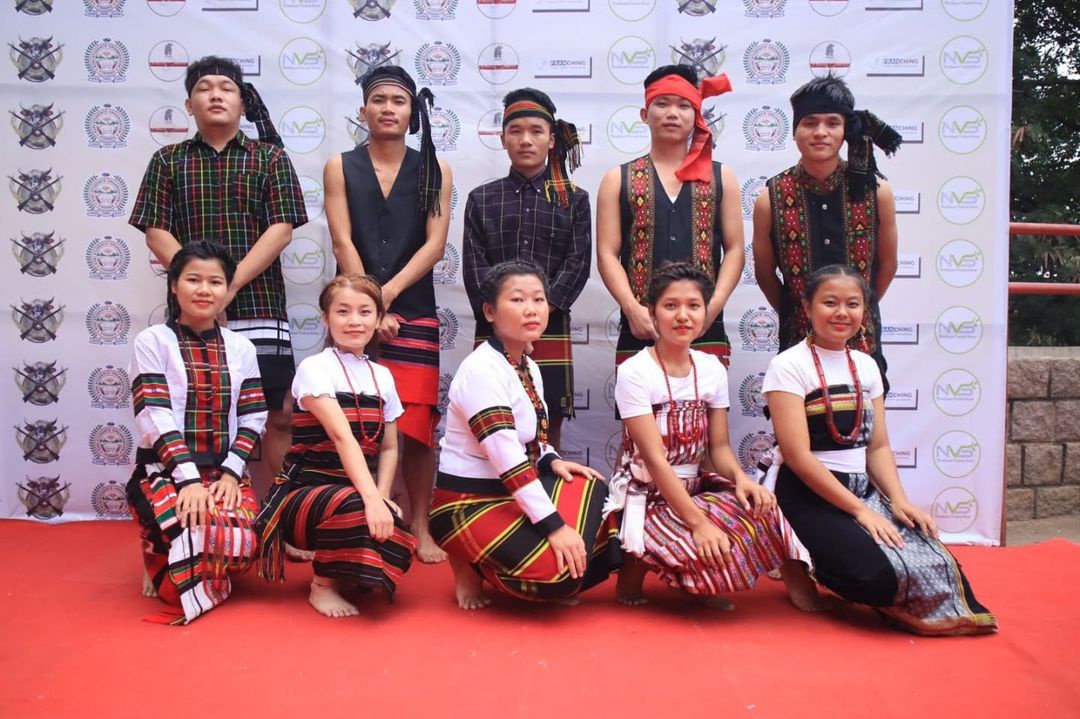
Abstract:
The Kuki communities living in Northeast India are similar to what North Americans regard as a community where most people “spent their lives surrounded by relatives, neighbours, and friends who shared not only similar backgrounds and beliefs but also did similar tasks and daily labor”. Since the issues of the Kukis are often overlooked by mainstream media, social media have become a platform to raise their voices against misrepresentation, discrimination and social injustice. The Kukis commonly utilize Facebook to share and preserve their cultural identity and experiences. By examining recent occurrences, this essay will explore how this community make use of this platform to challenge the narratives of those in control, safeguard their traditions, stand for their community and advocate their rights.
A significant focus of this essay will be on the injustice faced by Kuki women and how social media is used by the Kukis to speak out against discrimination and violence faced particularly during and the ethnic violence in Manipur in 2023.
Introduction:
Northeast India is as diverse as the rest of India. The prominent tribes of the region are Garo, Khasi, Jaintia, Adi, Mizo, Karbis Nyishi, Angami, Konyak, Bhutia, Kuki, Rengma, Bodo and Deori. The minority hill tribes in North Eastern India are spread across the regions of Northeast India mainly Manipur, Myanmar and Bangladesh, and. As per written records of William Shaw, ‘the Koms, Aimols, Khotlangs, Thadous, Lushais, Chins, Pois,Suktes, Paites, Gangtes, and various others are all somehow connected’ (Shaw, 1929, p. 16). Although there are oral histories and colonial writings, the real origin of the Kukis is unproven as of today, claims have been made that they migrated from China to Burma and then settled in the Northeast India and neighboring regions, while some believed they were one of the lost tribes of Genghis Khan, who is the founder of the Mongol empire. This could probably be the reason why the Kuki tribals of Northeast India possess Mongoloid features.
Approximately 50 tribes fall under the Kuki tribe according to the nomenclature used during Britishers’ colonial times, some believe that the clan is also under the Mizo tribe. Although it is said that several ethnic communities existed in the region even before India was under the colonization of the Britishers, it is hard to know who exactly are the first settlers of the region. The Kukis claim to be amongst the indigenous tribes of Northeast India, and the demand for Kukiland dates back to the late 1980’s, but there is no official acceptance from the government despite the fact that the Indian government introduced special reservation policies for the tribe in education, employment and political positions. (Srikant, 2023)
Social media as a weapon:
Facebook is arguably one of the most community-friendly online platforms as it is commonly used not only by young people but also by elderly persons as well. It is so user-friendly to the point that it allows its user to create different identities and relationships, not just as a virtual community platform. Many years ago, technology didn’t play as big of a role as it does today. Social media like Facebook is also a platform to express one’s concerns or simply share about their day. The communities or groups in the platform are often personalized, and comprised of people with similar behavior or the same interest. This could take a different form of even starting a new political movement or drawing attention to an issue. The good side of this is that it is an open space for all kinds of people. On the contrary, it can be misused as a means of creating fake profiles and spreading hate against other communities. The backside of these virtual communities is that relationships are kept alive through social media, more inclined towards temporary connections that lack real humane bonds, likely to perish without the use of technology.( Delanty, 2018)
The Kukis express their indigeneity on social media using applications like Facebook posting photos about their culture and history and raising and sharing about their traditional arts, music and dances. There are also different groups and pages associated with the Kukis; most of these pages serve as a means of uplifting their culture, keeping their community updated on their traditional events and news and these Facebook communities are often kept public so that anyone interested can be a part of the community. These groups are useful platforms for keeping displaced Kukis informed about their cultural events and updates about notable information within their community.
The recent outbreak of a conflict between the Kukis and Meiteis forced many families to move out of Northeast and settle in other places like Delhi, Pune, Mumbai, etc. The northeast people would often face discrimination and are commonly perceived as “outsiders” even in their own country. They commonly encounter racial slurs, especially in the mainland areas of India. However, because of the existence of social media platforms like Facebook, Instagram, WhatsApp, Twitter etc, the people of the region are able to raise their voices to stand against the injustice practices upon them.
During the clash of rivalry between the Meiteis and Kukis, which started in the year 2023, a sense of deep hatred was evoked out of the two groups. Many students were greatly affected as their families had to move out of their own homes. The two groups exchanged their own people with the help of the central forces of the government in order to ensure that there would be an end in killing within the two groups. Many churches were also burnt during the initial stage of the conflict, and videos of sensitive cases were circulated across Facebook and platforms, which brought a lot of attention to what was happening in the region from people from other states of India and foreign countries.
One notable incident of that time is a video of two Kuki women paraded naked. After hearing that Meitei mobs were “burning homes” in a nearby village, their families had escaped through a dirt lane, but a mob found them. The perpetrators were reported to have killed one of the victim’s father and brother, after which they began to assault the women, asking them to take off their clothes. This incident not only became a matter between the Meiteis and Kukis but turned into a global issue against women. The clip showed two naked Kuki women, surrounded by a bunch of Meitei men, being paraded naked and their private parts touched publicly, walking toward a field where they were later assaulted.
The video of that incident was highly circulated across Facebook and it became a hot topic in different Facebook groups and other platforms like Twitter, YouTube and Instagram. The video was later covered by a lot of news media like Al Jazeera, BBC World News, Hindustan Times, First Post and a few others. Later, the police arrested those who were said to have taken part in the incident.
“When we resisted, they told me: ‘If you don’t take off your clothes, we will kill you’,” said the woman, who is in her forties. She said she took off “every item of clothing” only in order to “protect herself”. All the while, the men allegedly slapped and punched her. She said she was not aware of what was happening to her 21-year-old neighbour because she was some distance away. Sourced from Reddit.
Because of the hatred that exists between the two groups, many Facebook groups, pages and accounts owned by the Kukis and Meiteis were reported on a matter of spreading hatred or false information and, as such resulted in the suspension of many accounts by Facebook.
Imphal, the capital of Manipur is now, in a way, owned by the Meiteis since the ethnic dispute fully separated the two groups. The Kukis now reside in the hill areas surrounding the capital, while some have moved to other states of India. Even the news media became highly affected in Manipur. The Imphal valley being the capital, has more developed media outlets like television channels and media platforms than the hill districts of the state. Most of the valley-based news followed the directions of the Chief Minister of Manipur, who is also from the Meitei community, and as a result, these media mostly blamed the Kuki people. The hill people on the other hand, have most of their newspapers written in their local dialect, their only alternative is to raise their voices on social media. This, in turn became a concern to the multitude as there existed a bunch of misleading reports in different social media groups. When such incidents arose, the government would sometimes impose a ban on internet use to prevent the spread of disinformation and false information on social media.
The Kukis are also regarded as illegal immigrants by the Meiteis in Manipur. In March 2023, there was a protest outside the house of the Chief Minister by several student groups protesting against the Kukis are “illegal immigrants of Myanmar, Nepal and Bangladesh”. There are reports of anonymous persons from the two sides creating Facebook groups against the other group and giving false reviews on their tribe’s social pages. However, facebook groups created by the Kukis like “Voice Of The KUKI”, “THE KUKI HERITAGE & NEWS” and a few others serve as a platform to preserve the Kuki culture and unite its people and raise their opinions.
The outbreak of the Coronavirus spread Asian racism and the use of the word “Corona” as a racial slur in different parts of India. Although the virus originated from a different country, racial discrimination against the northeast Indians, including the Kukis increased, especially during the initial weeks of the pandemic. Northeast Indians often get asked questions like, “Are you from China?” from other Indians in the cities. This kind of situations frequently happen not only out of ignorance but to alienate them for their looks. Along with being treated as different, they also face objectification and disrespect.
About 10 years ago, an initiative was taken to protect the rights and fight injustice against the Northeast people of India. A Facebook group called Northeast Support Centre & Helpline was created by human rights activists, social workers, students, journalists, lawyers, intellectuals and professionals to prevent harassment, discrimination, molestation and abuses towards people from Northeast India living in Delhi NCR. This same step was later taken in Mumbai as well.
The group collected testimonials from victims who faced such racial discrimination and helped them get legal help and demand justice. Many incidents of racial discrimination were reported in this group. People shared different testimonials and raised their voices, and the group became a safe virtual community for the Northeast people where they could discuss and share opinions. A media page called Brut India also collected videos and covered stories about what the Northeast people faced during the pandemic. The video includes reports of a man from Delhi spitting on a Manipuri lady while she was out in public buying groceries; not only that, he also made vulgar comments towards her. This video received more than a million views on Facebook with two thousand plus comments.
Conclusion:
By utilizing Facebook, the voices of the Kuki communities are heard and amplified than before, and their culture and traditions are kept alive through community groups. They are able to create support networks and counter stereotypes and misrepresentation. For a community whose voices are often silenced, social media is more than just a social platform or an act of communication, and it is a form of empowerment, strength and resistance. It offers an inclusive narrative not just for the Kuki community but for all the marginalized who strive for justice.
References:
Carlson, B., & Kennedy, T. (2021). Us Mob Online: The Perils of Identifying as Indigenous on Social Media. Genealogy, 5(2), 52. https://doi.org/10.3390/genealogy5020052
Delanty, G. (2018). Virtual Community: Belonging as communication, Community (# 3.). Routledge, pp. 200 – 224. https://doi.org/10.4324/9781315158259
Hampton, K. N., & Wellman, B. (2018). Lost and Saved . . . Again: The Moral Panic about the Loss of Community Takes Hold of Social Media. Contemporary Sociology, 47(6), 643- 651. https://doi.org/10.1177/0094306118805415
HANGSING, L. (2023). Re-Interpreting Home and Identity: An Ethnographic Study of the Kuki Migration in Delhi (Doctoral dissertation, AMBEDKAR UNIVERSITY DELHI).
https://www.researchgate.net/profile/Lunpithang-Hangsing/publication/374117321_Re- Interpreting_Home_and_Identity_An_Ethnographic_Study_of_the_Kuki_Migration_in_D elhi/links/650e7ac082f01628f03d3000/Re-Interpreting-Home-and-Identity-An- Ethnographic-Study-of-the-Kuki-Migration-in-Delhi.pdf
McClard, A., & Anderson, K. (2008). Focus on Facebook: Who Are We Anyway? Anthropology News., 49(3), 10–12. https://doi.org/10.1525/an.2008.49.3.10
Pautunthang, N. (2024). Ethnic Stereotypes of the Meitei-Kuki Conflict in Manipur. https://doi:10.14445/2349641X/IJCMS-V11I2P101
Srikanth, H. (2023). Who in Northeast India are Indigenous? 1. In Indigeneity, Citizenship and the State (pp. 46-61). Routledge. https://doi.org/10.4324/9781003406259-2


Hi Shannon Kate, You’re right to ask; it is incredibly difficult to police these issues today. Predatory behaviour isn’t exclusive…