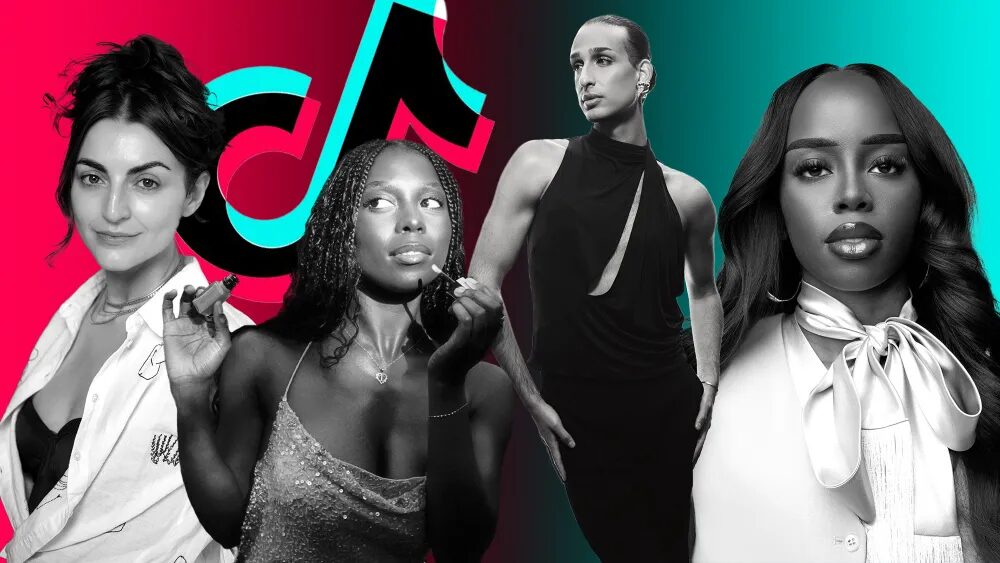
Gen Z and Millennial Influencers are empowering activism through leveraging TikTok to spread underrepresented information and influence political public opinion for social change. TikTok has emerged as one of the most widely used social media platforms, surpassing one billion monthly active users in 2021(Cervi et al., 2023). With its surge in popularity, the platform has organically transformed from a space for jokes, pranks, and viral dance challenges into a space where Gen Zers and Millennials come together to advocate for social issues(Cervi et al., 2023).
TikTok has since transformed into a “third place” by providing a dynamic, informal space where users can gather, share experiences, and engage in community discussions outside of home and work, fostering social connections and cultural exchange. The ‘third place’ acts as a social equalizer, inviting individuals from all societal levels to engage in lively and cheerful conversation while fostering inclusivity, usually consisting of social interactions outside of work and home (Wright, 2014). TikTok influencers emerged as the platform gained traction among Gen Z and Millennials, leveraging its short-form video format to showcase creativity and engage audiences.
In more recent years, Tik Tok influencers are starting to utilise the platform to advocate against various political, legal and social issues. Activism has historically depended on various forms of media to communicate messages and inspire action. In recent years, social activism has increasingly transitioned to social media platforms, as traditional media formats often fail to align with activists’ goals or adequately represent their perspectives (Le Compte & Klug, 2021).
This has resulted in influencers empowering social change by driving significant political movements, such as the Black Lives Matter movement and the Free Palestine movement. They have also advocated for social justice in high-profile court cases, like the Lively vs. Baldoni matter, while promoting positive initiatives, such as the promotion of the Cat Janice music initiative. Through their efforts, these influencers have played a crucial role in shaping public discourse, advancing important causes and striving for social change.
Influencers Driving Political Opinion:
Gen Z and Millennial influencers have emerged as powerful agents in shaping political public opinion and driving social change, leveraging their platforms to engage their followers in meaningful dialogue about pressing issues. TikTok has significantly influenced the youth by allowing them to express their viewpoints freely on the platform, which serves as a backchannel for conversations, movements, and trends occurring in digital spaces (Abbas et al., 2022).
One significant way Gen Z and Millennial influencers impact public opinion is through their ability to make complex political issues relatable and accessible. The “non- serious” nature of TikTok often masks its role as a platform for political persuasion, as this playful engagement—through satire, parody, or memes— democratizes politics and reaches diverse audiences that would otherwise be difficult to engage (Abbas et al., 2022). This helps influencers to break down intricate topics, such as climate change, systemic racism, and voting rights, into digestible content that resonates with their peers. By using humor, storytelling, or creative visuals, these influencers can capture the attention of a younger audience that might otherwise feel disconnected from traditional political discourse.
During the #BlackLivesMatter movement, Gen Z and Millennial influencers such as @RubasWorld, @Charlidamelio, @Daviddobrik, @Jaydenhossler, @Brycehall and many more advocated all over Tik Tok’s platform speaking out for social justice, equality and strongly calling for governmental action in their posts. By utilizing hashtags and frames, influencers during this time successfully called for action by engaging in ongoing conversations, inspiring and directing people towards specific actions, highlighting victims impacted by incidents, rallying individuals for demonstrations, and spreading information to enhance visibility and outreach (Abbas et al., 2022).
Other Tik-Tok Gen Z and Millennial influencers such as @MadisonBeer and @Johnboyega helped heightened the visibility of police brutality footage and showcased scenes and commentary from Black Lives Matter protests globally, with videos made and shared on the platform often extending beyond it (Herrman, 2020). Gen Z and Millennial TikTok influencers therefore serve as formidable catalysts during political moments of unrest through mobilizing audiences by fostering active participation, raising awareness, and facilitating the political persuasion of the public. In April 2021, Israeli forces removed Palestinian families from their homes in the Sheikh Jarrah neighbourhood. In reaction, Palestinians harnessed the power of social media, particularly TikTok, to rally support for action under the hashtag #Save- SheikhJarrah (Abbas et al.,2022).
The viral and unrestricted nature of TikTok content led to the creation of a new term, “TikTok Intifada” (Abbas et al., 2022). Millennial influencers @Aims, @KearaSullivan and others came to the platform to share support for the #FreePalestine movement along with celebrities the likes of The Weekend, Selena Gomez, Dwayne Johnson, Gal Galdot, Justin Bieber, Gigi Hadid. TikTok users, who later formed effective public groups in support of Palestinians, flooded the platform with social, political, and cultural content to showcase their collective action through the creation of these short videos (Abbas et al., 2022).
The inundation of support sparked social change through the demonstration of protests, rallies, fund raising and donations to the cause, showcasing how powerful social justice movements can be on the Tik Tok platforms when influencers of all sort share, tag, comment, like and repost. Therefore, Gen Z and Millennial influencers have emerged as pivotal figures in shaping political public opinion and driving social change through their impactful engagement on the TikTok platform. These influencers have harnessed their platforms to advocate for social justice, raise awareness about critical issues, and mobilize their followers towards meaningful action, thereby reinforcing their role as significant agents of social and political change in the digital landscape
Influencers Dissemination of Underrepresented Narratives:
Gen Z and Millennial influencers are pivotal players in the dissemination of underrepresented narratives on TikTok, profoundly influencing social change. This generation, recognized for its adeptness in digital communication and dedication to social justice, leverages the platform to convey a multitude of perspectives and elevate marginalized voices that are frequently neglected by conventional media. A social media influencer is described as a person or group that has cultivated a large and trustworthy audience on social media, enabling them to “significantly influence the decisions of their followers and peer consumers” (Goodwin et al., 2023).
TikTok facilitates influencer’s reach further due to its enhanced scalability with global audiences primarily through its algorithm, which prioritizes content promotion based on user engagement rather than the creator’s follower count or geographical positioning. As a result, a video can swiftly gain momentum and achieve viral status, thereby reaching users across a myriad of countries and cultures. Due to the viral dynamics of TikTok, Gen Z influencers are afforded the opportunity to articulate their perspectives on a range of social and legal issues and then actively participate in ongoing conversations that drive social change.
An example of this was seen in the recent legal dispute between Blake Lively and Justin Baldoni, where Gen Z influencers Perez Hilton and Bee Better actively engaged with the proceedings. Initially, a large support base resided with Blake Lively who was highly respected and seen as a powerhouse in the entertainment industry with a net worth of $30 million. Perez and Bee Better simplified the complexities of the case for their audiences while also presenting their well-informed perspectives in their videos, resulting in both influencers being cited as sources of evidence in the actual court case proceedings.
Their research compelled them to fervently advocate for Justin Baldoni through the dissemination of information on TikTok, which significantly helped influenced public opinion and resulted in many individuals retracting their support for Blake. By highlighting details often absent from conventional media outlets, they, along with others, fostered an increasing number of supporters for Baldoni, ultimately leading Ryan Reynolds and Blake Lively to decide to withdraw from the legal dispute due to increasing social pressures. This instance of social change emerged through the persuasive efforts of media users who disseminated information by consuming, sharing, and reproducing the original messages, frequently enhancing them with their own edits and interpretations (Lee & Abidin, 2023).
Gen Z and millennial TikTok influencers serve as powerful advocates for social movements, effectively driving a call to action. Social movements can be described as “networks of (in)formal relationships, both online and offline, among individuals, groups, and/or organizations that have shared interests or collective identities and mobilize various resources (like emotions, attention, actions, and material capital) to advocate for the issues they deem important” (Lee & Abidin, 2023).
Another compelling example of Gen Z and Millennial influencers’ driving social movements for change is the advocacy for the song “Dance you Outta my head”, created by a young mother, Cat Janis, who was faced with a terminal illness. Influencers such as HaleyyBaylee, Cost n’ Mayor, and even Paris Hilton played a crucial role in boosting the song’s visibility, helping it go viral and raising awareness for her story. The mother dedicated the song’s financial earnings to her son, making the campaign not only a heartfelt tribute but also a powerful call to action for support and compassion in the face of adversity.
The song, released on January 19, not only reached No. 1 on the TikTok Billboard Top 50 but also made it into the top 10 on Billboard’s Hot Dance/Electronic Songs chart, accumulating over 12 million streams on Spotify worldwide (Salam, 2024). Therefore, both examples serve as powerful illustrations of how Gen Z and Millennial influencers significantly impact advocacy by acting as opinion leaders in the flow of information, driving change through social persuasion, and amplifying the voices of minorities by disseminating underrepresented information.
Gen Z and Millennial influencers have evidently emerged as significant agents in the realm of political discourse and social change through their adept use of TikTok. By translating intricate political concepts into accessible and engaging content, they have effectively democratized political dialogue, reaching a broad and diverse audience. During pivotal movements, such as #BlackLivesMatter and #FreePalenstine, influencers utilized their platforms not only to raise awareness but also to advocate for social justice, galvanizing their followers and amplifying vital discussions surrounding systemic inequities. Their digital skills and commitment to social justice help them reach and engage large audiences, often promoting diverse perspectives that traditional media overlook. TikTok’s algorithm allows their content to go viral, increasing its impact.
A notable case was the legal dispute between Blake Lively and Justin Baldoni, where influencers simplified complex issues and influenced public opinion, even being cited in court. As they continue to harness their influence, these young advocates are not only reshaping the landscape of activism but also inspiring a new generation to engage in substantive dialogue and take meaningful action for the causes they are passionate about.
These influencers are actively redefining the future of social media’s role in society, highlighting the profound impact that collective action in the “third space” can have on creating meaningful change in the world. Their ability to unite individuals around shared causes underscores the power of community and collaboration, reminding us that when people come together, they can drive significant transformation.
1. References
Abbas, L., Fahmy, S., Ayad, S., Ibrahim, M., & Ali, A. (2022, 06 8). TikTok Intifada: Analyzing Social Media Activism Among Youth. Retrieved from De Gruyter Brill: https://www.degruyterbrill.com/document/doi/10.1515/omgc-2022- 0014/html
Abidin, C. (2021, 01 19). Mapping Internet Celebrity on TikTok: Exploring Attention Economies and Visibility Labours. Retrieved from Sciendo: https://sciendo.com/article/10.5334/csci.140
Cervi, L., Tejedor, S., & Blesa, F. G. (2023). Tik Tok and Political Communication: The Latest Frontier of Politainment? Case Study. Retrieved from Cogitatio: https://doi.org/10.17645/mac.v11i2.6390
Goodwin, A., Joseff, K., Riedl, M., Lukito, J., & Woolley, S. (2023). Political Relational Influencers: The Mobilization of Social Media Influencers in the Political Arena. Retrieved from International Journal of Communication: https://ijoc.org/index.php/ijoc/article/view/18987/4070
Haslem, B. (2022). Tiktok as a Digital Activism Space: Social Justice Under Algorithmic Control. Retrieved from ProQuest: https://www.proquest.com/openview/0a3c1a4d5dd433e886b157d6915edf 8d/1?cbl=18750&diss=y&pq-origsite=gscholar
Hermann, J. (2020, 06 28). TikTok Is Shaping Politics. But How? Retrieved from The New York Times: culty_ql_tiktok_is_shaping_politics._but_how_nytimes.pdf
Le Compte, D., & Klug, D. (2021). “It’s Viral!” – A Study of the Behaviors, Practices, and Motivations. Retrieved from https://dl.acm.org/doi/pdf/10.1145/3462204.3481741
Lee, J., & Abidin, C. (2023, 02 26). Introduction to the Special Issue of “TikTok and
Social Movements”. Retrieved from Sage Journals: https://journals.sagepub.com/doi/full/10.1177/20563051231157452 Salam, E. (2025, 3 1). Cat Janice, viral TikTok singer, dies aged 31. Retrieved from
The Guardian: https://www.theguardian.com/technology/2024/feb/29/cat-janice-dead- tiktok-singer
Wright, S. (2014, 11 10). From “Third Place” to “Third Space”: Everyday Political Talk in Non-Political Online Spaces. Retrieved from Taylor&Francis: https://www.tandfonline.com/doi/abs/10.1080/13183222.2012.11009088


Hi Shannon Kate, You’re right to ask; it is incredibly difficult to police these issues today. Predatory behaviour isn’t exclusive…