Abstract
This paper investigates the role of Taiwanese Instagram influencers in leveraging the Instagram platform to generate social change by examining the tragic child abuse case of Kai Kai in Taiwan in 2023. It argues that the influencers successfully raised public awareness through visual storytelling techniques in their content, creating a public sphere in the comment session and leading to a physical social change such as protesting. This study recognized the power of visual media in pressuring the government authorities to make stricter government regulations regarding child abuse. While highlighting the efficiency of social media in creating social change, this paper acknowledges the potential risk of misinformation spreading while public spheres occur. Ultimately, this research provides an overview of the significant roles of Instagram influencers in generating social change through the Instagram platform.
Introduction
Technological advancement contributed to the rise of social media in this era. Social media provided a platform for the public to generate, share, and discuss information virtually, which increased the quality and efficiency of our daily life (Khaeriyah; 2023; Ghafarri, 2020). Not only that, social media creates a space for government and citizens to communicate with one another, enables citizens to generate their opinion to reach the authorities (Meikle, 2018). In other words, the phenomena and value of a society can be reflected through social media content (Ghafarri, 2020). For instance, citizens, or so-called public, may leverage social media platforms to raise awareness, create a public sphere, and finally generate a social change by the prominence of social media. This paper aims to study how Taiwanese Instagram influencers leverage the Instagram platform to create social change for challenging government regulation about child abuse by analyzing the case of Kai Kai that happened in Taiwan. This paper argued that Taiwanese Instagram influencers play a crucial role in raising awareness through creating visual storytelling content, building a public sphere at the comment session, and finally contributing to a social change. Besides, this paper also acknowledges the inherent risk of the public sphere leading towards the spread of misinformation.
Background Overview: Kai Kai Child Abuse Case
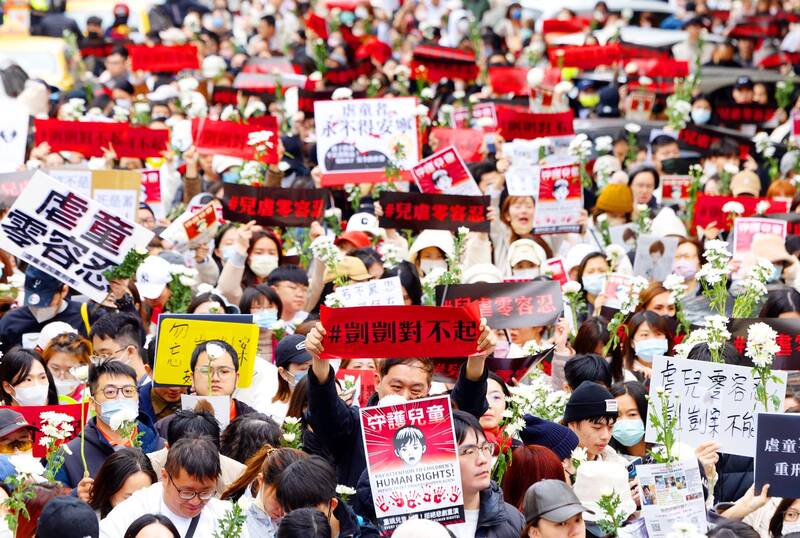
This essay will examine a child abuse case that happened in Taiwan in 2023, which has sparked widespread public outcry and raised public awareness. The victim of this case is a one-year-old boy nicknamed as Kai Kai, who was suffering severe abuse from his caregivers, Liu Tsai Hsuan and Liu Juo Lin, until death (Lu, 2024; Khoo, 2024). Liu Tsai Hsuan and Liu Juo Lin inflicted several inhumane physical abuses on Kai Kai, such as blindfolding him with a mask and stuffing him into a water bucket, forcing him to stand naked on a winter balcony as punishment, beating and kicking by his caregiver, loudly yelling and cursing with foul language, 3 teeth being broken, one tooth falling out, fingernails being torn off, multiple bruises being found, limb deformities due to prolonged binding, and lacerations on the neck caused by fingernails (Lu, 2024; Khoo, 2024). These prolonged abuses had led to his difficulty in breathing and caused his death. The child abuse case has sparked national outrage. Social media platforms such as Instagram, Facebook, and YouTube played a critical role in gathering public opinion and led to a protest on 19 March 2025 (Taipei Times, 2025). Social media influencers are involved themselves in this case by creating videos and posts with captions to raise awareness to the public regarding this case and encouraging them to participate in the petition and protest. The protest aimed to pressure the judiciary by imposing strict penalties on the child abuser (Taipei Times, 2025). Therefore, this essay will delve in-depth on how Taiwanese Instagram influencer leverages Instagram to raise awareness about child abuse to change their government regulation.
Visual Storytelling to Raise Awareness
Taiwanese social media influencers are leveraging Instagram as a platform for visual storytelling to raise public awareness, creating media activism. Media activism is a form of activism that utilizes media to disseminate information and create social change (Chandra, 2024). The emergence of media has changed the way people interact with others, allowing users to participate in creating content across various platforms (Ghaffari, 2020; Costanza-Chock, 2018), which is recognized as participatory culture (Bird, 2011). Instagram content, regarding posts and videos, is recognized as a visual storytelling format, allowing users to create visualized content on social media platforms. Visualize content format able to catch user attention quickly. Social media influencer is a new character that has emerged with the prominence of social media platforms, indicated by the individual having gained a significant amount of audience with their credibility on social media platforms (Brooks et al, 2021). While they are creating content on social media, it is considered a participatory culture. A social media influencer is able to bring influences towards the public while they leverage social media platforms to create meaningful content (Mavrodieva et al., 2019). Taiwanese Instagram influencers had created various posts on Instagram to demonstrate their concerns towards the Kai Kai case. For instance, Pierreliupei, a Taiwanese Instagram influencer, was posting a video on their Instagram page (Fig.1) indicating how Kai Kai was abused until death, raising awareness towards the public and encouraging the public to participate in the upcoming protest (Pierreliupei, 2025). After scrolling through the comment, there were Instagram users/public who commented they never heard about this case and appreciated the awareness raised by Pierreliupei. The content in the comment session shows that the Instagram influencer is able to raise public awareness through their visual storytelling creation on Instagram since it is able to catch users attention in awhile. Thus, visual storytelling on Instagram is recognized as a method to raise public awareness about the child abuse case.
Fostering Public Sphere through Instagram Comment Session
Social media platforms play a vital role in raising public awareness on social issues; however, raising awareness is insufficient to create a social change. Creating public sphere on social media platform is crucial for creating social change towards a social, economy or political issue (Ghaffari, 2020). Public sphere is a virtual place when public is able to discuss their opinion regarding issues virtually (Mehan, 2024; Rosa, 2022). Instagram is a social media platform providing a virtual space for public to create public sphere. Public sphere is a phenomenon indicated public are interested in certain topic and willing to interact on it (Rosa, 2022). The discussion can be both positive and negative. Public leverage comment, post, story and reels features on Instagram to express their opinion and participate in social media discussion, yet forming a public sphere. Kim and Hastak (2018) acknowledged that these features on social media will enhance public understanding within certain issues and motivate them to share the information and discuss with others. There is public sphere regarding Kai Kai case on Instagram as well. A Taiwanese influencer, named riceandshine.co posted some videos (Fig. 2) regarding how they show parents love towards their children, along with Kai Kai case poster and a long caption (Fig. 3) (Riceandshine.co, 2025). In her caption, she mentioned her empathy and anger towards this tragedy and uses her platform to encourage public to participate in the protest to strengthen Taiwan government law regulation. Her post has successfully gained a public sphere discussing about the Kai Kai case. There are lots of comment discuss Taiwan government should strictly enhance their law and regulation towards child abuses (Fig. 4, Fig. 5), some of the public stated they will participate in the upcoming protest, some of the public mentioned their empathy towards Kai Kai and some of the public indicated they had participated in the petition online. This phenomenon happened in comment session on riceandshine.co post, and this is recognized a public sphere, where public showing their interested and generated discussion towards this case. Besides, the discussion on the comment session will evoke public emotion and attention towards this case, gradually influence more public to participate in the online petition and protest, thus a social change happened (Mehan, 2024).
From Awareness to Social Change: Physical Protests and Online Petitions
Raising awareness and creating a public sphere are the communication methods that exist virtually on social media platforms. There are fundamental methods to create social change. According to Khaeriyah et al. (2023), social change is a transformation and evolution of a society’s structure over time in order to improve the standard of living. Social change can be created both physically and online. It encompassed various activities such as public discussion, protests, online petitions, sign-holding campaigns, and social media content (Mehan, 2023; Meladi, 2016). Ghaffari (2020) and Meladi (2016) acknowledged that the rise of social media platforms will contribute to societal change. After the awareness of the Kai Kai case was raised by the Instagram influencers in Taiwan, Taiwanese people started an online petition proposal to propose authorities strengthen the law and regulation by increasing criminal liabilities such as the death penalty on child abusers (Sandy, 2024). The online petition encourages the public to vote virtually, and since 04 April 2025, they have received 138347 votes from the citizens. The online petition started on 02 February 2025, was approved by the authorities, and will get a response from the authorities on 16 May 2025 (JoinGovTw, n.d.). Along with the online petition, Taiwanese citizens protested on 19 March 2025 in front of the Taiwan High Court regarding the law and regulations towards child abusers (Taipei Times, 2025). The online petition is a social change, as it represents Taiwanese people acting on their actions by voting online. Besides, the protest is also a social change, as it represents public actual behavior towards the Kai Kai child abuse case. Their behavior is not only confined to virtual space but turns into behavior in the actual world. Aside from that, the online petition and protesting asserted pressure on the Taiwanese government to make changes on their original law and regulation, which is recognized as a social change. Public pressure will influence the government to be conscious about child abuse issues that they neglected before. Moreover, there is also a sign-holding online campaign held on an Instagram page, encouraging the public around the world to hold a card with the word #Justice for Kai Kai and uploading to the page (JusticeforKaiKai, 2024). This is a social change, as the public is aware of the case and willing to participate by taking pictures of themselves with the card and uploading them to the Instagram page, allowing more public to be conscious of this case. Hence, the Kai Kai case exemplifies how raising awareness and creating a public sphere on Instagram can lead to an important and significant social change.
Misinformation Risks Arising from Public Sphere
While raising awareness and creating a public sphere on Instagram will generate social change, however, discussion existed online will potentially caused the dissemination of misleading information and fake news (Chamber, 2020; Kim and Hastak, 2018). The rise of social media platforms provides freedom of speech for the public to generate content online, including comments, posts, and stories, but the downside is that fast-paced sharing culture will easily spread out the fake news and misinformation to the public (Chamber, 2020). The public has to be aware of the information they consume online and verify the source of the information carefully before sharing out (Meer, Hameleers & Ohme, 2023). Besides, following official news sources is important for the public to acquire accurate information. This is because official news outlets will employ a fact-checking process to ensure their information accuracy and credibility (Meer, Hameleers & Ohme, 2023). However, there is a limited update on the Kai Kai child abuse case on Taiwan’s official news outlet online. After browsing through the official news from Google, there are lack of outlets reporting the protest of the Kai Kai case on 19 March, 2025, which is considered an essential news to be reported to the world. Other than that, other news regarding the Kai Kai child abuse case was on 2024, which indicated that the news discontinued reporting this case from one year. The lack of reporting and updating news will gradually increase the spreading of fake news or misinformation since the public was not able to find reliable sources during this period. Thus, as a public, acquire accurate information from credible sources is important to prevent spreading mis-information.
Conclusion
In conclusion, Kai Kai’s case exemplifies how Instagram influencers empower the Instagram platform to raise awareness towards the public, create a public sphere, and catalyze social change. Instagram influencers are leveraging visual storytelling to create content and raise public attention towards the child abuse case, leading to the formation of the public sphere and public discussion and finally reaching a social change through public participation on online petitions and protests to pressure the Taiwan government on strengthening child abuse regulations. However, it is important to acknowledge the potential risk of public discussion will lead to fake news and misinformation. This paper demonstrated that social media platforms are effective tools contributing to a social change. Nevertheless, even if this paper mentions the role of Instagram influencers and how they leverages Instagram to create social change, it is inevitable to admit that they will have the risk to spread misinformation to the public. Thus, searching for reliable and credible sources online is important in this digital era to ensure the public is responding to the accurate issue, which will lead to a positive social change result.
References
Bird, S. E. (2011a). Are we all produsers now? Cultural Studies, 25(4–5), 502–516. https://doi.org/10.1080/09502386.2011.600532
Brooks, G., Drenten, J., & Piskorski, M. J. (2021). Influencer Celebrification: How social media influencers acquire Celebrity Capital. Journal of Advertising, 50(5), 528–547. https://doi.org/10.1080/00913367.2021.1977737
Chambers, S. (2020). Truth, deliberative democracy, and the virtues of accuracy: Is fake news destroying the public sphere? Political Studies, 69(1), 147–163. https://doi.org/10.1177/0032321719890811
Ghaffari, S. (2020). Discourses of celebrities on Instagram: Digital Femininity, self-representation and hate speech. Critical Discourse Studies, 19(2), 161–178. https://doi.org/10.1080/17405904.2020.1839923
Graham, M., & Costanza-Chock, S. (2018). The routledge companion to media and activism. Transformative Media Organizing. https://doi.org/10.4324/9781315475059
Justice for Kai Kai [@justiceforkaikai]. (2024). Post. [Instagram Page]. Retrieved 01 April, 2025. Instagram
Khaeriyah Khaeriyah, Anne Abdul Rahman, Indriati Amirullah, Idham Gentanegara, & Nurasia Natsir. (2023a). The effect of social media on Community Social Change. Brilliant International Journal Of Management And Tourism, 3(1), 01–11. https://doi.org/10.55606/bijmt.v3i1.1012
Lu, F. (2024, March 26). Nanny sisters in Taiwan in custody accused of torturing baby boy to death. South China Morning Post. https://www.scmp.com/news/people-culture/trending-china/article/3255473/taiwan-nanny-sisters-accused-torturing-baby-death-beatings-sleep-restraints-food-deprivation-3-month
Kim, J., & Hastak, M. (2018). Social network analysis: Characteristics of online social networks after a disaster. International Journal of Information Management, 38(1), 86–96. https://doi.org/10.1016/j.ijinfomgt.2017.08.003
Khaeriyah Khaeriyah, Anne Abdul Rahman, Indriati Amirullah, Idham Gentanegara, & Nurasia Natsir. (2023). The effect of social media on Community Social Change. Brilliant International Journal Of Management And Tourism, 3(1), 01–11. https://doi.org/10.55606/bijmt.v3i1.1012
Khoo, Y. H. (2024, March 27). Tied, beaten and fed burnt food: Nanny sisters in Taiwan accused of torturing baby boy to death. AsiaOne. https://www.asiaone.com/asia/tied-beaten-and-fed-burnt-food-nanny-sisters-taiwan-accused-torturing-baby-boy-death
K Sarath, C. (2024, February). SOCIAL MEDIA AS AN EFFECTIVE TOOL IN RAISING AWARENESS IN SOCIETY. https://www.researchgate.net/publication/387427171_SOCIAL_MEDIA_AS_AN_EFFECTIVE_TOOL_IN_RAISING_AWARENESS_IN_SOCIETY
Mavrodieva, A. V., Rachman, O. K., Harahap, V. B., & Shaw, R. (2019). Role of social media as a soft power tool in raising public awareness and engagement in addressing climate change. Climate, 7(10), 122. https://doi.org/10.3390/cli7100122
Mehan, A. (2024). Digital feminist placemaking: The case of the “Woman, life, freedom” movement. Urban Planning, 9. https://doi.org/10.17645/up.7093
Miladi, N. (2016). Social Media and social change. Digest of Middle East Studies, 25(1), 36–51. https://doi.org/10.1111/dome.12082
Pierre Liu Pei [@pierreliupei]. (2025). Post. [Instagram page]. Retrieved 01 April, 2025 from Instagram
Riceandshine.co [@riceandshine.co]. (2025). Post. [Instagram page]. Retrieved 02 April, 2025 from https://www.instagram.com/p/DHTcWBEqSGz/?img_index=1
Rosa, H. (2022). Social media filters and resonances: Democracy and the Contemporary Public Sphere. Theory, Culture & Society, 39(4), 17–35. https://doi.org/10.1177/02632764221103520
Taipei Times. (2025, March 19). Crowd gathers outside court for Child abuse, death case. Taipei Times. https://www.taipeitimes.com/News/taiwan/archives/2025/03/20/2003833741
Sandy, S. (2024, May 4). Sign the petition. Change.org. https://www.change.org/p/demand-justice-for-kaikai-and-reform-of-social-safety-net-in-taiwan
van der Meer, T. G., Hameleers, M., & Ohme, J. (2023). Can fighting misinformation have a negative spillover effect? how warnings for the threat of misinformation can decrease general news credibility. Journalism Studies, 24(6), 803–823. https://doi.org/10.1080/1461670x.2023.2187652
公共政策網路參與平臺. (n.d.). https://join.gov.tw/idea/detail/04a2cad8-8d73-43fe-93d2-dd8a649b9e0d


Hi Shannon Kate, You’re right to ask; it is incredibly difficult to police these issues today. Predatory behaviour isn’t exclusive…