Abstract
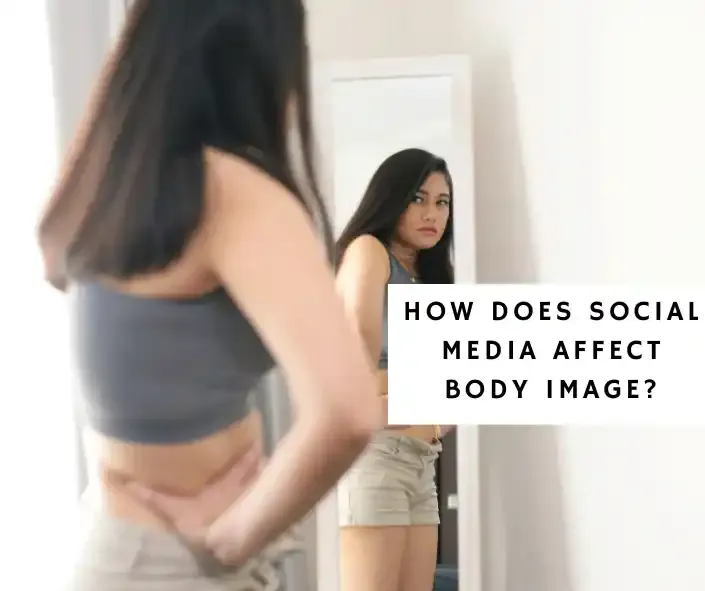
The purpose of this paper is to conduct an in-depth analysis on the role that social media platform, particularly Instagram and how it continues to redefine the nature of people`s online identity and eating disorders among women. This conference paper will examine the degree to which Instagram, over the years, has evolved leading to the adoption of different personas while interacting in the social online space. The paper will provide a critical analysis of various arguments proposed by scholars to support the argument that social media has indeed over the years provided a platform that has redefined and contributed to how women portray themselves online and the degree to which Instagram has influenced how they behave and its impact towards eating disorders leading to conditions such as anorexia and bulimia in the US.
Undoubtedly, technology and globalisation continues to revolutionise the world and how we interact with each other. The emergent technologies and advancements have made the world a global village and impacted industries across the globe. However, technology has both positive and negative impacts. According to (Young, 2013), people across the world have been able to curate their identities and exchange information through sharing content with the aid of computer mediated communication technologies and social networks such as TikTok, Instagram, Snapchat, Myspace, Facebook just to name a few. The author further posits that identity can be better explained through the social identity theory analyses behavioural patterns to establish a connection between a particular niche`s social media relationships. This is further supported by (Trepte, 2013) who argues that the social identity theory framework seeks to examine how people form relationships on the basis of the shared common goals and values such as but not limited to politics, nationality, demography, race among other paradigms. The author further suggests that these shared interests contribute to the media technologies that are adopted by various groups and is a prerequisite of what social media platforms they utilise to express themselves. For instance, baby boomers tend to prefer social media platforms such as Facebook to stay in touch with their friends and family. In contrast the Gen Z demography may prefer to use applications such as TikTok, Instagram and snapchat while curating their social identities.
According to Dondzilo et al (2024), social media and digital platform usage continues to increase worldwide with over 4 billions users worldwide. The author further posits that the content shared on these platforms influence human behaviour greatly and has the potential to impact various demographics either positively or negatively. (González-Nuevo et al., 2021) states that there are many scholars that have attempted to examine the link between social media networks and the role it plays in contributing eating disorders. The author further decrees that based on his research eating disorders have increased particularly due to the content that is shared on social media to generate traffic and influence the user`s identity forcing them to conform to socially set beauty standards. This in turn has led to a sense of social pressure from the posts, likes and comments that people receive based on the content that they see. For instance, the health and lifestyle industry is constantly evolving, and the beauty standards are constantly being displayed on various platforms. If an influencer chooses to make content on Instagram that advises masses to avoid eating various foods, they contribute to the eating aversion pandemic such as bulimia and anorexia which in turn forces the users to conform and normalise these standards which sets off a chain effect.
According to Eikey & Booth (2017a), women are more prone to having eating disorders. This is based on a research project by the author to identify the degree to which Internet communication technologies (ICT) has played a role in influencing the dietary choices of the selected participants with eating disorders. The author further suggests that the study revealed that the participants attributed their eating disorders to the content that they saw on social media networks. The author further states that the study revealed that Instagram was the most prevalent site that the participants were more inclined to follow to get dietary advice from other Instagram users. While this is viewed as a negative impact, the author argues that social media can be used as a platform to curb eating disorders and assist women to recover from this disorder. There is a myriad of actions that can be utilised to help curb this issue. For instance, while some may consider technology as a negative factor, it is an unavoidable tool that can be leveraged to provide solutions. For instance, people suffering from these disorders can use Instagram as a platform to join online communities of users and support groups who are currently experiencing similar challenges.
This is further supported by (Yusri, 2020), who argues that eating disorders and unhealthy eating behaviours in the US are prevalent and can be attributed to the information that people view on these sites. The author also suggests that social media has the power to influence human behaviour and shift internet user`s perception. Moreover, the author further suggests that in the US, women are more susceptible to fall prey to advertisements that advocate for food aversion and binge eating compared to the male population. This can be attributed to the fact that the social media platforms are gradually becoming populated with influencers and advertisers who are keen on promoting their products and services. For instance, a common uprising trend that is becoming popular across the world is the implementation of social network platforms to use celebrities and influencers to market brand products and services. They have the power to influence public opinion hence they have become an integral component for organisations.
This is further supported by Fioravanti et al., (2023) who states that in the US eating disorders in women living has been ranked at more than 49 percent amongst women. The author posits that these disorders increased in the country particularly during the covid period. Statistics according to (Kumar & Kumar, 2022), shows that the usage of online social media networks in the United States during the pandemic was rampant and eventually led to the increase of this disorders. The pandemic not only revolutionised how people interact but also forced people of different genders and demography to conform to a new phenomenon that is more centered on communicating and interacting with each other through online platforms. Since the pandemic led to social isolation, people around the world were socially isolated forcing them to use social platforms to check on their friends and relatives as a coping mechanism. The author suggests that in the United States, the mortality rate linked to eating disorders has increased with over ten thousand cases yearly. This can be attributed to the fact that due to the nature of the pandemic; people were forced to communicate and maintain relationships through social media platforms as a directive to prevent further spread of the disease. Therefore, that means that most people were determined to share content during this social isolation period to stay relevant. Instagram was used as a platform by content creators to highlight how they have been able to maintain a healthy lifestyle during this period. Since majority of people were living their lives online, the content that they had access to be a driving factor that sipped into their livelihood. More specifically, the diet and exercise routines can be attributed to the content that was disseminated on these platforms.
Furthermore, in contrast, a positive effect of the social isolation was that a demography chose to utilise Instagram to stay fit by watching various videos that are more cantered on keeping fit and maintaining a healthy lifestyle. The content shared on this platform focused more on making the best out of an unpleasant situation. Since typically access to usual activities were cut off, some people took the liberty to use Instagram as a platform to encourage individuals to stay fit Since Instagram is predominantly used by people between the ages of 18-25 worldwide, the content being shared on this platform played an important role in identity reconstruction and curbed this issue to some extent.
Instagram, like other social media platforms has been instrumental in contributing to the creation of social identity online. The features that the application offers allows users to use filters and various features to generate content. These filters allow the users to change their appearance to fit into societal standards. For instance, for content creators, influencers, and celebrities to appeal to their demography, they would adopt the use of various features that would alter their appearance and create an illusion which is populated across different platforms with the aim of influencing like-minded individuals with the same shared interests. These online identities have contributed to this disorder particularly because the people who consider the practices portrayed on social media platforms ma have underlying conditions such as body dysmorphia, anxiety and in some cases mental illness that makes them susceptible to adopting what is highlighted on these sites. According to (Kumar & Kumar, 2022), the average human being spends more than 100 minutes a day on social media. The author further states that these online platforms not only contribute to disorders such as anorexia and bulimia, but the use of multiple applications has the potential to contribute to depression and anxiety particularly among the youth. The social identities that are presented on Instagram and other social media platforms can influence the thoughts, behaviours, and negative feelings.
According to (Crusius et al., 2022), women living in the United States who use Instagram as platforms for sharing content are susceptible to social comparison. The author suggests that this phenomenon is since people compare their status to that of others either positively or negatively. For instance, upward social comparison is more focused on the fact that social media users compare their situation against others and conclude that their situation is better than their counterparts. However, a downward social comparison is an indication that tends to focus more on increasing an individual’s self-esteem on the basis that what they are experiencing and showcasing on social media is far worse than what they are going through which in turn boosts their self esteem and gives them reassurance that what they are experiencing is better because someone else is experiencing more harsh conditions. This is further supported by (Suis & Wheeler, 2012), who argues that social comparison with relation to social media usage has the potential to contribute to eating disorders either positively or negatively. The author argues that women in the United States can be influenced by the content that they view online and tend to compare themselves. While this may have a positive outcome, there is still a probability that it may contribute to an even larger problem such as abiding to beauty standards generated from online buzz.
Conclusion
In conclusion, social media when used well has the potential to be used a platform to drive change in a positive direction. This paper focused on the effects and the role that Instagram plays and the extent to which women in the United States interpret and implement what they see on the site. While eating disorders are prevalent on social media, one`s social identity plays a significant role towards avoiding pitfalls such as fake news and conformance to industry beauty standards. However, social media platforms have the power to influence masses and change people`s perceptions, it is advisable to have awareness and be able to depict manipulative strategies that are often employed by the so-called influencers and celebrities. Moreover, the pandemic practically forced people worldwide to isolate themselves both socially and pers and family face to face led to an increase in depression and anxiety since interactions became limited to online platforms.
Therefore, to eradicate eating disorders, stress, anxiety, and curb mental illness, it is prudent for people to discern and separate your online social identity from your reality. The advancements in technology have led to the creation of different online personalities which are far from reality. For instance, there are various social media applications that are using the use of Artificial intelligence on their platforms. This creates an illusion that is far from reality and people who are not knowledgeable about these technologies end up falling into this abyss and incorporating the content they view online into their lives. Evidently, depending on shared interests, people on these platforms eventually create a persona of themselves so they can fit in. While this is not frowned upon, it can lead to unprecedented situations such as falling prey to scammers, hackers and cat fishers who have the capability to take advantage of you (Eikey & Booth, 2017b) physically which inevitably led to an increase in the use of social media platforms. This can be attributed to the fact that people were forced to adopt technologies to interact with their family members and friends online as well as adapt to a different lifestyle. Due to the rampant use of technology to stay informed, many individuals, particularly women in the United States became targets of manipulative schemes which is attributed to the content that they were viewing on Instagram.
References
Crusius, J., Corcoran, K., & Mussweiler, T. (2022). Social Comparison. Theories in Social Psychology, Second Edition, February, 165–187. https://doi.org/10.1002/9781394266616.ch7
Dondzilo, L., Mahalingham, T., & Clarke, P. J. F. (2024). A preliminary investigation of the causal role of social media use in eating disorder symptoms. Journal of Behavior Therapy and Experimental Psychiatry, 82(November 2023), 101923. https://doi.org/10.1016/j.jbtep.2023.101923
Eikey, E. V., & Booth, K. M. (2017a). Recovery and Maintenance: How Women with Eating Disorders Use Instagram. In iConference.
Eikey, E. V., & Booth, K. M. (2017b). Recovery and Maintenance: How Women with Eating Disorders Use Instagram. IConference, March.
Fioravanti, G., Cassioli, E., Rossi, E., Lucherini Angeletti, L., Casale, S., Ricca, V., & Castellini, G. (2023). The relationship between problematic Instagram use and eating disorders psychopathology: an explanatory structural equation model. Social Psychiatry and Psychiatric Epidemiology, 0123456789. https://doi.org/10.1007/s00127-023-02477-1
González-Nuevo, C., Cuesta, M., & Muñiz, J. (2021). Concern about appearance on instagram and facebook: Measurement and links with eating disorders. Cyberpsychology, 15(2). https://doi.org/10.5817/CP2021-2-9
Kumar, A., & Kumar, A. M. (2022). The Effect of the COVID-19 Pandemic on how Social Media Use Influences Eating Disorders and Exercise Motivation. https://digitalcommons.unf.edu/etd/1144
Suis, J., & Wheeler, L. (2012). Social comparison theory. Handbook of Theories of Social Psychology: Volume 1, January 2015, 460–482. https://doi.org/10.4135/9781446249215.n23
Trepte, S. (2013). Social identity theory. Psychology of Entertainment, June, 255–272. https://doi.org/10.5840/iabsproc19967101
Young, K. (2013). Managing online identity and diverse social networks on Facebook. Webology, 10(2), 1–18.
Yusri, A. Z. dan D. (2020). 済無No Title No Title No Title. Jurnal Ilmu Pendidikan, 7(2), 809–820.


Leave a Reply
You must be logged in to post a comment.