Abstract
This paper examines the impact of social media on university students’ travel practices and self-representations. Students use open image and video-sharing platforms to create curated visual narratives representing their idealized lifestyles and aspirational identities. The study critically discusses the opportunities for flexible identity experimentation and the risks of contrived performances on social media. Although social media provides students with unprecedented opportunities, hidden dangers, such as the homogenization of information, virtualization of experiences, and over-reliance on external evaluations, should be guarded against. Therefore, students should use social media rationally, maintain independent thinking, and pursue authentic travel experiences and intrinsic values.
Keywords: #liberal, #university students, #travel, #socialmedia, #sharing, #TikTok, #Instagram
Introduction
Social media are deeply embedded in our lives and unprecedentedly changes our experiences and perspectives. Social media greatly influences students’ travel experiences and identities. Whether before, during, or after travelling, social media has changed students’ traditional travel and lifestyle habits in many ways. In this paper, I delve into the impact of social media on students’ travel experiences and identity transformation. Firstly, I explore the profound effects of social media on how students obtain travel details and organize their trips. Subsequently, we aim to examine the role of social media in enhancing the student travel experience and analyze the pros and cons for university students in travelling. Finally, our analysis focuses on the role of social media in accelerating the formation and meaning of students’ travelling identities. From these aspects, social media is changing modern students’ travel experiences and principles in novel ways.
In current information age, social media greatly impacts student travel planning and experiences. Traditional guidebooks and advice have been transformed into social media channels such as travel guides, blogs, and critiques. Learners can actively survey and evaluate feedback and recommendations from global travellers on social platforms rather than just passively seeking information from travel agents or literature. Real personal sharing is often more objective and targeted than traditional methods. At the same time, students can manage their trips more cheaply through social media platforms, offering unique offers and discounts (Xiang, Z., & Gretzel, U. 2010). Notably, social media has played an important role in revolutionizing how students access travel information, plan trips, and promote creative freedom for content creators. Platforms such as TikTok and Instagram provide a platform to showcase personal experiences and travel escapades.
University students can share their experiences on social media by uploading photos, videos, and stories to garner attention and recognition. The exhibition is a narrative of travel, personal identity, and self-conception. University students can shape their online identities, showcase their pastimes, values, and lifestyles through travel-centric content on social networks, and thus influence how others see and expect them. In addition, the social media platforms’ timeline function helps chronicle and showcase travel experiences over time, ensuring they are preserved over time. The durability and traceability of this feature allow university students to continue and disseminate their travel narratives, reinforcing their identity on social media (Leaver, T. 2015).
In addition, integrating large datasets into social media platforms influences the consistency of personal identities by incorporating information from outside firms to form a comprehensive profile. When one forms one’s identity, observing exciting travel content spread by others on social media can inspire new expectations and ideas about locations, technologies, and travel experiences. University students can break away from traditional travel techniques by pursuing a personalized travel experience through visual and narrative approaches. The interactivity of social media has revolutionized travel images and videos, attracting a variety of audience reactions, such as likes and comments. This highlights the positive role of social media in bringing people together, revealing their private lives, and shaping their identities, as well as the challenges social media poses in preserving the integrity of identity and protecting privacy. In addition, social media attracts college students by exposing them to various peer-shared travel resources (Brusseau, J. 2019) and providing them with multiple opportunities for travel and cross-cultural communication. University students utilize social media to share travel narratives with people from varied cultural backgrounds, learn about regional cultures and customs, and promote cross-cultural understanding and dialogue.


Additionally, social media services help university students gain access to basic information about where they are travelling, encompassing transportation, accommodation choices, and food recommendations to enhance their experience. University students strategize and hashtag photos on social media platforms to construct and display their identities. They present themselves in a certain light by choosing specific themes and events to highlight in the pictures they show. These photos were created as important forms of symbolism for their world, allowing them to intuit their college experiences and self-presentation. By showcasing photo libraries on platforms like Instagram, university students construct visual narratives that reflect their daily lives and social interactions, presenting curated versions of themselves to a diverse audience. I think this images capture the moment and convey the essence of the performance, showcasing aspects of identity and belonging while validating the sense of authentic experience .
With social media, students are accelerating the construction of a new “traveller” identity. In the past, those described as “travellers” tended to have extensive travel experience and professional backgrounds. Ordinary students build their travel image by sharing their experiences on social media platforms. For example, According to miwivon’s (2024) post on Instagram displays various photos of her travels, including everyday life on exotic streets, photos of famous sights, and interesting photos of her travels in multiple modes of transport. In addition to the lifelike images, the student took to social media to share her love and experience of the journey. Inspirational photos and shared insights created a picture of the student as a “traveller.”. Predictably, more students will take the road driven by social media, showing an unprecedented sense of adventure and curiosity about the world. At the same time, the similarities and differences in university students’ travel images and video-sharing behaviours can be influenced by different identities, personalities, and other factors. For example, travellers can adopt behaviours aimed at gaining face (greedy) or saving face (protective). Travellers with protective tendencies are wary and shy and keep a low profile, believing that miscommunication or mistakes may cost them face.
In contrast, travellers with acquisitive tendencies are attention-seekers eager to build a positive image through self-promotion and ingratiation. For example, consider an Instagram influencer, Taramilktea, who regularly posts images of luxury hotels, designer clothing, and exotic destinations. This influencer may be seen as someone with acquisitive tendencies, seeking attention and validation through showcasing her glamorous lifestyle to gain followers, likes, and admiration. Her posts often include hashtags related to luxury living, travel, and fashion, further emphasizing her desire for attention and recognition.Thus, sharing travel experiences on social media is a social dilemma. Travellers can maintain their dignity by refraining from disseminating their travel stories, preventing false information. Conversely, travellers can enhance their societal reputation and social standing by disseminating their travel adventures. These findings demonstrate how travel narratives shared by travellers on social media platforms (such as TikTok and Instagram) affect their social networks and assets, as noted by scholars and professionals (Wang, X., Huang, Y., Li, X., & Peng, L. 2016).
Some studies suggest that university students sharing travel-related information on social media may exhibit different preferences and interests based on gender. Women tend to share information about food, ethnic fashion in stylish regions, and picturesque photography. At the same time, men are more inclined to post about adventure and outdoor activities. Such differences could impact their public and social media image (Abidin, C. 2021). Besides, university students of diverse ethnicities might display varied cultural traits and tastes when sharing travel photos or videos.
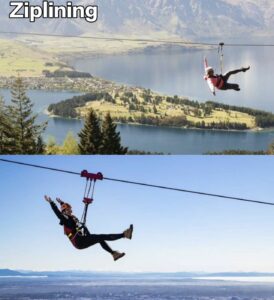

On the other hand, Asian students tend to emphasize traditional culture and history in their travel content sharing. For example, in China, the sharing of ethnic identities is evident in travel preferences, including the selection of destinations, activities, and travel methods. There are 56 ethnic groups in China, each with a different culture, cuisine, and clothing, and these differences can affect their performance and identity on social media. Students of various ages may travel in different ways and have different experiences. Younger students seek excitement and new experiences, preferring company trips, outdoor camping, and field trips. Older students are more comfortable and relaxed when travelling alone or with their families. This difference may be reflected in their travel content and sharing behaviour, which can affect their image on social media. Therefore, different types of college students may have other travel images and video-sharing behaviours. These differences can affect how they are portrayed and identified on social media, reflecting differences in their travel patterns, experiences, and expectations.


As a result, photos and content shared by college students on social media should be more authentic and relevant to their lives than content shared by celebrities and microblogging public figures. Celebrities and micro-celebrities often present an idealized version of life, presenting perfect clothes, luxurious lifestyles, and flashy moments. In contrast, college students may share a wider range of content, including imperfections and real-life situations, and this authenticity is more likely to resonate and identify with others (Tononi, F. 2023). In addition, content on social media is also influenced by consumerist culture, driving the trend towards personal branding and imitating influencers. This can lead young people to feel insecure and self-doubt as they compare themselves to the perfect lives of celebrities and influencers (Tononi, F. 2023).
Contemporary travel sharing is an iterative process of selective self-presentation, influenced by the rapidly changing attention economy and evolving digital self-presentation norms. Planning often involves extensive research into popular locations, stylized poses, creative filtering, and editing techniques to create visually appealing travelling personas (Liu, C. 2021). For example, during a trip, students could post comments on food, lodging, and attractions on Instagram or TikTok, along with great photos or videos. Such sharing, on the one hand, can help students better document their journeys and, on the other hand, can stimulate interactive discussions among friends and enrich the experience. Friends can comment on the beauty of the photos and the student’s knowledge of students who post content that attracts likes and comments from friends and family. This positive feedback will undoubtedly strengthen the student’s identity. This identity would not have been possible without the virtual stage provided by social media, where students can show their adventurous, open, and independent side through words, images, and even videos. In addition to social interaction, sharing travelogue blogs on social media often brings new travel experiences for students. For example, students stumbled across a popular-style restaurant when they looked up the guidebook. They decided to go there on a whim to learn more. This serendipitous but interesting discovery adds to the novelty of the journey. In addition, instant interaction on social media makes it easier for students to connect with local people, increasing opportunities for cross-cultural communication and making the travel experience more immersive and unique. Social media makes the travel experience unique and personal, whether on the road or at a destination.
Not only that, but social media also provides a virtual stage for college students to negotiate and experiment with flexible identities by creating compelling visual narratives. The duration of travel images and videos facilitates the reflexive process of self-expression required for choreography, whether depicting adventurers, cultural explorers, ethical globetrotters, or some other idealized character (Liu, C. 2021). That’s why social media platforms offer college students many opportunities to travel, such as personal branding. By sharing travel content, college students can demonstrate their lifestyle, values, and cultural identity, connecting with others and expanding their social circle. This behaviour is linked to the dynamics and influence of the online public. Within the dynamics of the online public, there is a dynamic known as the “influencer audience,” which includes both human and machine viewers and forms self-presentation and interaction, though sometimes only visible to specific groups. When university students share travel photos or videos, they must attract attention and maximize algorithmic norms that trigger the platform to present content to a user community. So, by sharing travel content, college students can showcase their versatility on online platforms, interact with fans in digital and physical spaces, and monetize content by integrating “ads.” When sharing travel information, university students may disclose their details, such as specific itineraries and lodging locations, and risk being exploited by outlaws (Mendelson, A.L., & Papacharissi, Z., 2010). Therefore, university students must carefully consider the balance of opportunity and risk when using social media platforms to share travel content, protecting their privacy and safety. At the same time, social media platforms put pressure on individuals to remain consistent in their identities in different social contexts, which can limit the expression and exploration of multiple identities. Social media sharing platforms provide opportunities to showcase and construct identities. They can also create limitations and challenges to individuals’ identities.
Conclusion
Social media are fundamentally reshapes students’ travel experiences and identities. From the preparation for travelling to the knowledge and sharing afterwards, social media are everywhere, influencing students’ approach to travelling and their view of themselves. This change is reflected in the convenience of accessing and sharing information, and the new cognition and value orientation students have developed . We need to objectively recognize that this social media-driven change has brought unprecedented opportunities to students. However, hidden dangers should be guarded against, such as homogenization of information, virtualization of experiences, and over-reliance on external evaluations . Students should use social media rationally, maintain independent thinking, and pursue real travel experiences and the realization of intrinsic values. This way, social media can help students broaden their horizons and cultivate their emotions rather than limiting them to a narrow virtual world. By embracing the new changes brought by social media while maintaining the original intention of travelling, students will gain a successful life experience and an independent personality.
Reference
Abidin, C. (2021). From “networked publics” to “refracted publics”: A companion framework for researching “below the radar” studies. Social Media+ Society, 7(1), 2056305120984458.
Brusseau, J. (2019). The ethics of identity in the age of big data.
Eid, M. I., & Al-Jabri, I. M. (2016). Social networking, knowledge sharing, and student learning: The case of university students. Computers & Education, 99, 14–27.
Gerhardt, C., Eisenlauer, V., & Frobenius, M. (2014). Participation framework revisited: new media and their audiences and users.
Jackson, S. J., Bailey, M., & Foucault Welles, B. (2018). #GirlsLikeUs: Trans advocacy and community building online. New Media & Society, 20(5), 1868–1888.
Leaver, T. (2015). Researching the ends of identity: birth and death on social media. Social Media+ Society, 1(1), 2056305115578877.
Liu, C. (2021). Exploring selfie practices and their geographies in the digital society. The Geographical Journal, 187(3), 240–252.
Mendelson, A. L., & Papacharissi, Z. (2010). Look at us: Collective narcissism in college student Facebook photo galleries. In A Networked Self (pp. 259–281). Routledge.
Miwivon(2024)https://www.instagram.com/miwivon?igsh=djcycThqeXFmenA0
Terranova, T. (2004). Network culture (p. 73). London: Pluto Press.
Tononi, F. (2023). Images in the Age of Social Media: Capitalism, Consumerism, and Liberalism. In Regimes of Capital in the Post-Digital Age (pp. 179–202),. Routledge.
Wang, X., Huang, Y., Li, X., & Peng, L. (2016). A moderated mediation model of sharing travel experience on social media: motivations and face orientations in Chinese culture. Journal of China Tourism Research, 12(1), 42–64.
Xiang, Z., & Gretzel, U. (2010). Role of social media in online travel information search. Tourism Management, 31(2), 179–188.


Leave a Reply
You must be logged in to post a comment.