
aBSTRACT
Like Harry Styles ‘ fans, Instagram and TikTok have emerged as crucial platforms for creating online communities with similar interests. This paper investigates how these social media platforms foster connections, allow for creativity, and show mutual respect between fans. The study looks at the unique aspects of these platforms, such as hashtags and interactive content, to demonstrate how crucial they are in creating a community. Drawing on Oldenburg’s concept of Third Places, the study demonstrates how Instagram and TikTok function as modern equivalents, establishing where fans can bond over their shared passion for Styles’ music and personality. By interacting with user-generated content and sharing creativity, These platforms foster a vibrant online community that recognises Harry Styles’ skills and goes beyond entertainment.
How Social Media Platforms act as a ‘Third Place’ for Harry Styles fans
Keywords: Harry Styles, TikTok, Instagram, Third Place, Online Communities, Fandom.
Social media platforms such as TikTok and Instagram are crucial in creating communities based on shared interests in the digital age. The fandom of Harry Styles is a notable example, captivating audiences worldwide. These platforms function as virtual “third places” where fans can connect, share experiences, and express their admiration for Styles. An Analysis of these platforms’ unique features highlights their role as digital hubs for community building, strengthening fandom ties, and showcasing creativity and appreciation for Harry Styles’ music.
Harry Styles, initially rising to fame with One Direction on The X Factor in 2010, quickly gained global recognition (Banks, 2020, p.12). Following the band’s hiatus in 2015, Styles embarked on a solo career, debuting with his ‘Harry Styles album, captivating audiences with his music and fashion sense, often compared to the iconic David Bowie (The Conversation, 2022). Renowned for pushing boundaries in gender and genre flexibility, Styles’ bold fashion choices, including elegant Gucci suits, showcase his unique style evolution from his boyband casual attire (Banks, 2020, p.12). Additionally, he is a vocal advocate for LGBTQ+ rights, promoting inclusivity and support for all fans (Singh, 2021). His motto, “TPWK”, embodies his message of empathy and acceptance, expanded into generosity through fundraising efforts that have raised over $1.2 million for charities worldwide (Banks, 2020, p.12). Styles’ internet fan base, centred on platforms like TikTok and Instagram, exemplifies a close-knit community engaging in activities like fanfiction creation and discussion (Sauro, 2017, p.2). Emphasising shared identity and values, these fans actively contribute to a supportive and inclusive environment displayed by the ubiquitous TPWK phrase (Meakins, 2014, p.18).
Defining Third Place and its attributes is essential before delving into Instagram and TikTok as candidates for Third Place within the Harry Styles following. Established by Ray Oldenburg in 1989, Third Places are essential social settings different from homes and workplaces and promote casual conversation and ties to the community (Foster, 2013, p.11; Aldosemani, 2016, p.1022). Foster (2013) emphasises that These places, such as pubs and coffee shops, provide a laid-back atmosphere that levels social hierarchies and encourages inclusivity. Furthermore, they welcome various customers, encouraging consistent attendance and a feeling of community (Foster, 2013, p.11). Aldosemani (2016) suggests that with internet technologies, the idea of Third Places has been extended to virtual spaces, promoting inclusivity and real encounters (Aldosemani, 2016, p.1022). These online environments, crafted by various community members, seek to replicate a “home away from home” (Soukup, 2006, p.434). Co-creating these environments, participants add recognisable components to foster a sense of community (Soukup, 2006, p. 435). Social media platforms facilitate topic-specific discussions by connecting users with dispersed communities (McArthur, 2016, p.1). Therefore, regarding this investigation, as technology blurs physical and digital spaces, researchers investigate online community creation based on Oldenburg’s criteria of Third Places.
With Innovative features like Hashtags, visual imagery, and engagement tools such as liking and commenting, Instagram serves as a digital Third Place for the Harry Styles fanbase. With over a million users, this free photo and video-sharing app has grown in popularity over time rapidly (Instagram, 2024). Arvios’s study (2022) mentions that Users can create public profiles, interact with others, exchange material and upload images and videos (User-generated content), which is essential for self-expression (Arvios, 2022, p.8). User-generated content improves the experience, adds context, and is frequently accompanied by text, such as comments or Hashtags (Bejandi, 2017, p.487; Giannoulakis, 2019, p.592). Ibbas study (2015) notes that Instagram users can curate visually attractive content and establish connections within the fandom by utilising interactive components such as liking, commenting, and sharing. Continuously with customisable privacy settings and a post-by-post timeline, Instagram ensures that users are informed and engaged with their favourite accounts (Ibba, 2015, p.280). Therefore, Instagram is more than just a social media platform; it is a virtual community where fans can express their creativity, become closer, and have deep conversations while sharing their passion for Harry Styles’s music.
For Harry Styles’s followers, Instagram is an essential Third Place, mostly because of its clever use of Hashtags. According to Sekhon’s (2023) study, users may naturally classify and arrange material Thanks to these tags, which comprise the site’s folksonomy system (Sekhon, 2023, p.4). Folksonomies, in contrast to formal taxonomies, are rules-based and allow users to be active developers of the classification scheme (Sekhon, 2023, p.4). The ‘#’ symbol designates a Hashtag, adding descriptive components to shared text, photos, and videos to help categorise and explain user searchability (Kwon, 2023, p.79). Furthermore, Ibba (2015) states that content producers tag their work for simpler findings and to express their viewpoints, emotions, or locations (Ibba, 2015, p.280). Instagram’s algorithms can identify Hashtags and classify related photos according to tagging, facilitating interaction with various communities (Malik, 2019, p.14). For instance, the Hashtag #Loveontouroutfit in Figure 1 creates a community on the platform where participants share pictures of their outfits, encouraging conversation and creativity (Giannoulakis, 2019, p.592). In addition to raising awareness and fostering word-of-mouth effects, this approach fosters idea sharing, purchasing insights, and self-expression through clothing choices. In the end, it improves post-discoverability and engagement rates.
Figure 1: The Hashtag page for #Loveontouroutfit

The #Loveontouroutfit above is a perfect example of how the site serves as a Third Place for the Harry Styles fandom. As Aldosemani (2016) said earlier, it encourages casual spaces like physical Third Places (Aldosemani, 2016, p.1022). With this Hashtag, fans everywhere may unite in a virtual environment to express their love for Harry Styles and share what they wore to the concert, thus bringing them together to form a strong online community. In this area, supporters unite around their enthusiasm for his concerts and fans’ distinctive style choices. As users browse through the hashtag feed, they all discover clothing ideas they could wear to the concert when Harry is performing locally near them, where they can also use the hashtags themselves, adding to the mosaic of enthusiasm and inventiveness among fans.
Moreover, through concert outfit images of fans, the Hashtag is a dynamic platform for fan contact and participation, facilitating a virtual exchange of ideas, adoration, and support (Bejandi, 2017, p.487). Hashtags encourage a sense of connection between fans worldwide and commemorate the shared experience of seeing Harry Styles live. The Hashtag connects followers passionate about the musician regardless of where they live. With this perspective, Instagram has become a virtual Third Place where users can unite, communicate, and create deep bonds over common interests (Soukup, 2006, p.435). Whether looking for clothing inspiration, talking about their concert experiences, or just hanging out with other fans, users find comfort and friendship in this space. Thus, this demonstrates Instagram’s ability to build relationships and improve the fan experience as a Third Place.
Instagram, a vital Third Place for Harry Styles fans, also uses visual imagery and engagement tools like liking and commenting. Photo sharing is essential because it lets people visually communicate their feelings (Serafinelli, 2017, p.96).
Figure 2: @Harryflorals Reported Sighting of Styles

Figure 3: Comment section of Figure 2

Recent postings from fan pages like @Harryflorals Figure 2 provide an interesting example of this fandom interaction. This post features a Harry Styles sighting with comments and hashtags, all encouraging participation. By tagging friends, users improve social interaction and make tight communities visible. Instagram serves as a platform for creative expression and a thriving social network where users in the fandom may interact with each other through photos and interactive elements. For Harry Styles fans, Instagram is an essential online Third Place because of its creative visual images and engagement tools for liking and comments. As Foster (2013) mentions, like conventual third places like Pubs or Coffee shops, Instagram provides a laid-back environment for interaction (Foster, 2013, p.11). Harry Styles’s uploaded pictures, like Figure 1, spark conversations frequently centred on his look and style preferences. Like the purpose of actual Third Places, this produces a virtual environment where fans get together, communicate, and form bonds around common admiration (Bejandi, 2017, p.487). Fans can express respect for Styles’ aesthetic choices and form bonds over mutual appreciation by participating in conversations about his hairdo, clothing, and facial expression in the comment box, as illustrated in Figure 3. Styles’ identities and stages, such as “frat boy Harry”, are frequently made fun of by fans, who use them to make jokes and inject humour into discussion. This strengthens the bond between followers who recognise his changing persona. Figure 3 illustrates how interactions go beyond likes and comments. Users tag others to start reciprocal discussions and boost engagement (Kang, 2022, p.3). As a result, Instagram serves as a contemporary Third Place through visual communication and interactive features, encouraging deep connection and a feeling of community among Harry Styles fans and other communities on the network.
TIKTOK
For fans of Harry Styles, TikTok occupies a digital Third Place thanks to its varied video content and interactive culture via its user interface. Once known as Musical.ly, it was primarily a platform for sharing videos and letting users make entertaining lip-sync videos and music (Bhandari, 2022, p.1). TikTok is one of the biggest social media platforms, with over 1 billion users globally (Schellewald, 2023, p.1568). According to Tandberg (2022), users can quickly like, comment on, and share videos on desktop and mobile devices. In addition, TikTok’s algorithm promotes ongoing viewing by swiping upward and provides an appropriately curated video upon login. The platform invites users to reproduce, reinterpret, or react to numerous themes and thrives on video trends (Tandberg, 2022, p.17).
One of TikTok’s most notable features is its variety of video content, including ‘duets’. Tandberg describes that the duet feature lets users make side-by-side videos using shared audio tracks imaginatively used in various genres, including music (Tandberg, 2022, p.19). Harry Styles fans use duets to enhance musical performances by asking others to play an instrument or add voices. For instance, a fan creates a video of them playing an acoustic version of “Cherry” and invites other musical fans to duet and add their talents to the video. One fan uses a trumpet to perform the song’s lyrics, dueting over the original guitar, merging both the audios to overlap, creating an original musical piece, demonstrating the community’s inventiveness. The duet function of TikTok promotes a feeling of community and is consistent with Oldenburg’s idea of the Third Place. It upends conventional music models by fostering links among scattered fans and promoting collaborative creativity (Tandberg, 2022, p.19). As both creators work together to produce material, they show enthusiasm for Styles’ music and build a deep relationship within the community. As a result, TikTok’s duet affordances enhance the fan experience and give Harry Styles followers worldwide a thriving digital Third Space.
TikTok’s user interface and interactive culture also enhance the Third-Place feel. At the heart of TikTok’s design is the For You Page (FYP), which promotes personalised discovery by selecting content based on user interactions and preferences (Borelli, 2022, p.26). Anderson (2020) notes that on the FYP, Users swipe up to view the next video in the series, which is presented one at a time. The video keeps playing until users press the screen to pause or swipe up (Anderson, 2020, p.8).
Figure 4: The FYP Comment Bubble icon
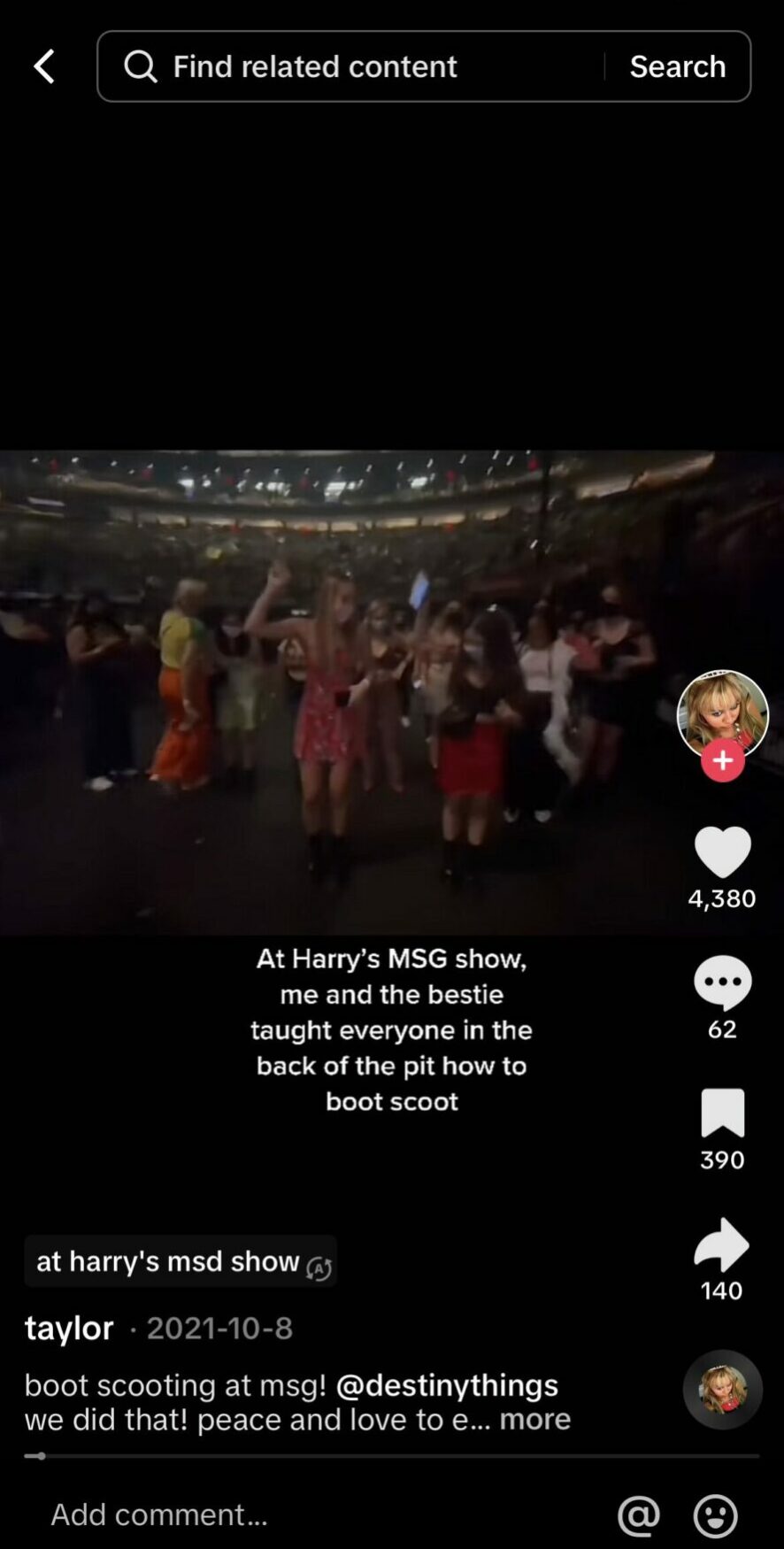
Figure 5: The comment section for figure 4
Icons on the FYP include a chat bubble for comments, as seen in Figure 4. When you click the chat bubble, the number of comments appears and can be viewed in more detail, as seen in Figure 5 (Anderson, 2020, p.8). Moreover, comments can be liked and ranked in order of popularity, with the most liked comment appearing first. Users can tag other users using “@” symbols, promoting interaction (Anderson, 2020, p.8). Figure 4 shows how fans gather to share trends and encourage engagement through comments on a boot scoot video at the Harry Styles concert. This creates a sense of community and excitement for potential fans who will attend the concert. In contrast to conventional music platforms, TikTok’s comment area facilitates direct communication between musicians, fans, and the community, as seen in Figure 5. This dynamic engagement, like physical Third Places, promotes inclusivity and connectedness. By expressing their excitement, starting trends, and promoting engagement, members of TikTok establish a friendly community in which people feel appreciated and connected. Thus, the comment section of TikTok serves as a virtual meeting place for people to interact and build relationships outside the realms of work and media consumption.
Instagram and TikTok are virtual Third Places where fans can connect, share experiences, and express their admiration for Harry Styles. TikTok’s duets, user interface, Instagram hashtags, and visual content/interactive capabilities highlight how these platforms transcend entertainment, offering spaces where fans worldwide can unite for community building, strengthening fandom ties, and showcasing creativity and appreciation for Styles’s music. As technology advances, these platforms will continue to enrich the fan experience, strengthening the sense of belonging within the Harry Styles fandom.
References
@Coulou__. (2020, December 15). #duet with @jhekhoos #greenscreen tryna match your vibe whilst it rains her in Brooklyn. [Video]. TikTok. https://www.tiktok.com/@coulou__/video/6906260389659430149
@HarryFlorals. (2024, April 2). HARRY OUT ON A WALK RECENTLY! [photograph]. Instagram. https://www.instagram.com/p/C5Qn7e4sC0y/?utm_source=ig_web_copy_link&igsh=MzRlODBiNWFlZA==
@taylorxcx. (2021, October 8). Boot scooting at msg @destinythings we did that! Peace and love to everyone who danced with us. [Video]. TikTok. https://www.tiktok.com/@taylorxcx/video/7016359795200363782?_r=1&_t=8lK8fvUCsRF
Aldosemani, T. I., Shepherd, C. E., Gashim, I., & Dousay, T. (2016). Developing third places to foster sense of community in online instruction. British Journal of Educational Technology, 47(6), 1020-1031. https://doi.org/https://doi.org/10.1111/bjet.12315
Anderson, K. E. (2020). Getting acquainted with social networks and apps: it is time to talk about TikTok. Library Hi Tech News, 37(4), 7-12. https://doi.org/10.1108/LHTN-01-2020-0001
Arvio, M.G. (2022). Building an online community on Instagram [master’s thesis, Haaga-Helia University of Applied Sciences]. Haaga-Helia. https://www.theseus.fi/bitstream/handle/10024/786410/Arvio_MariaGabriela.pdf?sequence=2
Banks, H. J. (2020). Adored pop star or freaky artiste: The evolution of harry styles. Social alternatives, 39(4), 12-18. https://www.proquest.com/scholarly-journals/adored-pop-star-freaky-artiste-evolution-harry/docview/2524413586/se-2
Bejandi, S. A., & Katanforoush, A. (2017, 22-22 Dec. 2017). How unseen communities of Instagram users are revealed using the real-valued collocations of hashtags. 2017 IEEE 4th International Conference on Knowledge-Based Engineering and Innovation (KBEI). https://ieeexplore.ieee.org/abstract/document/8325026
Bhandari, A., & Bimo, S. (2022). Why’s Everyone on TikTok Now? The Algorithmized Self and the Future of Self-Making on Social Media. Social media + Society, 8(1), 20563051221086241. https://doi.org/10.1177/20563051221086241
Borelli, M. (2022). The Changes in the Cultural and Social Meaning of Music: The Case of TikTok [master’s thesis, Management of Creative Business Processes] MSoSc. https://research-api.cbs.dk/ws/portalfiles/portal/92145389/1534552_MastersThesis_BorelliMatilde.pdf
Foster, W. (2013). Oldenburg’s great good places online: assessing the potential for social network sites to serve as third places [Doctoral dissertation, Texas Tech University]. DSpace. http://hdl.handle.net/2346/58210
Giannoulakis, S., & Tsapatsoulis, N. (2019). Filtering Instagram Hashtags Through Crowd tagging and the HITS Algorithm. IEEE Transactions on Computational Social Systems, 6(3), 592-603. https://doi.org/10.1109/TCSS.2019.2914080
Ibba, S., Orrù, M., Pani, F., & Porru, S. (2015). Hashtag of Instagram: From Folksonomy to Complex Network. https://doi.org/10.5220/0005613502790284
Instagram. (2024). About Instagram. https://help.instagram.com/424737657584573
Instagram. (2024). #Loveontouroutfit. https://www.instagram.com/explore/tags/loveontouroutfit/
Kang, J., Yoon, J., Park, E., & Han, J. (2022). “Why tag me?”: Detecting motivations of comment tagging in Instagram. Expert Systems with Applications, 202, 117171. https://doi.org/https://doi.org/10.1016/j.eswa.2022.117171
Kwon, S., & Ha, S. (2023). Examining identity- and bond-based hashtag community identification: the moderating role of self-brand connections. Journal of Research in Interactive Marketing, 17(1), 78-93. https://doi.org/10.1108/JRIM-07-2021-0183
Malik, M. N. (2019). A Theoretical Investigation into Instagram Hashtag Practices [Thesis]. Carleton University. https://doi.org/https://repository.library.carleton.ca/files/wd375x216
McArthur, J. A., & White, A. F. (2016). Twitter Chats as Third Places: Conceptualizing a Digital Gathering Site. Social media + Society, 2(3), 2056305116665857. https://doi.org/10.1177/2056305116665857
Meakins, R. (2014). We’ve got the touch: An exploration of the role of fandom in contemporary society. https://researchportal.murdoch.edu.au/esploro/outputs/graduate/Weve-got-the-touch-An-exploration/991005545281107891?skipUsageReporting=true&skipUsageReporting=true&recordUsage=false&recordUsage=false&institution=61MUN_INST
Sauro, S. (2017). Fandom and online interest groups. Language, education, and technology, 1-12. https://d1wqtxts1xzle7.cloudfront.net/81901712/Sauro2017b-libre.pdf?1646778076=&response-content-disposition=inline%3B+filename%3DFandom_and_Online_Interest_Groups.pdf&Expires=1712590789&Signature=GNFG92fDnPZDm8Tkak~BRuHUJgagw7lDaNnegGs7RqDFO9N0XQ8w~FCF-6QoFZY~IJ8gwfwjgWO5uzDy3WQK7v8563SnQGrx0c6ycnE~IZg8c5BmaapOjUbElin-9rcRf9yAJuXRiztKlI3Hf~R~XnjuNKbVpp9tsX7TcJ16gzNnK9K157nrob0zJkM-Db9n8rtmdhSl71OFen8L4kLzzry6wz34yO5~vOQhDufvYhEUBPEi3B2e8A63AvjqXhWIcwR4bB0UsGB4-h78XawO-Fo68z1dfaCIvEdan2MEiUh8HDqRLFqqj4z6DH4d1wL~z0am6JD8cBMXsEO3zge22Q__&Key-Pair-Id=APKAJLOHF5GGSLRBV4ZA
Schellewald, A. (2023). Understanding the popularity and affordances of TikTok through user experiences. Media, Culture & Society, 45(8), 1568-1582. https://doi.org/10.1177/01634437221144562
Sekhon, P. (2023). A Guide to Understanding & Using Folksonomies. Western Libraries, 1-17. https://ir.lib.uwo.ca/cgi/viewcontent.cgi?article=1013&context=classification_indexing_winter2023
Serafinelli, E. (2017). Analysis of Photo Sharing and Visual Social Relationships: Instagram as a case study. photographies, 10(1), 91-111. https://doi.org/10.1080/17540763.2016.1258657
Singh, O.S. (2021, June 2). 9 times Harry Styles was a champion for the LGBTQ community. Business Insider. https://www.businessinsider.com/harry-styles-supported-lgtbqia-community-2018-7
Soukup, C. (2006). Computer-mediated communication as a virtual third place: building Oldenburg’s great good places on the world wide web. New Media & Society, 8(3), 421-440. https://doi.org/10.1177/1461444806061953
Tandberg, J.W. (2022). That Song from TikTok: How Independent musicians develop their careers through the short-video platform [master’s thesis, University of Agder]. AURA. https://uia.brage.unit.no/uia-xmlui/handle/11250/3020400
The rise and rise of Harry Styles: how did the former boyband member become the biggest name in pop? (2022, May 20). The Conversation. https://theconversation.com/the-rise-and-rise-of-harry-styles-how-did-the-former-boyband-member-become-the-biggest-name-in-pop-183128


Leave a Reply
You must be logged in to post a comment.