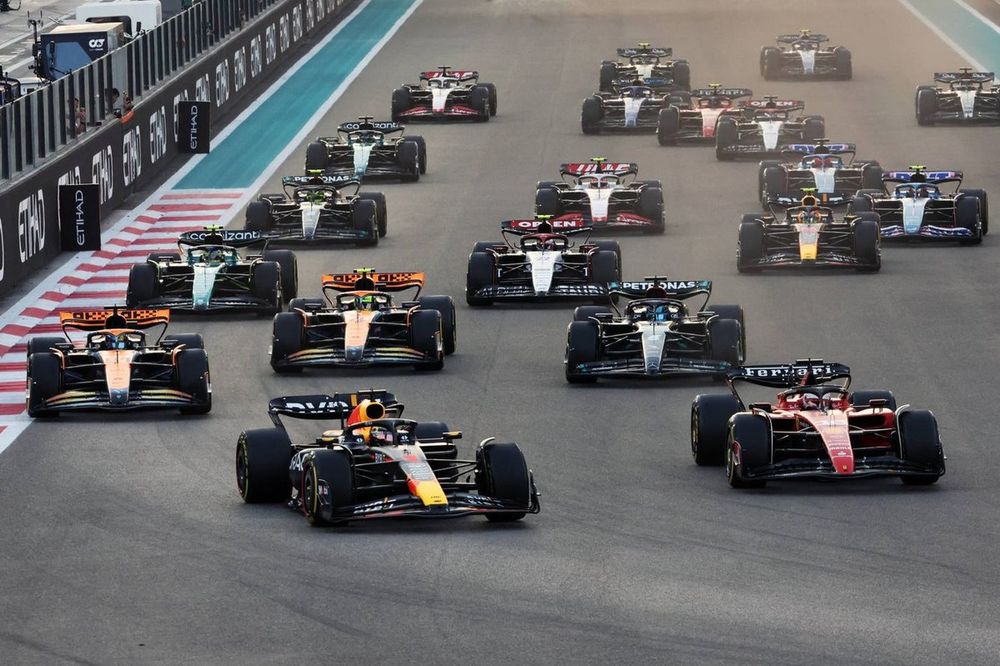
Formula 1 Cars on track

The rise of the Formula 1 Community made a positive impact on Twitter. However, it also caused pervasive awareness, leading to toxic fans.

Posted on

by


THESIS:

The rise in Formula 1 popularity has led to a growing issue of toxic fan culture on social media platforms like Twitter. It can lead to misinformation spreading, pressure on official accounts, pervasive awareness in the F1 community, and unhealthy obsessions with drivers and teams.


Keywords: Formula 1, “#f1twt,” toxic fan culture, social media, Twitter (X) platform, pervasive awareness, unhealthy obsessions, F1 community, barbaric fandom, misinformation, fan pressure, monitoring F1 drivers, invasion of privacy.


Abstract: Twitter has benefited the Formula 1 community but also created a toxic fan culture and caused pervasive awareness. This motorsport community is a third place where it is known for its passion and dedication. Recently, with the significant rise in Formula 1 popularity, “#f1twt” became popular on Twitter. Unfortunately, it has a lot of negative aspects, as there is a large number of barbaric fans who spread negativity and behave disrespectfully online and in person when they attend races or meet the drivers.

Some fans misuse technology and social media platforms to invade their favourite drivers’ privacy. They are not afraid to spread misinformation about them due to their unlimited access to information online. They would also go to the extreme to find and leak confidential information where the official accounts of the drivers and teams have to make announcements to confirm or deny the allegations.


INTRODUCTION:

While Twitter has benefitted the Formula 1 community since its popularity, it also causes pervasive awareness, leading to a toxic fan culture. There is pervasive awareness in the sports community, which acts as a third place. As a result, monitoring or acting as surveillance has become easy, and there is a rise of barbaric fans in the F1 community and how they choose to express themselves online. Even if the F1 community does not reflect pervasive awareness, a good chunk of fans are considered barbaric. They have the qualities of pervasive awareness in the way they present themselves in an online community. The F1 world is a captivating blend of abundant passion and adrenaline. F1 fans are known for their dedication and support for their favourite drivers and teams. Unfortunately, behind this thrilling and cheerful sport, some negative aspects of the F1 community will be explored. Even in a virtual world, negativity and disrespectful behaviours can spread rapidly. One of the main concerns is the spread of false information; the pressure on official Formula 1 accounts to deliver exclusive announcements tends to create a tense atmosphere and can have negative repercussions. Extreme fans may develop an unhealthy fixation on a particular driver or team and exhibit obsessive behaviours, ranging from belittling other drivers to personal attacks.


THE FORMULA ONE COMMUNITY, AS A THIRD PLACE:

The third place in this article is the Formula 1 Community, which engages on the microblogging platform X, formerly Twitter. A network is a social structure of people gathering as they share a common interest in sports to form a fan community. In this community, it is most likely that they will form weak connections with the mass community compared to a few other families, where they will develop a closer bond (Mastromartino, 2022). Since the rise of virtual communities, face-to-face communications have decreased significantly. Modern technology connects people in the virtual world more and makes them feel “a sense of belonging” by distancing themselves from those around them. The communities in the physical world can overlap with those in the virtual world. However, the virtual community (e.g., Formula 1 Community) can rarely overlap with the physical world. Even if online platforms and social media have positively shaped social interactions, community building, and social networks, there is a downside.

For example, in the F1 community, the “og” members (who have been fans for a long time) tend to be mean towards the new fans and females in the motorsport world. Each person has one social network and is part of many communities, which gives them a sense of belonging to people with shared interests. Communities can vary in origin and culture and be formed based on individual personalities and interests. Virtual communities, on the other hand, are loose, thin, and not strong, as people may not know each other well despite shared interests. As Taylor Dotson mentions in the article “Technically Together” (2017), social media on mobile phones is a technological device used for socialising. It enables an alternative, thick community with distinct and unique personalities online. For example, Twitter uses hashtags, and people with the same interests will see the very same tweet and can communicate. This community is formed by people interested in particular topics who want to build an environment that reflects their personalities. Virtual communities on Twitter express many forms of belonging in an imagined community. The imagined community is the third place for new techniques to engage with people and establish new interactions in which people may help one another even if they don’t know each other.


BARBARIC FAN BEHAVIOUR: Acting as a Surveillance

With online communities, spreading awareness about monitoring someone’s life has become easy. However, the term “surveillance” highlights that the users intentionally planned to share this information in the digital world. People are used to constantly accessing data at any time, like digital technology, which provides pervasive awareness (Hampton, 2016). A part of a strategy to deal with an issue with the public on social media platforms is pervasive awareness. The problem is how challenging it is to transmit messages from person to person across networks. Even if it is easy to link this approach with surveillance, it is similar to the communities in the past, where they would be watched in a casual setting. The characteristics of pervasive awareness are both “sousveillance” and “surveillance,” meaning that the users are being watched as much as they are watching others online. Hence, it goes back to the traditional way of being watched in a social circle, where “surveillance” was introduced. Another characteristic of pervasive awareness is the production of collective knowledge, where other people’s information is considered necessary for the audience to know (Hampton, 2016).

The fans act like they have the right to see every detail of the drivers. For example, on Twitter, when a fan spots a driver and takes a picture with him, they will post about it online, and most of their pictures will go viral because the other fans want to know where the drivers are at any moment of the day. Also, one of the most common searches on Twitter is “Driver name + recent” or “#DriverName,” where the F1 fan would constantly like to keep up with their favourite driver. Another observation is that they invade the drivers’ privacy; recently, they leaked a picture on Twitter that someone had taken of an F1 driver in the bathroom. Also, the partners of the Formula 1 drivers, also known as “wags” in F1 terms, have been victims of their private data being exposed to the public. On Twitter, some users collect data and even post “threads” about private details of the Wags’ lives that they do not want the public to know, such as their past relationships, friends, childhood, and family pictures.


Barbaric Fan Behaviour: Spread of Misinformation, Fan Pressure, and Invasion of Privacy

The barbaric F1 fans on Twitter made the community toxic and hateful since they have unlimited access online. People are used to constantly accessing data anytime, like digital technology, which provides pervasive awareness. New communication technologies allow people on social media to connect and interact with people anywhere. The growth of social media has resulted in always being in contact with people and having broad knowledge about anything (Hampton, 2016). Hence, the toxic fans would spread misinformation on Twitter and pressure the official accounts to make announcements to confirm leaked information or to end rumours. An example of this issue was on February 1, 2024, when some of the fans leaked a document that stated that a driver would leave his team for another one the following year. During the day, more concrete proofs of images and videos were circulating on Twitter to confirm this rumour. The fans were putting so much pressure on the official pages on social media, such as F1 and the concerned team and drivers, to announce that the rumour was accurate and the leaked documents were proven true. Hence, this is one of the recent examples where the fans have pressured them to release official statements.

There is also another F1 term called “silly season,” which usually happens during summer or winter breaks, and the fans would share their best theories and “proof” of why a particular driver would change teams and go to a specific one. They will try their best to collect “proofs”; later, it will be confirmed true. When the fans do that, they will sometimes bombard the drivers’ social media to the point where they have to reveal their plans. Barbaric fan culture acts like an intrusive paparazzi, displaying unhealthy fixations on drivers. These F1 fans do not love the teams and drivers, as they are obsessed with them in a harmful way. For example, some fans entered a hotel lobby last year and wanted to go to the driver’s room. The driver was pressured to make an official announcement and talk about how some of the fans tried to come to his hotel room and that we should respect his privacy. Also, these fans will make fun of the drivers and discourage those they do not support. The consequences of these behaviours on the overall F1 community are not okay, and intervention is needed to foster a more positive and respectful environment. It would be valuable to highlight the importance of promoting a healthy fan culture, emphasising respectful engagement, and creating spaces where fans can express their passion for the sport without toxicity.


FANS SELF-PRESENTATION AND ONLINE INTERACTION:

When using social media, the users choose how they want to appear in front of others and what information they want to share online. Keith N. Hampton (2016) said there is a general belief that new communication technologies significantly impact how people communicate with their close ones and strangers. Pervasive awareness leads to short, unplanned text or photo exchanges on platforms such as blogs, microblogging (like Twitter), and other social media sites. Social media platforms allow users to convey their connection with other users, share any information they want about themselves or others, and interact online with other users. It is also possible when people are connected online to communicate for a long time. It also results in constant communication between users virtually and low social interactions in person. In a media-driven world with various online communication modes, many people like to curate an image for themselves to maintain an acceptable identity for multiple audiences. For people to maintain a connection online, there is a tendency towards balance, where the users express their bond with others online. Sharing information online may promote openness when people express themselves and collaborate. However, it may also decrease the diversity of freshly developed information. Self-censorship is crucial these days to control information online and avoid sharing content with audiences who are not appealing (Hampton, 2016). When interacting with people, it is the perception that they fabricated and curated the profile they are interacting with. From observation, the most popular aspects of Twitter’s online identity are authenticity and pseudonymity.

Since they communicate online and can be anonymous, people can say whatever they want without facing the consequences. Hence, it will enable them to keep being mean and bully others, resulting in a toxic community. For example, a boy was a fan of one of the drivers last year. He was always spotted with his favourite driver, but the other fans got jealous of him and bullied him. He then had to make his account private, and to this day, he has not shared another photo with his favourite driver online. Even if anonymity is present where they hide their real identity and are here to observe, the most common ones are accounts that seem genuine and “fan accounts.”. Fan accounts are usually finstas, aka fake accounts, where only the close friends of a person know that this account belongs to them. They usually add the words “F1, Ferrari…” or their favourite drivers’ numbers (e.g., 16, 55, 4…) in their usernames.


CONCLUSION

Hence, in the sports community, there is pervasive awareness, which acts as a third place where surveillance is quickly done, barbaric fans have increased, and they have different ways of expressing themselves online. The rise in Formula 1 popularity has led to a growing issue of toxic fan culture on social media platforms like Twitter. Pervasive awareness can lead to misinformation spreading, pressure on official accounts, and unhealthy obsessions with drivers and teams. It is crucial to foster a positive and inclusive environment for all fans, address these challenges, and promote a positive atmosphere. It is vital to talk about the negative aspects while also recognising that most Formula 1 fans are supportive and passionate in a positive way. The supporting arguments and ideas highlighted the harmful effects of the toxic fan culture above. However, this behaviour does not represent the entire Formula 1 community, as many fans are supportive and would always avoid all of the toxic discussions online and instead focus on the positives rather than belittle fans, drivers, and teams. Formula 1 fans will keep increasing now and in the future, mainly because of its Netflix series “Drive to Survive” and because of the social media platforms where the admins keep up with the latest trends and keep improving the quality of their content.


REFERENCES

Dotson, T. (2017). Technically Together. https://doi.org/10.7551/mitpress/9780262036382.001.0001


Hampton, K. (2016). Persistent and Pervasive Community: New Communication Technologies and the Future of Community. American Behavioral Scientist, 60(1), 101–124. https://www.mysocialnetwork.net/downloads/offprint/PersistentandPervasive_Hampton.pdf


Mastromartino, B. (2022, October 11). Instant Fan Community: Utilizing Social Network Theory to Understand Sport Fan Community Building. ResearchGate. https://www.researchgate.net/publication/364310462_Instant_Fan_Community_Utilizing_Social_Network_Theory_to_Understand_Sport_Fan_Community_Building_International_Journal_of_Sport_Management


FEATURED IMAGE REFERENCE

Kew, M. (2024, January 28). Big changes to F1 teams’ form in 2024 would be a “surprise” – Aston Martin. Autosport.com; Autosport. https://www.autosport.com/f1/news/big-changes-to-f1-teams-form-in-2024-would-be-a-surprise-aston-martin/10569368/


Search Site

Your Experience

We would love to hear about your experience at our conference this year via our DCN XV Feedback Form.

Comments

48 responses to “The rise of the Formula 1 Community made a positive impact on Twitter. However, it also caused pervasive awareness, leading to toxic fans.”

  1. UwUgang Avatar
    UwUgang

    Hi Mishma, this was quite a refreshing and original topic you’ve got here! Now, I wonder, since you have mentioned negative behaviour and fan toxicity, are there at least some positive actions taken by the “nice” fans (aside from avoiding the drama) to counter these harmful behaviours? If not, what do you believe would be the best course of action to confront that toxic culture head-on? Thank you!

    1. Mishma Noyan Avatar
      Mishma Noyan

      Hello, Joel. Thank you for your feedback on my paper.

      Regarding your question, I have only discussed the bad aspects of the Formula One community in this paper, but there is also a bright side. From my experience, what I like most about the Formula One Community are the international friends I’ve made along the journey and our conversations while watching the race live.

      I saw a pattern of conduct when I watched fans engaging in smaller groups with people they knew; they were more kind and friendly. However, when it comes to a viral tweet, the users usually have a fictitious name and the freedom to express as they see fit.

      To reduce this issue, especially on Twitter, I suggest that certain words be banned. For example, curse words or names that the fans came up with to make fun of the drivers or teams. What do you think about this?

      1. UwUgang Avatar
        UwUgang

        Thank you for your reply!

        You are right, most of the toxicity and bad behaviours come from the loudest fans and as you implied, the nicest ones are generally in smaller groups where civility and respect matter more.

        Furthermore, I fully agree with you, certain words should be banned to limit the spread of toxic behaviour but I think it should go beyond that little step: the most instigating accounts must be banned and the worst examples taken to court because some of these actions are becoming illegal (like you said, there were harrassment and invasion of privacy). And the saddest part is that its reflecting on the entire community.

        Anyway, great read!

        1. Mishma Noyan Avatar
          Mishma Noyan

          Thank you once again, Joel, for reading and commenting!
          Yes, I agree with going a step further and taking legal action to put an end to this type of conduct, especially when it crosses the line. I hope it ceases reflecting the entire Formula 1 community.
          Please do not hesitate to contact me if you want to share your opinions or ask questions about my paper!

  2. Holly.C Avatar
    Holly.C

    Hi Mishma,
    Good job on your paper. I found it very interesting and as someone who hasn’t really had a lot of exposure to F1 it was very informative. I think the points you raised are very relevant and concerning in today’s online fan culture. When fans have access to an abundance of constant information, it’s easy for them to feel like they know these F1 drivers or other celebrities personally, because they know about so many aspects of their lives, so it can sometimes be quite a toxic unrequited relationship they have. Do you think this toxicity is something that has only really become an issue with the growth of social media or has it always been an issue that just wasn’t as widely broadcasted?

    Your paper actually contrasts heavily to mine, as I chose to focus on the positive ways fans can connect and collaborate using social media, despite knowing there is definitely a negative side of online fandoms as well. If you’re at all interested, the link to my paper is here https://networkconference.netstudies.org/2024/csm/4075/swifttok-a-community-of-creative-collaboration/#comments

    Holly

    1. Mishma Noyan Avatar
      Mishma Noyan

      Hello Holly! Thank you for taking the time to read my paper. I am happy my paper exposed you to Formula 1 and its community.

      To answer your question, I think yes. With the official accounts and the drivers getting more exposure because of social media and Formula 1 being broadcasted internationally, it may contribute to these issues unintentionally. I also think some of the fans are entitled to believe that they deserve to know every aspect of the drivers’ personal lives. Hence, it leads to the invasion of privacy and the leak of confidential information.

      I will soon take a look at your paper. In my paper, I delve only into the fanbase of F1, and the issues I discussed are also present in other fan bases. Do you know any examples of problems arising in other fanbases?

  3. AmnaB Avatar
    AmnaB

    Hi Mishma,

    I just finished reading your paper that’s about the arguable incontrovertibility of Formula 1 fans on Twitter and it leaves me open mouthed. I was deeply amazed by you when you mentioned a fact that caused people to lose their sense of reality due to this technology.

    And now end of the day I consider myself, though what skill set is required to avert these challenges? Have you felt that there might be any possible solutions or initiatives which could in turn lead to establishment a more supportive and respectful atmosphere in Formula One community on internet?

    I really liked your paper and would to hear your thoughts further on this.

    Also, if you could please read my paper on impact of social media on real life social skills and provide some feedback on that. I would really appreciate it!

    Kind regards,
    Amna

    1. Mishma Noyan Avatar
      Mishma Noyan

      Hello Amna! Thank you for reading my paper. To answer your question, I think the barbaric fans need to return to reality by facing the consequences of their actions.

      For example, last year, there was a Grand Prix in Mexico where Checo (a Mexican driver) collided with a Ferrari driver. Even if Checo was at fault, a group of Mexican fans physically attacked the Tifosi (Ferrari fans) at the race, implying that it was the Ferrari driver’s fault. Then, the people in charge of the race took the initiative and removed the group of Mexican fans from the premises. However, the other fans booed when the Ferrari driver talked after the race and was disrespectful the whole time.
      For another race in 2023 itself, many Checo fans were shouting his name when the national anthem of the winner was playing.

      The crash: https://youtu.be/1gr_wM9Iiyc?si=bpNRbk4p5pyaTysE
      Fans booing Ferrari driver: https://youtu.be/eCaEY7j0GwI?si=97EgrR5ecfL2WYAh
      Fans shouting during the national anthem: https://youtu.be/CHZg6JmuuuU?si=UdZpeZdTKssQ02Qp

      Hence, I think the rules for attending a race should be more strict. F1 should take measures to hold the fans accountable if they find any form of bullying or physical abuse at the race or online. Thus, the community would be much more positive, and we would focus on supporting the drivers and the teams more rather than beef with them and other fans.

      What do you think about this?

      1. AmnaB Avatar
        AmnaB

        Hello Mishma,

        I appreciate you sharing your knowledge. Hearing about similar situations at races is depressing. I concur that tougher regulations and making spectators answerable for their actions could help to create a more upbeat and courteous environment within the Formula 1 community. Instead of participating in bad habits, let’s concentrate on encouraging the drivers and teams so that we can all genuinely enjoy the sport we all love. Your recommendations for enhancement are well-considered and crucial to fostering a better atmosphere for all parties.

        Lastly, I would highly appreciate if you could read my paper and provide some feedback. https://networkconference.netstudies.org/2024/csm/3527/impact-of-social-media-on-our-real-life-social-skills/

        Warm regards,
        Amna

        1. Mishma Noyan Avatar
          Mishma Noyan

          Hello once again, Amna! I agree with your suggestion that stricter regulations and responsible spectators could improve the Formula 1 community, encouraging drivers and teams to enjoy the sport rather than promoting bad habits and enhancing the atmosphere for all parties involved.
          Also, I have read and commented on your paper. I loved reading your paper, which discusses the impact of social media on our daily lives.

          Thank you for your suggestions and engagement with my paper! Please do not hesitate to let me know if you have more comments or insights about Formula 1 and Fan Culture.

  4. Douglas Baker Avatar
    Douglas Baker

    Hi Mishma – it is interesting to look at the F1 community as it has grown significantly in recent years with the the change from ownership for the commercial rights from Bernie Ecclestone over to Liberty Media, and the exposure to new fans as a side effect of the Netflix Drive to Survive series along with a focus on the US market. Could the manufactured drama of a series like Drive to Survive, combined with the rapid news-cycles of modern media be making the problem of barbaric fans worse?

    Regards
    Douglas

    1. Mishma Noyan Avatar
      Mishma Noyan

      Hey, Douglas. Thank you for taking the time to read my paper.
      I think there is an issue with modern media that makes the behaviour of barbaric fans worse. Also, F1 is getting exposure worldwide, especially in the US market. The Grand Prix in Miami, Austin, and Las Vegas has a lot going on, and most of the drivers themselves want to focus solely on the race and less on the entertainment side of it.
      An example of the pre-race ceremony, which many F1 drivers were unhappy with: https://youtu.be/N109mlx10NA?si=CxhiiGPIyL49F_Cp
      Yes, this happened. Many fans were shocked and uphappy with this, as the comments were a bit disrespectful; the presenter even made fun of a driver because of his height. Also, the drivers were uncomfortable with the whole situation.

      Another opening ceremony that many F1 drivers did not want to be part of was: https://youtu.be/DMgoC0D3MHk?si=4cYD7H1VCLFyx6bW

      There was also this issue where makeup influencers were invited to the Miami Grand Prix last year. Many fans were unhappy because these influencers had no interest in the race and did not even bother learning about it. Yet, they had the privilege to attend the race and were in the paddock, which is expensive.
      What do you think about the US pre-race ceremonies and makeup influencers getting invited?

      1. Douglas Baker Avatar
        Douglas Baker

        The US events try to take the show to the extreme, but in the end F1 is just an expensive way to travel around a track albeit very fast.
        We will need to see this coming weekend what the Miami event turns out like with respect to pre-race events that are for the show and to what form of celebrity or influencer is rolled out into the paddock this time around. The marketing aspects of F1 are a necessary part of the business given the extreme cost involved in such high end engineering. Liberty media may find that the traditional fan base are less and less tolerant of the influencers with no sporting connection, and will need to rethink who they have in the paddock.

        1. Mishma Noyan Avatar
          Mishma Noyan

          I agree with you that makeup influencers have no connection with Formula 1. It may be a way to expand the audience, but the influencers were not interested in learning about the sport.

          For the Miami Grand Prix that will take this week. I am sure there will extravagant events that will take place.
          I wanted to know your opinion on Ferrari having a blue livery for their suits and the SF-24. Also, what do you think about Ferrari having the sponsor “HP” in their official name?

          1. Douglas Baker Avatar
            Douglas Baker

            Special livery can be a great way for teams to gain some extra attention and focus (especially when the racing could be a little “dull”) I can see from glancing at Twitter/X that there is of course engagement from fans as they speculate on what the cars will look like, with many different fan-created suggestions. There are of course the contributors providing the negative commentary – “All we will see are two mainly red cars” or “So it will look like a Williams from the 90’s” and so on. No doubt there will be the Miami-specific merchandise connecting the historic blue colors that fans can purchase to show that they are a member of the Ferrari community both in person and spread across their online presence.
            Sponsors such as HP purchasing a naming contribution to a team is something that keeps the sport running – it can be fairly subtle as the case of ‘Scuderia Ferrari HP’, or taken to the extreme with ‘Visa Cash App RB Formula One Team’. There is a big difference in who will identify with the two different naming sponsors of these two teams. RB is going to resonate a lot more with the people who could end up in the Miami & Las Vegas paddock – the fashion and makeup influencers and their followers.

        2. Mishma Noyan Avatar
          Mishma Noyan

          Thank you, Douglas, for your opinions on the Ferrari Livery and HP Sponsors. Yes, the blue livery was usually supposed to link Ferrari’s history. For the 70th anniversary of Ferrari’s presence in North America, they featured two historic shades of blue: Azzurro La Plata and Azzurro Dino, which Enzo Ferrari loved.
          However, many fans made fun of the car mainly because of its design, and they see it primarily as a strategy for HP as they have 15 HP logos on the car itself, let alone the race suits. The fans are unhappy about the whole situation, as they see a historic event focusing more on the sponsors.
          Thank you once again for engaging with my paper and giving me insights. Reach out if you have any questions or want to comment more.

  5. 20366669 Avatar
    20366669

    Hi Mishma – I agree with the fact that the Formula 1 community has become a toxic place for fans and drivers. Do you think that content such as TikTok and Drive to Survive which shows fans drivers in a way we’ve never seen before creates an overall net increase in toxicity as fans can see the driver’s heavily dramatised personalities due to fans only being showed a “slice of life” or a net decrease in online toxicity towards drivers due to the humanisation of these celebrities?

    Loved reading this and go Fernando!!!

    1. Mishma Noyan Avatar
      Mishma Noyan

      Hello! I am so glad that you loved reading my paper! Yes, I agree, getting exposure on the part of the driver’s life resulted in the fans taking extreme measures to invade their privacy.

      On TikTok, there are also the “POVs” of fans making purely fictional scenarios from Wattpad where they imagine the drivers being part of their lives when they do not even know the drivers personally and vice-versa. Hence, it could be a perfect example of barbaric fans having an unhealthy obsession with the drivers, saying comments like “That’s my husband!” and getting mad when other fans disagree, which would lead to a whole fight.

      With Fernando, fans are “shipping” him with Taylor Swift and the “Taylonso” content. They would even make photoshop images of him with Taylor and the spread of misinformation. I love how Fernando and his PR team handled this situation. They made videos with Taylor’s song in the background to make fun of the situation.
      The most recent video Fernando made for this situation is: https://vm.tiktok.com/ZMMbJjpmp/

      I also think that the PR managers of the teams may have an impact on their fans behaviour. For example, Aston Martin and Williams have good marketing strategies compared to Ferrari, especially last year. Whenever the team had an issue during race week, they would post good-looking pictures of the drivers on “Wallpaper Wednesday” to distract the fans.

      What do you think about the TikTok “POVs” and the situation with Fernando and PR management?

  6. Aliah Motaleb Avatar
    Aliah Motaleb

    Hi Mishma,

    This is a very interesting and original topic, to be honest, I do not know much about Formula 1 but the paper is really understandable. You highlighted on the negative impacts of fan behaviour and the need for a more positive environment, what do you think social media platforms and official accounts could do to promote healthier interactions among Formula 1 fans on Twitter?

    1. Mishma Noyan Avatar
      Mishma Noyan

      Hello Aliah. Thank you for reading my paper. When I wrote it, I made sure that both F1 and non-F1 fans could understand the topic, as the issues discussed happen in other fandoms as well.

      To answer your question, they could ban certain words in the comment sections on the official F1 Teams accounts. The words that could be banned could be curses or words that the fans made to make fun of F1, the teams, and drivers.
      The teams and drivers could also be more open and admit whenever they are at fault. Otherwise, the fans would create fights because of who is at fault. It could also end in physical fights.

      If the PR team of the drivers made statements on their social media whenever they caused a collision, They could publicly apologise and ask their fans to behave themselves and stop being disrespectful. Many fighting and beefing situations would have been prevented.
      Here is an example of when an F1 driver was telling his fans not to boo at another driver after a race: https://youtu.be/rs1uYKixssg?si=1E64sGsLuoCy36u7

      What do you think about what I said and other methods you propose for the F1 Community to have healthier interactions overall? Also, what other fandoms have you noticed that experience the issues I mentioned in my paper?

      1. Aliah Motaleb Avatar
        Aliah Motaleb

        Thank you for the complete response

        You have very good ideas. Blocking certain words and encouraging honesty from teams and drivers are practical steps to reduce negativity. Fostering respect among fans and having clear rules for online behaviour are also important. Overall, these measures could help create a more positive environment for everyone involved.

        Yes, many other fan groups face similar challenges. It can be fans of Star Wars, Marvel, or music artists or any other fandom negativity and bad comments are very common online. It’s important for all fan communities to work together to promote kindness and respect each other.

  7. Desi Marliani Avatar
    Desi Marliani

    Hi Mishma,
    Thank you for the interesting topic. I never knew this was happening to F1. It would have made more sense if this happened to soccer players, which is a more common sport. I find the topic of anonymous online identity intriguing, particularly when a cyberbully uses an anonymous ID and gets away with it. Again, a big compliment to your topic, as it is easy to digest. 
    and I would appreciate it if you took the time to review my paper
    at https://networkconference.netstudies.org/2024/icodsm/3032/facebook-group-a…ltural-matrimony/ ‎

    Cheers,
    Desi

    1. Mishma Noyan Avatar
      Mishma Noyan

      Hello Desi! Thank you for taking an interest and complementing my paper.

      Recently, Formula 1 has been promoted worldwide and is considered one of the best categories for racing since it began in 1946. Because of the recent exposure to a mass of people, the issues I mentioned have risen to an entirely different level.
      The issue of cyberbullying from anonymous accounts is a lot more familiar nowadays. What measures do you think could prevent this?

      1. Desi Marliani Avatar
        Desi Marliani

        Hi again Mishma,
        Criminals are always innovative these days, hey. So I guess the measure that the platform can take is that you can’t leave messages or comments unless your account is verified, especially when you show up as anonymous or with your fake name or pseudonym. That way, they are liable for what they have done for cyberbullying or if the comment is against community standards. I would appreciate it if you took some time to read my paper.

        https://networkconference.netstudies.org/2024/icodsm/3032/facebook-group-as-digital-bridges-building-an-online-community-for-the-social-development-of-indonesians-and-australians-intercultural-matrimony/

        Cheers,
        Desi

        1. Mishma Noyan Avatar

          Hello again!
          I agree with your thoughts and the measure you proposed to prevent the issue of cyberbullying from anonymous accounts. They should indeed have strict rules and be respectful, so they are not banned from social media platforms.
          By the way, I have just read and commented on your paper and found it interesting. I learned many things about what it is like to adjust to another lifestyle because of marriage in another country.

  8. Lewis Moss Avatar
    Lewis Moss

    Hi

    I don’t follow F1, but I always assumed that fans were fairly respectful. Your article clearly highlights that this is not the case.

    Once again, we have examples of the anonymity of Twitter allowing individuals to spread misinformation and hurt. My article in contrast (linked below) trys to highlight to positives of youtube and twitter in sport, please have a read.

    Do you believe that the main culprits of this behaviour are true F1 fans or just trolls with no knowledge or interest in the sport?

    Lewis

    https://networkconference.netstudies.org/2024/csm/3200/the-rise-of-sports-fan-media-how-youtube-and-twitter-have-helped-change-how-fans-experience-sports/

    1. Mishma Noyan Avatar
      Mishma Noyan

      Hello Lewis! Thank you for taking the time to read and comment on my paper.
      When I first got into F1, I thought the same thing: that it is a respectful community, and it is. However, as I got more in-depth, I discovered the “dark” side of the F1 community that non-F1 fans would never know.

      There are three possible answers to your question:
      1. The fans have unhealthy obsessions with the drivers, mainly because of their good looks and personality. Hence, they would behave normally when they “obsess” with their celebrity crush. Hence, they are not true F1 fans; they have celebrity obsessions and little interest in F1 because their main interests are the drivers.
      2. They are true F1 fans, and they love the sports. However, when they see the drivers in person, they are excited to take pictures of them or are caught in the moment but not thinking about what they are doing.
      3. They are just haters and have no interest in the sport whatsoever.

      I plan to read your paper soon and comment on it, of course. By the way, did you know that there is a seven-time world champion also named Lewis. He is currently drives for the Mercedes team.

      What other sports do you know that face the issues that I mentioned?

      1. Lewis Moss Avatar
        Lewis Moss

        Hi Mishma,

        Although I think all of your answers could be true, I think there is possibly one more you could add to the list. Jealousy of the athletes due to their social standing and wealth, fans love to hate on people who are doing well AKA Tall Poppy Syndrome.

        In terms of your question about other sports that encounter the same issue, I believe it is evident in all sports. The research that I did on social media’s impact on fans channels showed many examples of this. Let’s face it, it is prevalent in society today, it’s not limited to just athletes but any public figure that appears to be doing well, actors, singers even members of the royal family are not immune.

        And yes I have heard of Lewis Hamilton haha, I did see an interview from him the other day where he said that F1 teams employ around 1,200 people.

        I thought this was mind blowing given that the teams just have two main drivers, but when you take the mechanics and marketing teams into account it becomes more apparent why you would need this amount of staff.

        Lewis

  9. Cedric Li Avatar
    Cedric Li

    Hi Mishma, I really enjoyed reading your paper on the F1 community and its hidden aspects such as toxicity, and unhealthy obsessions with celebrities, especially the F1 drivers. I feel disgusted by this behavior as it destroys this aspect of being connected with a hobby you love and instead turns it into an unhealthy activity, especially with toxic fans entering the private lives of the drivers. Usually, those behaviors lead to celebrities giving up on their dream to continue what they love about it such as F1 sport which disgusts me as we are also impacted by that, especially the authentic fans. My question is, can we do anything to prevent such barbaric behavior on social media or in our daily lives trying to make it less toxic and more enjoyable especially for F1 driver’s private lives?

    1. Mishma Noyan Avatar
      Mishma Noyan

      Hello Cedric! Thank you for reading my paper!
      I definitely agree with you. Having those fans in Formula One drags down its reputation, and they dishonour its history and the sport in general. Fans who want to have a good time watching their favourite sport, whether broadcast live or on track, would wish to avoid barbaric fans online or in person.

      For the drivers’ private lives, I think that they should have security with them at all times. Also, whenever they enter a restaurant or are somewhere they want to chill, they can ask security to prevent people from taking intimate photos of the drivers when they are with their partners, for example. If they did, their actions should have consequences, such as being asked to permanently delete them immediately or to pay a fine if they are leaked. What other methods do you suggest?

      1. Cedric Li Avatar
        Cedric Li

        Yeah totally agree with you. This is such a sad reality, especially for celebrities who cannot live a peaceful and normal life anymore as people nowadays only seek money and attention leading to barbaric behavior. I just hope that the F1 community becomes a more enjoyable place for fans to meet and share what connects them, especially for you, since you are a huge fan of F1 racing 🙂

        1. Mishma Noyan Avatar
          Mishma Noyan

          Thank you, Cedric, for your feedback!
          I also hope that the community becomes more positive, especially on Twitter.
          Please do not hesitate to reach out if you have any more questions!

  10. Neelen Murday Avatar
    Neelen Murday

    The article provides a comprehensive examination of the toxic fan culture within the Formula 1 community on Twitter, shedding light on the negative behaviors and consequences associated with online fan engagement. It effectively addresses the issues of pervasive awareness, spread of misinformation, and the need for promoting a more respectful and inclusive environment for all F1 enthusiasts. The exploration of fan psychology and the call for proactive measures to mitigate toxic behaviors make this article a valuable contribution to the discourse on addressing such challenges in the sporting world.

    1. Mishma Noyan Avatar
      Mishma Noyan

      Thank you, Neelen, for taking interest in my paper!
      Yes. My paper explores the toxic fan culture in the Formula 1 community on Twitter, highlighting negative behaviours and misinformation. It calls for a respectful environment and proactive measures to mitigate toxic behaviour.
      Do you know any other communities facing the issues I mentioned in my paper? Also, what measures should social media platforms take to promote positive user interactions?

  11. D.yaj Avatar
    D.yaj

    The paper provides a comprehensive exploration of the toxic fan culture within the Formula 1 community on Twitter, shedding light on the detrimental effects of pervasive awareness and unhealthy obsessions. It effectively highlights the spread of misinformation, invasion of privacy, and pressure on official accounts as key issues exacerbated by social media platforms. However, while the analysis delves into the negative aspects, it would benefit from further discussion on potential solutions or interventions to address these challenges. How can the Formula 1 community mitigate the toxic fan culture and foster a more positive and inclusive environment online? Additionally, are there any initiatives or strategies in place to educate fans about responsible online behavior and the importance of respecting drivers’ privacy? Finally, how might Formula 1 stakeholders, including teams, drivers, and social media platforms, collaborate to tackle these issues collectively?

    Overall, the article effectively sheds light on the challenges posed by toxic fan culture in the Formula 1 community on Twitter. By incorporating a more balanced perspective and offering actionable insights, it can serve as a valuable resource for fostering meaningful discussions and driving positive change within the community.

    great reading 😁😁

    1. Mishma Noyan Avatar
      Mishma Noyan

      Hello Yaj, thank you for reading my paper and giving me insights. I agree with your comments on toxic fan culture.
      To answer your questions, the Formula 1 community could be fixed by the fans themselves. For example, the fans would voice out all the support they are given through the community and that they can ignore the people who are hateful and want to seek attention from the community. If all the fans collectively ignore them, the hate could be suppressed, and it would definitely make a difference.
      I am unsure if any initiatives are taking place to educate them on responsible online behaviour. However, it is an excellent suggestion that could take place, and the official accounts could create content about the importance of the drivers’ privacy.
      Usually, the people working at F1 tried to tackle this issue with the PR team releasing statements from the drivers’ accounts when there were significant incidents. However, maybe they did not plan it well beforehand, as it barely impacted.
      Now, I want to hear your opinions on these issues. What other strategies and initiatives that F1 officials could potentially do for the fans to understand the drivers’ perspectives and for the fans to understand the importance of their behaviour online and in person?

  12. NilApp Avatar
    NilApp

    Hello Mishma.

    I like how your paper clearly points out the good and bad sides of the F1 community on Twitter. It shows how F1’s popularity surge led to toxic behavior among fans, like spreading false info and invading privacy. Before reading your paper I didn’t know that Twitter became a big hub for F1 fans but also a place where some act badly. Talks about the ease of monitoring individuals’ lives online, the spread of information within the community, and the pressure on official accounts to address rumors or leaks, was very interesting

    The paper clearly shows some really nasty behavior, like fans leaking private info and pressuring teams to confirm rumors. It suggests we need to step in to make the community nicer.

    I have some follow up questions regarding your paper, here they are:
    1. Do you see this kind of behavior in other fan groups you’re part of?
    2. How do you think we can stop fans from spreading fake news and invading privacy?
    3. Are there other social media sites where fans might act this way?

    By the way, here’s my paper: https://networkconference.netstudies.org/2024/csm/4058/unveiling-the-eg…omy-on-instagram/
    I’d appreciate if you could leave a comment there.

    Thanking you in advance,
    -Nilesh

    1. Mishma Noyan Avatar
      Mishma Noyan

      Hello Nilesh! Thank you for taking an interest in reading my paper! I hope distributing false information, invasion of privacy, and other issues will be put to an end in the near future. Here are the answers to your questions:
      1. No. I came across these kinds of behaviour in the F1 community and have no idea if the fan culture is the same for other sports.
      2. To stop the fans from spreading fake news, there need to be strict regulations for F1 fans on and off track to ensure proper behaviour and to prevent other issues such as invasion of privacy.
      3. There are also some groups on Facebook where the admins are clear that we cannot put any content that is fake news or controversial topics. However, from observation, I have noticed biased views on women in these Facebook groups. For example, when a woman posts about a subject, the fans react entirely differently than if a man posts the same thing. We are in 2024, yet some of the fans on Facebook would belittle women and new F1 fans.
      Regarding question 1, do you know any other sports teams or fan communities facing the issues I discussed in my paper?

  13. Mitali Kangalee Avatar
    Mitali Kangalee

    Hi !

    This essay delves into the detrimental fan culture of the Formula 1 online community on Twitter, which is evidenced by fervent supporter behaviors and aftermath concern. This is the type of consequence that becomes clear only after you realize how common the increase in publicity and obsessiveness can be, and what results can bring.

    It is particularly worth mentioning that the pressures of official accounts to prove issues that deal with leaks or rumors is another interesting element that requires attention. Such moments doubtlessly must be challenging for teams and drivers in that respect to behave in accordance with their professionalism and privacy.

    I am interested in your views on the availability of possible solutions or interventions used to tackle these issues, if there are any. What practical steps can Formula 1 management take to handle the issue of toxic fan culture and create an environment which will be more comfortable and less hostile online? Furthermore, do these teams have missionaries or strategies in order to help the fans to grasp online behavior responsibility and good reason of respecting drivers’ privacy?

    Finally, your paper provides very clear and accurate views on intricacies of the fan culture and fans` relationships in the era of digital media and brings up the issue of popularizing more constructive types of interacting among Formula 1 devotees.

    1. Mishma Noyan Avatar
      Mishma Noyan

      Hello Mitali! Thank you for reading and commenting on my paper! Much Appreciated!
      To answer your questions. I think the team workers need to sign some NDA contracts where they are not allowed to discuss anything work-related with anyone, even their close ones. Hence, this will avoid any potential leaks of official strategic decisions.
      Also, as I said before, the F1 management could ask the social media admins to restrict specific keywords, such as curse words and other made-up words by fans who make fun of the drivers. For example, “Lando Nowins” is a made-up word that the fans created to make fun of a driver (Lando Norris) because he did not win any race. Now that he did, the fans stopped calling Lando that awful made-up nickname.
      Personally, I have not noticed any strategies made by the teams to stop these kinds of behaviour. It is a good idea to implement in their contents to promote a positive online and on-track environment.

  14. dale_b Avatar
    dale_b

    Hi Mishma,

    You are very knowledgeable on this topic, and thank you for the informative read!

    This is an area I know nothing about, and am shocked reading your paper along with the additional information in the comments. I agree that intervention needs to happen in the form of charging these people, as what you have described has crossed the line into criminal behaviour. If the teams don’t have enough to do, their PR teams have to respond to these demands, as well as the impact on mental health of the drivers, their families and team staff.

    My opinion would be to take collective action: action from organisers of each race event and from each social media platform, and not just X (Twitter) as each social media platform should ban the spread of this behaviour as it is being amplified the more it is being shared. Social media has really impacted the lives of Formula 1 teams in ways I bet they never imagined!

    Has there been any research done on the psychology of this F1 fan culture and papers written? It would be interesting to read a psychological analysis.

    And are there any proposed solutions or interventions that you know of to address the issues of pervasive awareness and toxic fan culture?

    Well done on a terrific paper Mishma.

    My paper is at this link and I would love it if you could read it and respond – https://networkconference.netstudies.org/2024/csm/3338/exploring-facebook-fostering-strong-connections-knowledge-sharing-and-cultivating-belonging-within-a-school-setting-a-case-study/

    Kind Regards,

    Dale.

    1. Mishma Noyan Avatar
      Mishma Noyan

      Thank you, Dale, for reading, commenting, and complimenting my paper. It is much appreciated. I am glad you found it informative and gave you some raw insights about the Formula 1 community. I have mainly talked about the adverse effects, as they are disregarded but still very present.
      I agree with your opinion that organisers of race events and social media platforms should collectively take action against amplified behaviour, as social media has significantly impacted Formula 1 teams’ lives, especially for the drivers who are risking their lives each time they go on track, as it is an extreme sport that is dangerous.
      To answer your questions, I found papers about the psychology of fandom, but I have not yet found one about Formula 1 fans. However, reading about many aspects of the sport as an F1 fan would be amazing.
      Also, to combat toxic fan culture in Formula 1, proposed solutions include promoting sportsmanship, creating guidelines for fan conduct, and implementing stricter penalties. Fostering a positive online community and encouraging open dialogue can also help. Collaboration between fans, teams, and organisations is crucial to creating a safe and inclusive environment for everyone to enjoy the sport.
      Do you know any other solutions to decrease the behaviour of toxic fan culture in sports or other fandoms?

      1. dale_b Avatar
        dale_b

        Hi Mishma,

        Thank you for your response.

        To answer your question – “Do you know any other solutions to decrease the behaviour of toxic fan culture in sports or other fandoms?”

        Apart from what I said above about ‘collective action’ and what you have also highlighted (specifically being addressed by Formula 1 officials), I think it is really important that social media platforms are part of this collaboration, along with law enforcement. There needs to be accountability measures put in place by online platforms and toxic users banned. This is not the type of online community I would like to be involved in.

        From what you have said above, it sounds like Formula 1 are working hard to create a long-term cultural shift, but this can only be achieved if all stakeholders are involved and the efforts are ongoing. It will take some very strong leadership.

        Best of luck with your A2 assignment Mishma.

        Kind Regards,

        Dale.

  15. Suhayl Judoo Avatar
    Suhayl Judoo

    Hi Mishma,

    Thank you for this informative paper and it was an enjoyable read. You have perfectly explained the actions of barbaric fans in the ever expanding world of Formula 1. The actions of these fans in f1 nowadays is a topic which needs to be discussed more often as their actions has reached new heights especially on tracks and at a grand prix. The crowd chanting the f word towards Max verstappen at the Miami GP last year, the Austin crowd calling him a cheater in 2022, crowds evading the track after a race which can sometimes be really dangerous especially for the backbenchers yet to finish a race, as well as the shambolic scenes at the Azerbaijan gp last year when people were on the pit entry when Esteban Ocon was making his pit stop are recent examples that show the carelessness of f1 fans. Do you think that this is a lack of strict measures from the the FIA to protect both the safety of fans and drivers or just careless acts from these fans?

    I would also love to hear your thoughts on my paper which evolves around an another sport.
    https://networkconference.netstudies.org/2024/csm/3742/racism-towards-black-football-athletes-has-become-a-norm-on-twitter/

    Thanks,
    Suhayl

    1. Mishma Noyan Avatar
      Mishma Noyan

      Hello Suhayl! Thank you for taking an interest in reading and commenting on my paper.
      To answer your question, the FIA must implement strict rules and regulations for F1 Fans on and off track. For example, if a fan misbehaves while on track or online, they must be banned from attending F1 races or fined. With these harsh measures, the fans’ behaviour will drastically improve. Also, for the safety of the drivers, there needs to be a regulation that ensures that the drivers are accompanied by security at all times. If the security guard finds fans taking pictures of the drivers when they are having a private moment with their close ones, the fans need to delete the image, and if the photos are leaked, they need to pay a fine.
      For the 2023 Miami GP, Max wishes to improve fan behaviour when he was booed on the podium after securing his 15th win of the year. Also, I have just found out that the organizers of the Mexico GP launched a campaign called #Racespect and provided Max with security/bodyguards throughout the race weekend last year, which is what I would recommend all the Grand Prix organizers plan for all drivers for their safety.

      1. Suhayl Judoo Avatar
        Suhayl Judoo

        Hi Mishma,

        I think these are some great measures f1 personnel can apply to keep the sport and it’s drivers safe. Thank you for your comprehensive answer and all the best for the rest of your studies.

        Regards,
        Suhayl

  16. Romain Avatar
    Romain

    The surge in Formula 1’s popularity has led to a concerning rise in toxic fan culture on social media, particularly on Twitter. This culture fosters misinformation, places undue pressure on official accounts, and promotes unhealthy fixations on drivers and teams. The misuse of technology allows fans to invade drivers’ privacy and spread false information, causing tension within the community.

    The Formula 1 community on Twitter serves as a third place for fans, fostering both camaraderie and intrusive surveillance. Fans, emboldened by pervasive awareness, often invade drivers’ privacy by sharing personal details and leaked information. Misinformation spreads rapidly, fueled by pressure on official accounts to address rumors and leaks. Fans’ unhealthy obsessions lead to aggressive behavior, with some resorting to bullying and harassment of fellow fans and drivers.

Leave a Reply

Skip to content