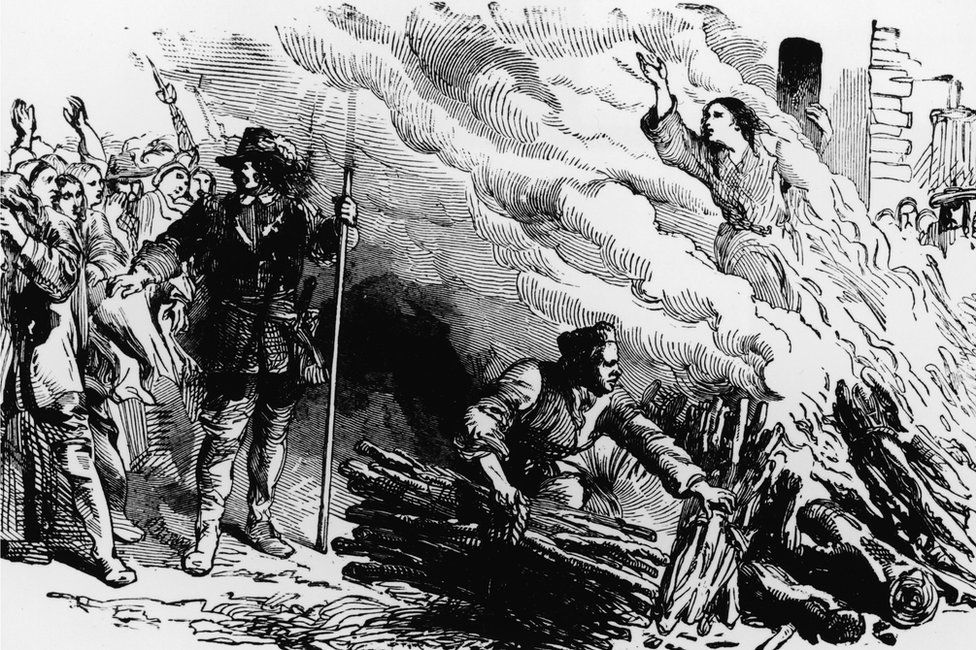
Abstract: This paper aims to explore how SNS (social network sites) create an environment which fosters group bullying online. It does this through anonymity, weak interpersonal connections, algorithms and a desire for social justice in its users. These factors are combined with a generally young age of users on these sites looking for a platform to share their ideas on politics. The impact of these factors is an environment which is created that stimulates a mob mentality in its users. The concept of online sleuthing is also explored in this paper and how online users will use it to disguise their witch hunts as a tool for good. The key theme of this paper is SNS such as reddit and twitter are more of a network than a community and lack interpersonal relationships.
1) Introduction:
SNS create a breeding ground for hate via online witch-hunts. Witch-hunts were a practice of searching and prosecuting primarily women which have been occurring throughout history. Today this process has found a new host via the internet. Whilst users are not executed, they are opened up to a stream of online harassment and bullying. A user may become the target of this online hate due to a variety of reasons. Common causes being speculated crimes, breaching online codes about social justice, or even having a different opinion to the mainstream.
Witch-hunts involves a large group of people teaming up to try and deplatform and alter someone’s life. When a target has been found by a large group, a multitude of methods are utilized such as general harassment, notifying a person’s family/workplace and doxing.
Most of the time it will occur due to a large group of individuals taking the concept of social justice online far too seriously which has the potential to ruin people’s lives. This has resulted in people taking their own lives due to online harassment from mobilized groups.
2) Platform as a catalyst for online abuse:
While Facebook and Reddit are similar in how they allow people to communicate, there are some key differences in how these sites are structured which causes the spreading of hate to occur much easier. The prime cause of this is the fact that both Reddit and Twitter are more of a network than a proper community.
A community with deep interconnected relationships is much harder to establish on platforms such as reddit and twitter. There are a multitude of factors that are responsible for this such as the echo chamber element of these sites, the size of groups created and the level of anonymity that is encouraged.
Echo Chamber and the algorithm
An aspect of SNS that should be mentioned is the effect the algorithm has on making the platform an online echo chamber. An echo chamber refers to an environment where participants reinforce their own ideas by agreeing with likeminded people. In an online sense the echo chamber or “filter bubble” as described by Eli Pariser acts as a tool by SNS designers to keep users invested in their websites. Pariser (2011) notes in his novel that “The filter bubble tends to dramatically amplify confirmation bias—in a way, it’s designed to. Consuming information that conforms to our ideas of the world is easy and pleasurable; consuming information that challenges us to think in new ways or question our assumptions is frustrating and difficult”. It is no mistake that this filter bubble is evident on these sites as it encourages participation by forming a friendlier environment for its users’ specific interests and ideas.
The algorithm matches our interests with likeminded people. We hear want we want to hear, and we receive information that appeals to us even if it’s biased to do so to gain views. Like minded sources can affect the validity of information spread online and content can be intentionally shared to strum up hate as other views are limited, and extreme opinions are encouraged (Kitchens et al. 2020). The impact of this is a more divided userbase who are driven to polar extremes on their political ideas. This leads to less compromising between users and more conflict online inevitable leading to more witch-hunts.
Size
The largest Facebook page has 7,945,423 members while the largest non-staff owned subreddit has 40 million members (OneUpBlog 2022). The sheer size of most subreddits makes it very hard to form relationships with other users due to the decrease in commitment between users. In a small group chat if one user is not active the absence is felt to a larger degree due to the decreased population size and thus users are more valuable to others. This effect could also be compared to simple supply and demand laws where the smaller a group, the more important the users are to each other. Another aspect of the huge size of groups is the fact they must be heavily moderated to avoid trolls which affects the relatability of these groups as conversations are highly moderated and scrutinized to disallow rule breaches. This makes it harder for users to share their honest thoughts as users conform to sometimes very strict moderator rules (Anvur 2020). The impact of this is a usually highly impersonal collection of users.
More anonymity
SNS for the most part (Facebook is a rare exception) heavily encourage anonymity on their platforms. The guise of being anonymous acts as a catalyst that allows people to speak their mind and say things, they would most likely not in real life. This effect has been coined the online disinhibition effect which states that users online will stop following social rules due to a feeling that they can get away with not (Trulioo 2013). Online code of conduct in SNS spaces follow theories on postmodern identity. Who we are, how we act and how we present ourselves changes based on our environment. Because of this these sites can be so dangerous as users get sucked so deeply into a mob mentality as we emulate our environment and the hate around us (Wiley 2012).
This equates to a culture of abuse forming much easier on these sites due to the inherent separation from real life. SNS are anonymous enough for users to feel safe enough to participate in a witch-hunt but not anonymous enough to not get doxed if a user is the target of online abuse.
Doxing strips the anonymity users on these sites thought they had and exposes them to real life abuse. Online abuse and real-life abuse are two completely different things and allowing a user to experience both increases the amount of mental damage they receive tenfold (Carmen 2020).
An aspect of SNS that should be mentioned is these websites usually form over interests or hobbies and a lot less on geographical location unlike Facebook. This usually means groups will have members who have an increased level of friction of distance and will most likely never see each other in person. This increases the disconnection between users and confirms these sites as more of a network focus compared to a community.
Communities are not impossible to be formed on SNS such as reddit. For example, r/rockraiders is a small community with deep connections formed due to their only being 2.6 thousand members who share their passion for the retired Lego theme. But for the most part it would be foolish to call reddit and twitter a place that fosters an online community and not simply a network that causes online hate.
3) Demographics and the desire for social change
Another cause of witch-hunts on SNS is the innate desire for social justice the demographics of these websites hold. Demographics of twitter and reddit are much younger than other social media sites with the largest age bracket on twitter making up 38.5% of the platform. This being the 25 years old to 34 years old age group (Hootsuite 2022).
The leading rationale for why young people are more concerned with social justice issues is that they’re at the age where it is easier to perceive social issues while also most likely attending a form of higher education.
SNS gives younger people a place to voice their opinions and in their minds make a difference. These sites provide a platform for civic engagement in the 21st century with the cancel culture movement originating from twitter due to this very reason. Evidence for SNS such as twitter being platforms for political discourse is the fact Barack Obama is the most followed user on the site (Kornbluh 2017).
The rise of cancel culture due to said desire to spread social justice ideals has led to a vast number of online witch-hunts. One of the most well-known examples of a social justice charged witch-hunt is Justine Sacco’s infamous tweet in 2013. Justine Sacco was a PR executive who made a joke on her twitter account effectively mocking an underdeveloped nation for having a high STD rate. Her employer was also promptly informed, and she was let go. The cause was probably there for this woman to be questioned with her very tone-deaf joke, however all that needed to happen was her employer should’ve been notified, Justine Sacco should not have been subject to the online abuse as well as the potential mental impacts (Pilkington 2013).
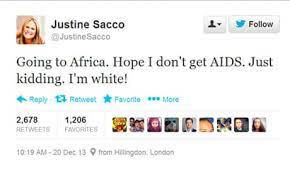
(Sacco, 2013)
Another example of witch-hunts occurring from the rise of cancel culture is the Me-Too movement. While the MeToo movement has undoubtably been a positive for woman’s rights there have been cases of false allegations that have ruined men’s lives. There have been plenty of examples of women misusing the movement to further a personal agenda against a person and effectively attempt to ruin their life. The combination of a very impersonal collection of people and a unified desire for social action leads to people organizing hate groups first and asking questions later.
There have already been examples of people killing themselves due to oppressive witch-hunts based on false information but a strong desire for social change. Izu Mmadubueze took his own life in July of 2020 when a twitter user put his name up on a list of known sexual assaulters simply to deplatform him despite the fact he had done no such thing (Olaiya 2020). The main reason people partook in the online abuse was to gain social credit by taking a stance towards rape, not to try and help anyone effected. The politically charged nature of SNS sites alongside various social justice trends such as cancel culture have and will result in more ruined lives.
4) The disguise of online sleuthing:
An aspect of witch-hunts that should be mentioned is the disguise of online sleuthing. Online sleuthing refers to communities forming online with the sole purpose of solving crimes to initiate legal action or incarceration instead of trying to deplatform a user. Users scour the internet and share resources among networks that are created for the task.
While the goal of online sleuthing may be different to traditional online witch-hunts, it still involves a group of people collaborating while working against an individual. They are not always performed with ill cause or done incorrectly with a focus on trying to hurt people however more often than not they don’t achieve their aims or are started on false information (much like most witch-hunts).
Despite there being some cases of online sleuthing that have effectively helped people find justice such as the bringing to justice of the “bike lock bandit” by 4 channers in 2017 (Ohlheiser 2017), most examples of online sleuthing have negative outcomes.
For example, in 2013 users on the subreddit r/FindBostonBombers successfully misidentified a perpetuator of the 2013 bombing attack. Sunil Tripathi was named as a potential suspect 3 days after the attack on the subreddit despite the fact there was 0 evidence that he had done anything. His family’s Facebook was harassed until Tripathis body was found on April the 23rd due to suicide (Suran and Brown 2017).
People who commit to online sleuthing are often untrained. They may also have false information to work with due to the ability for misinformation to spread via the internet such as the case with Suni Tripathi.
Sadly, the majority of cases of online sleuthing occurring have been either for the wrong reason or the people involved have acted poorly resulting in the actions taken being compared to witch-hunts or just excuses to commit to one.
5) Impacts/conclusion
As the internet grows more mainstream with the development of LDCs, online witch-hunts effects on mental health will become even more of a worry for global mental health. A study in Brazil found that 82% of children aged 9 from 17 were internet users. 41% of these users had experienced harassment online. The study found there was a causal link between anxiety and experiencing hate online (Silveria et al. 2020).
A national telephone survey conducted between March and June of 2005 in the US discovered that out of 1500 youth surveyed, 6% had encountered online harassment (Ybarra and Mitchell 2007). Today this number is around 46% (Pew Research Center 2022).
Obviously, the problem of online harassment has only gotten worse in the past 20 years when reviewing the statistics for youth bullying and anxiety rates. The cause being the rise of SNS, online group bullying and cancel culture/online activism.
An aspect of SNS that wasn’t discussed but is of concern is the links to real life violence. This coming from social movements started primarily on twitter such as a variety of movements in 2020 such as the antifa movement (Duqe et al. 2021).
Even small changes could make large effects such as a stronger effort in developing AI technology that represses dehumanizing content (Abdalla et al. 2021). If we wish to reduce online bullying and harassment, we must evaluate the role of these sites and make structural changes or at least change how they are run to reduce the disconnection and the echo chamber aspects of these sites. If nothing changes people will continue to die.
References
Abdalla, Mohamad, Mustafa Ally, and Rita Jabri-Markwell. 2021. “Dehumanisation of ‘Outgroups’ on Facebook and Twitter: Towards a Framework for Assessing Online Hate Organisations and Actors.” SN Social Sciences 1 (9): 238-38. https://doi.org/10.1007/s43545-021-00240-4.
Avnur, Yuval. (2020) “What’s Wrong with the Online Echo Chamber: A Motivated Reasoning Account.” Journal of applied philosophy 37 (4): 578-93. https://doi.org/10.1111/japp.12426.
Duque, Richard B., Robert Rivera, and E. J. LeBlanc. 2021. “The Active Shooter Paradox: Why the Rise of Cancel Culture, “Me Too”, Antifa and Black Lives Matter… Matters.” Aggression and violent behavior 60. https://doi.org/10.1016/j.avb.2020.101544.
Hootsuite. 2022. 24 Twitter Demographics That Matter to Marketers in 2023. https://blog.hootsuite.com/twitterdemographics/#:~:text=Most%20Twitter%20users%20are%20between,is%20probably%20for%20the%20best.
Kitchens, Brent, Steve L. Johnson, and Peter Gray. 2020. “Understanding Echo Chambers and Filter Bubbles: The Impact of Social Media on Diversification and Partisan Shifts in News Consumption.” MIS quarterly 44 (4). https://doi.org/10.25300/MISQ/2020/16371.
Kornbluh, Mariah Elsa. 2017. Building Bridges: Exploring the Communication Trends and Perceived Sociopolitical Benefits of Adolescents Engaging in Online Social Justice Efforts. Youth and Society, 51 (8): 1104-1126. https://doi.org/10.1177/0044118X17723656
Lee, Carmen. 2020. “Doxxing as discursive action in a social movement”. Critical Discourse Studies 19 (3): 326-344. https://www.tandfonline.com/doi/full/10.1080/17405904.2020.1852093
Ohlheiser, Abby. 2017. “A man clobbered protesters with a bike lock at Berkeley rally, police say. The Internet went looking for him.” Washington Post, June 3, 2017. https://www.washingtonpost.com/news/the-intersect/wp/2017/05/29/a-man-clobbered-trump-supporters-with-a-bike-lock-the-internet-went-looking-for-him/
OneUp Blog. 2023. List of the 62 largest Facebook groups (2023 update). https://blog.oneupapp.io/largest-fb-groups/
Olaiya, Tope Templer. 2020. “Outrage as man commits suicide after being accused of rape.” The Guardian Nigeria News, July 21, 2020. Outrage as man commits suicide after being accused of rape | The Guardian Nigeria News – Nigeria and World News — Nigeria — The Guardian Nigeria News – Nigeria and World News
Pariser, Eli. 2011. The Filter Bubble: What the Internet is Hiding from You. London, England: Penguin Books. https://dl.acm.org/doi/10.5555/2029079
Pew Research Center. 2022. Teens and Cyberbullying 2022. https://www.pewresearch.org/internet/2022/12/15/teens-and-cyberbullying-2022/
Pilkington, Ed. 2013. “Justine Sacco, PR executive fired over racist tweet, ‘ashamed’ ”. The Guardian, December 23, 2013. https://www.theguardian.com/world/2013/dec/22/pr-exec-fired-racist-tweet-aids-africa-apology
Sacco, Justine (@JustineSacco). 2013. “Going to Africa. Hope I don’t get AIDS. Just kidding. I’m white!” Twitter, December 20, 2013, 10:19 a.m. https://twitter.com/
Silveira, Ethieli R., Vanessa P. P. Costa, Marília L. Goettems, Thiago M. Ardenghi, Marina S. Azevedo, Marcos B. Correa, and Flávio F. Demarco. 2020. “The Impact of Cyberbullying on Schoolchildren’s Dental Anxiety in Brazil: A Cross‐Sectional Multi‐Level Study.” Community dentistry and oral epidemiology 48 (5): 440-446. https://doi.org/10.1111/cdoe.12557.
Suran, Melissa, and Danielle K. Brown. 2017. “Freedom from the Press?: How Anonymous Gatekeepers on Reddit Covered the Boston Marathon Bombing.” Journalism studies (London, England) 18 (8): 1035-1051. https://doi.org/10.1080/1461670X.2015.1111160.
Trulioo. 2013. Invisible Online: How Anonymity Affects Cyberbullying. https://www.trulioo.com/blog/identity-verification/invisible-online-how-anonymity-affects-cyberbullying
Wiley, Norbert. 2012. “The Post-Modern Self: A Retrospective.” Society (New Brunswick) 49 (4): 328-332. https://doi.org/10.1007/s12115-012-9556-6.
Union of International Associations. 2023. Witch Hunting. http://encyclopedia.uia.org/en/problem/154199
Ybarra, Michele L. and Mitchell, Kimberly J. 2007. “Prevalence and Frequency of Internet Harassment Instigation: Implications for Adolescent Health.” Journal of Adolescent Health 41 (2): 189-195. https://www.sciencedirect.com/science/article/pii/S1054139X0700136X


Hi L, The thing is the paper is mainly concentrated on the African continent particularly.If you make an analysis of…