Abstract
While the gaming industry continues to grow there is still a clear negative view of women that are attempting to make their way into these communities. Women are harassed and threatened online through social platforms such as Twitter and Twitch where they are treated as unequal when compared to their male counterparts within the communities. Female representation within games is sexualized and if women within the games don’t meet the standards of a traditional female body type, they are criticized harshly. Women struggle with their presented self due to the constant backlash they receive online from others, and it negatively impacts their interactions and participation within online communities.
Introduction
The video game industry is growing rapidly and within the last twenty years female players in the gaming community has increased with over half of the gaming population being female (Lopez-Fernandez et al., 2019). Women within the industry are often treated lesser than due to their gender and are being considered not real gamers on the online communities and social networking sites where they are harassed daily by often men within the community. Twitter is used as a platform where women can band together to create a community that actively defends their role within the industry, but it is also platform that discourages female gamers further. Men within these communities have created an identity of what a gamer means and when women try to make their way into the industry they are often met with backlash and bullying (Lorenz & Browning, 2020). Social networking sites such as Twitch provide a platform for women to live-stream themselves playing games along side others within the industry but are often judged first by their appearance and then their gaming abilities, creating toxic community for men and women to co-exist. The video games themselves conventionally have a protagonist, antagonist, and side characters, traditionally the representation of female characters within these games are oversexualized causing female players to have a negative self-view and increase self-objectification (Skowronski et al., 2021). Women within online gaming communities such as Twitch and Twitter, are treated negatively and struggle to maintain their self-identity within the industry due to their gender and the sexualised representation of female characters within games.
Discussion
Social media platforms such as Twitter are a place where people can express their views and connect with other people within the gaming community in a public and free space. The raising popularity of Twitter can be broken down into its two main affordances: all Twitter accounts are opened as public, allowing others to follow anyone and the use of hashtags to focus discussions of specific topics and keep them together (Schatto-Eckrodt et al., 2020). Twitter has become one of the main platforms where individuals go to argue their viewpoints within the online gaming communities and where they can find like-minded people to share their values of the masculine gamer identity (Dowling et al., 2019). One of the most prominent hashtags to come out of the online gaming communities is that of #GamerGate in 2014. Zoë Quinn is an independent game developer that crated a game based on her experience with depression, after the release of the game she was criticised online for allegedly sleeping with a journalist to receive positive reviews. Users quickly took to social media, with Twitter being the main focus, creating the hashtag to engage with the conversation online and discuss it further. Zoë and other women within the gaming community were sent death threats, had their personal information, such as address, shared to the public on Twitter and were ridiculed for attempting to stand up to the “hypermasculine performativity” (Tomkinson & Harper, 2015, p. 617). #GamerGate was used on Twitter as platform where female gamers were able to defend their identity as gamers and fight against the negative anti-female narrative that was being constructed online (Braithwaite, 2016; Perreault & Voss, 2016, as cited in Dowling et al., 2019). The use of this hashtag demonstrates that there is still an ongoing battle within the communities of male gamers vs girl gamers, leading that gaming is still seen as a male activity and women, in order to belong need to conform to the male standards (Storla, 2011). Girls who play video games are questioned as to whether they are real gamers and are often split into two different categories within the communities, Gamer Girls, and Girls who game, which relates directly with the overall ongoing gaming narrative of a casual gamer or a hardcore gamer (Storla, 2011). While this male centric viewpoint is prevalent within online communities such as Twitter, female self-presentation is also negatively impacted through the representation of female characters within games.
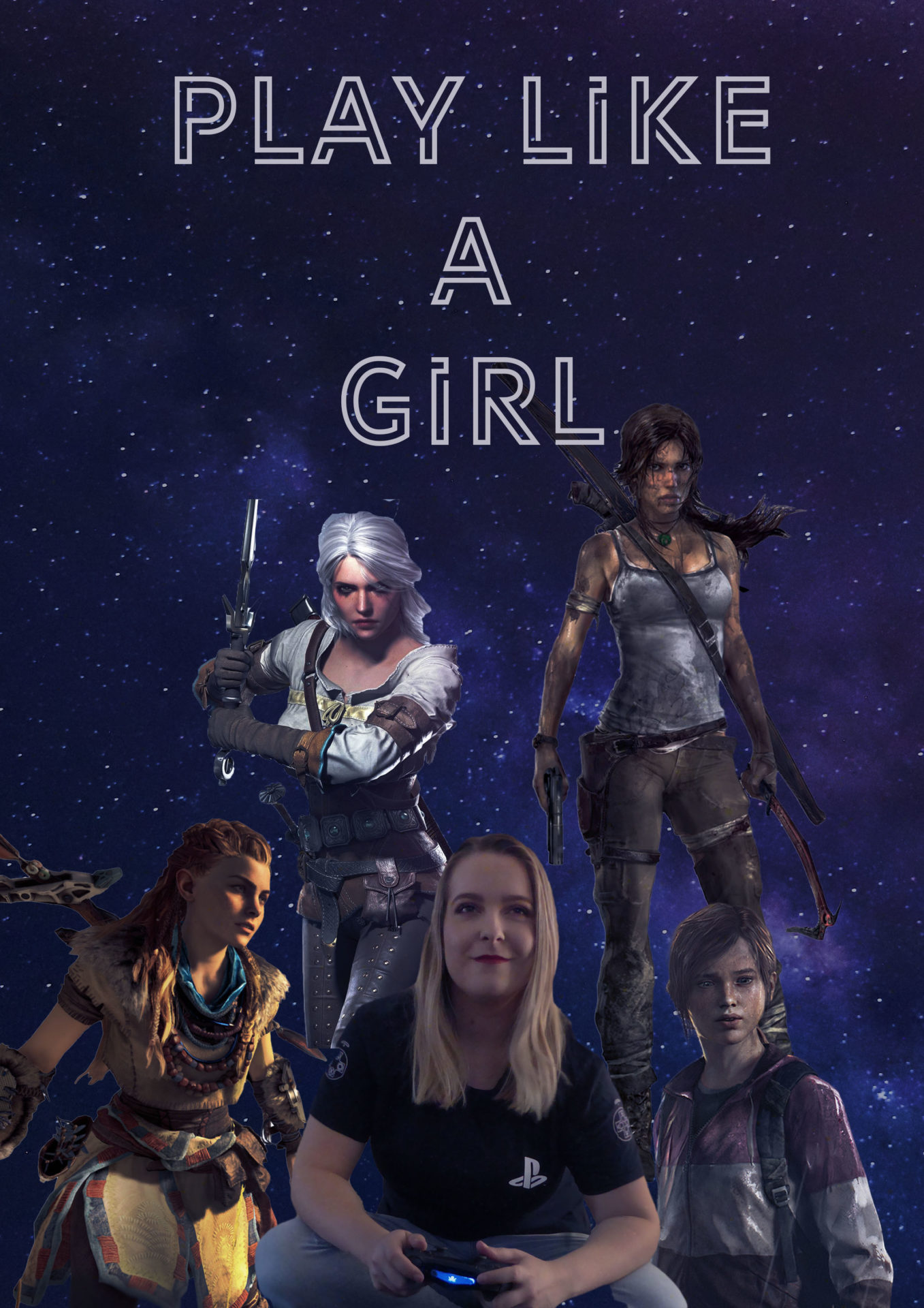
Video games are an entertaining form of media that has the capacity to impact the way we perceive gender roles and the attitudes towards women (Summers & Miller, 2014). Within traditional video games there is often a clear portrayal of female characters being presented as the damsel in distress, and the heroic men are on a quest to save these women (Summers & Miller, 2014). The portrayal of women within these games can have a direct influence on how women feel about their self-presentation and their overall involvement within these communities online (Shaer et al., 2017). There has been a push in the right direction since the events of Gamergate in 2014, where women shared their stories about their experiences within the gaming industry communities and how it has negatively impacted their lives (Tomkinson, 2022). Previously women were seen as sexual objects to please men within the gaming fantasy (Atrio, 2018) but there are more female characters that are breaking out of the traditional stereotypes and making positive changes within the community. An example of how the industry is attempting to change the perspective of women within games would be the successful franchise, The Last of Us part one and two, where the females within the games are strong leads without the need for saving. No longer are women required to wear small revealing clothing, but they are dressed within clothes that are practical for the game setting of a postapocalyptic universe (Atrio, 2018). While the games have been perceived in positive light, male gamers within the community had strong negative feelings towards one female character within the second game, Abby Anderson. Many players of the game were outraged by the fact that she didn’t have a ‘traditional’ ideal form of a woman, she was considered too ‘masculine’ and mocked online with some individuals going as far as to call her an “abomination of womanhood” (Tomkinson, 2022, p. 9). Sexualising of women within gaming communities was made prevalent when Abby was presented as a character because the men felt they could not sexualise her in a way that they wished. Women are forced to fit into standards that suit the male gaze which negatively impacts the way they perceive themselves within the communities making gaming communities one of the most unequal environments for women (Duggan, 2014, as cited in Jagayat & Choma, 2021).
Inequality within the gaming industry is not only prevalent in the representation of women within gaming but it can also be seen within the live streaming of games within communities such as Twitch. The inequality women face within the communities is directly related to the traditional depiction of a gamer’s identity, which is formed around the male identity whereby online gaming communities have mimicked traditional male-controlled societies (Lien, 2013; Gray et al., 2017, as cited in Jagayat & Choma, 2021). Twitch is a platform that has a vast array of communities purposefully built around the channels themselves, where members are able to interact with the streamers themselves and also other members within the communities. In a study conducted by Ruvalcaba et al., (2018, as cited in Kampel et al., 2020) stated that female streamers on the twitch platform experience up to “eleven times as much sexual harassment as male streamers” (p. 2). One of the main issues that is prevalent within communities such as these is the affordance of constant contact and communication with others within the platform, whereby they are unable to leave the conversations as compared to pre-social media technologies (Hampton, 2016). With online communities increasing people no longer feel the need to connect in-person and will connect through social networks where they will create their own personal networked self within these communities (Wellman, 2001). Often women in the community are met with harassment and cruelty when speaking up within the community and are expected to fall within the traditional gender roles that are placed on them (Mettler, 2022). Women streamers on Twitch often feel they must present a specific persona or networked-self online whereby they are conforming to the male standards of how women should be portrayed within the community, or they choose to hide their gender identity entirely to avoid harassment online (Behm-Morawitz & Schipper, 2015, as cited in Jagayat & Choma, 2021). Women within the Twitch platform are negatively impacted as they have to implement strategies to promote their online self as a performance, where they actively manage this alongside their live stream identity to meet viewers expectations (Freeman & Wohn, 2020). Regardless of a woman’s gameplaying ability, viewers will still focus on the women’s appearance and will associate them based on this, which will in turn lead to how many subscribers the streamer will get and community interaction (Uszkoreit, 2017).
Conclusion
While it is seen that the gaming industry is still a largely male dominated space, there are changes being made to provide equal experiences for women when interacting with others within the gaming communities. Females are banding together to create shared experiences within the platform of Twitter and usings its various affordances to publicly state their views within the community and challenge the traditional thinking of women within gaming. Online identities are created entirely by the female in the way that they wish to be presented and often it is a networked or theatrical version of themselves that they feel the need to push to remain relevant within the community. Twitch is a community of communities where females are harshly judged not based on their gaming ability but their ability to keep audiences engaged with their physical appearances and attitudes. Online communities such as this provide a clear insight into how this negatively impacts a woman’s presented self online by providing examples of instances where women are harassed for simply being a woman interested in gaming. Twitch fits within the patriarchal role that bleeds through every facet of the gaming community and upholds the ideal of what traditional gamers should look like, men, and that women are simply objects for them to view. Female gamers are not taken seriously within these communities and are often met with unnecessary threats against themselves. Female characters within games are often sexualised and often conform to what is considered the ideal form for the male gaze which greatly impacts the way women perceive themselves within the industry leaving lasting negative impacts on their self-image. However, in contrast to this, many games are starting to make female protagonist that are not princesses that need to be saved by strong men but are their own independent characters that help to defeat the narrative of weak women that need men. Further research can made within the gaming communities to see if there further changes that need to be made within these communities to promote an equal experience for both men and women. Some limitations to this paper could be that the overall pool of subjects that are used within the research are limited and not all viewpoints can be heard when discussing such a large and prevalent matter. Women are individuals who are allowed to enjoy gaming and actively participate within online gaming communities as equally as men within the community but more needs to be done to address the overarching narrative of women don’t belong in the community just yet.
References:
Atrio, A. (2018). Silenced Women: Gender Representation and Narrative Technique in Naughty Dog’s Video Game The Last of Us. [Master’s thesis of Universitat Autònoma de Barcelona]. Depòsit Digital.
https://ddd.uab.cat/record/196004
Dowling, D. O., Goetz, C., & Lathrop, D. (2020). One year of# GamerGate: The shared Twitter link as emblem of masculinist gamer identity. Games and Culture, 15(8), 982-1003.
https://doi.org/10.1177/1555412019864857
Freeman, G., & Wohn, D. Y. (2020). Streaming your Identity: Navigating the Presentation of Gender and Sexuality through Live Streaming. Computer Supported Cooperative Work, 29(6), 795-825.
https://doi.org/10.1007/s10606-020-09386-w
Hampton, K. N. (2016). Persistent and pervasive community: new communication technologies and the future of community. American Behavioral Scientist, 60(1), 101-124.
https://doi.org/10.1177/0002764215601714
Jagayat, A., & Choma, B. L. (2021). Cyber-aggression towards women: Measurement and psychological predictors in gaming communities. Computers in human behavior, 120.
https://doi.org/10.1016/j.chb.2021.106753
Jagayat, A., & Choma, B. L. (2021). Cyber-aggression towards women: Measurement and psychological predictors in gaming communities. Computers in human behavior, 120.
https://doi.org/10.1016/j.chb.2021.106753
Kampel, S., Koban, K., Bornemeier, J., & Ohler, P. (2020, May 21). Sexual harassment in female twitch streams. [Paper Presentation]. In 70th Annual ICA Conference, Australia.
https://www.researchgate.net/profile/Sonia-Kampel/publication/349345737_The_downsides_of_being_a_female_streamer_An_automated_content_analysis_approach_to_sexual_harassment_in_female_Twitch_streamers’_chatlogs/links/602bd574299bf1cc26cdfded/The-downsides-of-being-a-female-streamer-An-automated-content-analysis-approach-to-sexual-harassment-in-female-Twitch-streamers-chatlogs.pdf
Lopez-Fernandez, O., Williams, A. J., Griffiths, M. D., & Kuss, D. J. (2019). Female gaming, gaming addiction, and the role of women within gaming culture: A narrative literature review. Frontiers in Psychiatry, 10(454).
https://doi.org/10.3389/fpsyt.2019.00454
Lorenz, T., & Browning, K. (2020, June 23). Dozens of Women in Gaming Speak Out About Sexism and Harassment. The New York Times.
https://www.nytimes.com/2020/06/23/style/women-gaming-streaming-harassment-sexism-twitch.html
Mettler, K. (2022). Let Her Play: A report on gender-based violence in video games. Embodied: The Stanford Undergraduate Journal of Feminist, Gender, and Sexuality Studies, 1(1).
https://ojs.stanford.edu/ojs/index.php/sjfgss/article/view/2303
Schatto-Eckrodt, T., Janzik, R., Reer, F., Boberg, S., & Quandt, T. (2020). A computational approach to analyzing the Twitter debate on gaming disorder. Media and Communication, 8(3), 205 – 218.
DOI: 10.17645/mac.v8i3.3128
Shaer, O., Westendorf, L., Knouf, N. A., & Pederson, C. (2017, May 2). Understanding gaming perceptions and experiences in a women’s college community. [Paper Presentation]. CHI Conference on Human Factors in Computing Systems, Denver.
https://doi.org/10.1145/3025453.3025623
Skowronski, M., Busching, R., & Krahé, B. (2021). The effects of sexualized video game characters and character personalization on women’s self-objectification and body satisfaction. Journal of Experimental Social Psychology, 92.
https://doi.org/10.1016/j.jesp.2020.104051
Storla, K. D. (2011). Boyfriends, Babies, and a Few Good Headshots: Examining Girl Gamers’ Identity Enactment on Twitter Using the Communication Theory of Identity [Master’s thesis of Georgia State University]. ScholarWorks.
https://scholarworks.gsu.edu/communication_hontheses/2/
Summers, A., & Miller, M. K. (2014). From damsels in distress to sexy superheroes: How the portrayal of sexism in video game magazines has changed in the last twenty years. Feminist Media Studies, 14(6), 1028-1040.
https://doi.org/10.1080/14680777.2014.882371
Tomkinson, S. (2022). “She’s Built Like a Tank”: Player Reaction to Abby Anderson in The Last of Us: Part II. Games and Culture.
https://doi.org/10.1177/15554120221123210
Tomkinson, S., & Harper, T. (2015). The position of women in video game culture: Perez and Day’s Twitter Incident. Continuum, 29(4), 617-634.
https://doi.org/10.1080/10304312.2015.1025362
Uszkoreit, L. (2017). Video game live streaming and the perception of female gamers [Doctoral dissertation, University of Southern California]. ProQuest.
https://www.proquest.com/dissertations-theses/video-game-live-streaming-perception-female/docview/2183258961/se-2
Wellman, B. (2001). Physical place and cyberplace: The rise of personalized networking. International journal of urban and regional research, 25(2), 227-252.
https://doi.org/10.1111/1468-2427.00309
Paper download:

Breeze_Online Gaming Communities_Women can’t play games


Hi L, The thing is the paper is mainly concentrated on the African continent particularly.If you make an analysis of…